Will the House of Lords, Which Faces Euthanasia by Labour, Save Britain From Assisted Suicide?

The Lords, whose powers Labour aims to curtail, would do Britons a service by amending — or even helping defeat — the bill.

Via Wikimedia Commons
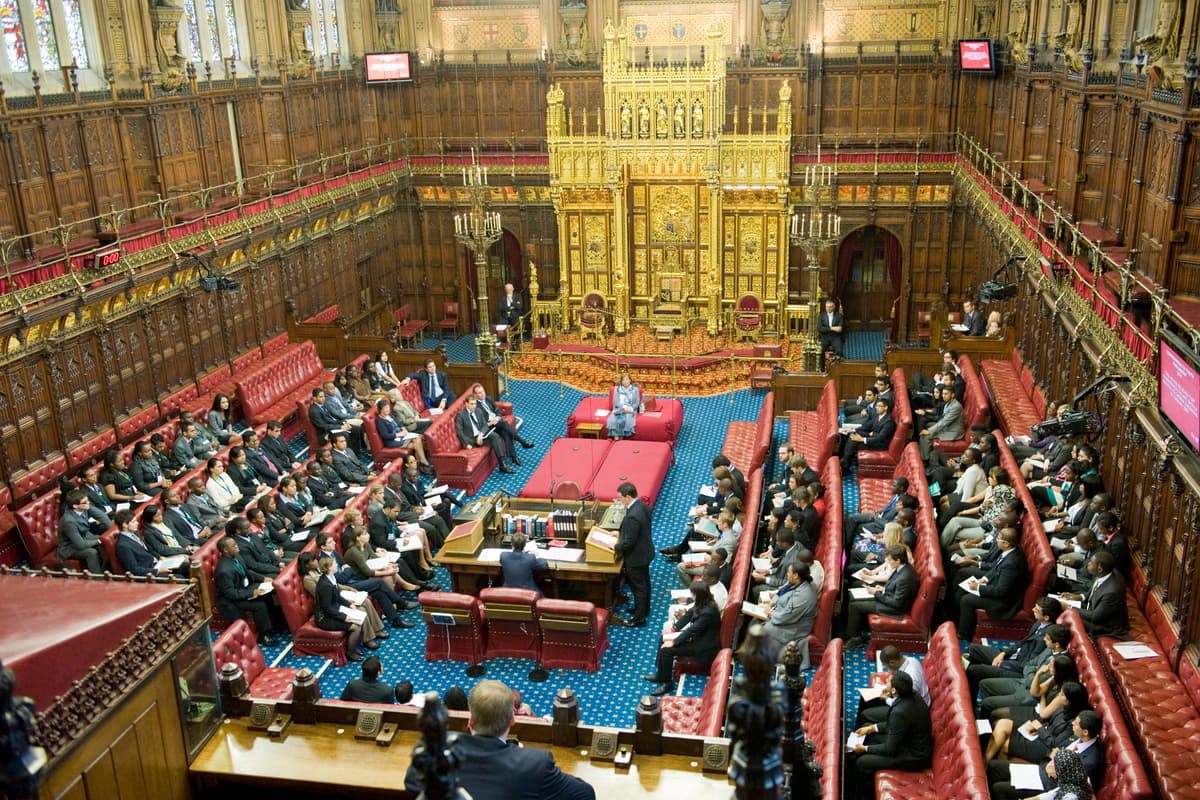
The House of Lords, which faces an uncertain future under Britain's Labour government. Via Wikimedia Commons

The next step for the United Kingdom’s assisted suicide law will be Britain’s beleaguered House of Lords, which now has a chance to scrutinize and amend the measure. It’s a reminder of the critical role that the upper house of parliament can play in British politics. 

The Lords would do Britons a service by amending — or even helping defeat — this bill. Yet it could prove the last hurrah for the storied house, whose powers and role Labour is aiming to curtail.

Many Labour MPs, including Prime Minister Starmer, want to see the Lords replaced entirely. As leader of the opposition, Sir Keir made abolishing the Lords one of his key electoral pledges.

Yet the Lords, far from “indefensible,” as Sir Keir once described it, is one of the last bastions of serious politics in Britain. Replacing it with an elected house, if the replacements are to be of similar quality to our illustrious MPs, would be a gift to the left.  

After fierce opposition, Sir Keir now seeks only to abolish hereditary peers. This would finish the job that his predecessor, Tony Blair, started in the late 1990s, when his government abolished all but 92. 

Even this is proving difficult, as Conservative opposition is steadfast. Lord Forsyth, not a hereditary peer himself, summed up the Conservative position in his description of Sir Keir’s plans as a “partisan drive-by assassination dressed up as constitutional reform.”

After reductions to the powers of the Lords in the 20th century, the upper house has the power to delay a government bill for only a year. However, because the assisted suicide bill is not officially government sponsored, the Lords have much more power. 

A constitutional law professor at the University of Cambridge, Mark Elliot, argued that the Lords would be well within their rights to block this bill.

In a piece written shortly after the bill’s passing, he wrote, “Any argument that it would be undemocratic or … constitutionally suspect for the Lords to do anything other than rubber-stamping the Bill would be wide of the mark.”

It is against this backdrop that the assisted suicide bill heads to the Lords, where peers are once again expected to perform the scrutiny the Commons seemingly did not have the competence or attention span to do themselves.

Even Labour Lords have acknowledged the disappointingly scarce Commons debate. Baroness Berger told the Times that the bill’s razor thin majority meant “great responsibility on members of the House of Lords” to add additional safeguards to the bill.

The Lords, free from the cut and thrust of electoral politics, mostly refrain from political theatre. One can expect to see the serious discussions around protecting the vulnerable and disabled in the Lords that should have come from our MPs during debate in the Commons.

Perhaps these truisms are why the prime minister is having such difficulty in actually carrying out his constitutional vandalism. 

Riding roughshod over our constitutional heritage is not the answer to Britain’s political woes, and the Labour Party knows it. The party’s obsession with replacing the upper house appears largely ideological. 

Sir Keir, one imagines, expects that the Lords will prove a thorn in his side on other pieces of legislation, like his flagship Employment Rights bill. Again here, the Commons passed gargantuan legislation riddled with ambiguities. Lord Fox essentially accused the government of “making it up as they go along.”

The prime minister wants the Lords to simply act as a rubber stamp for government policy, hence why he wants to replace independently minded peers with a chamber of political lackeys.

The Lords now stand as the only safeguard between the U.K. public and a dangerous bill that fundamentally changes the contract between Britons and the state. 

At a time where our MPs are constantly found wanting, the House of Lords is more important than ever. Lawmakers would be wise to reject the progressive demands that all institutions bend to the will of popular sentiment.


The New York Sun

© 2025 The New York Sun Company, LLC. All rights reserved.

Use of this site constitutes acceptance of our Terms of Use and Privacy Policy. The material on this site is protected by copyright law and may not be reproduced, distributed, transmitted, cached or otherwise used.

The New York Sun

Sign in or  create a free account

or
By continuing you agree to our Privacy Policy and Terms of Use