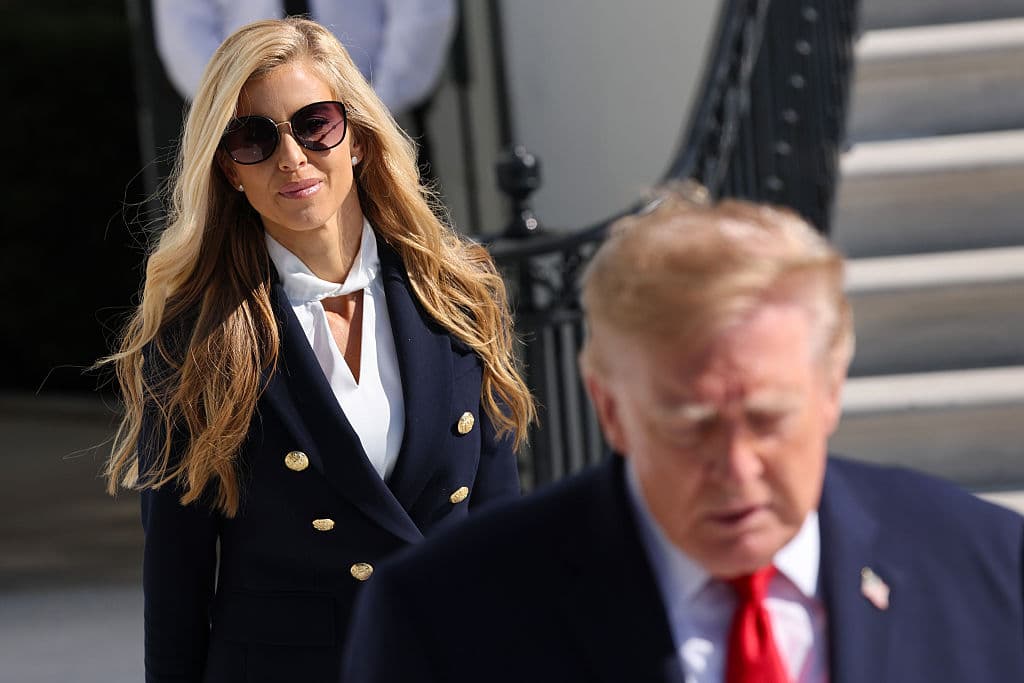
With the F-35s and the Saudis, It’s Déjà Vu All Over Again

Deal with Saudis echoes across the decades with the tumult over our sale of the airborne warning and control system known as Awacs.
Via Wikimedia Commons
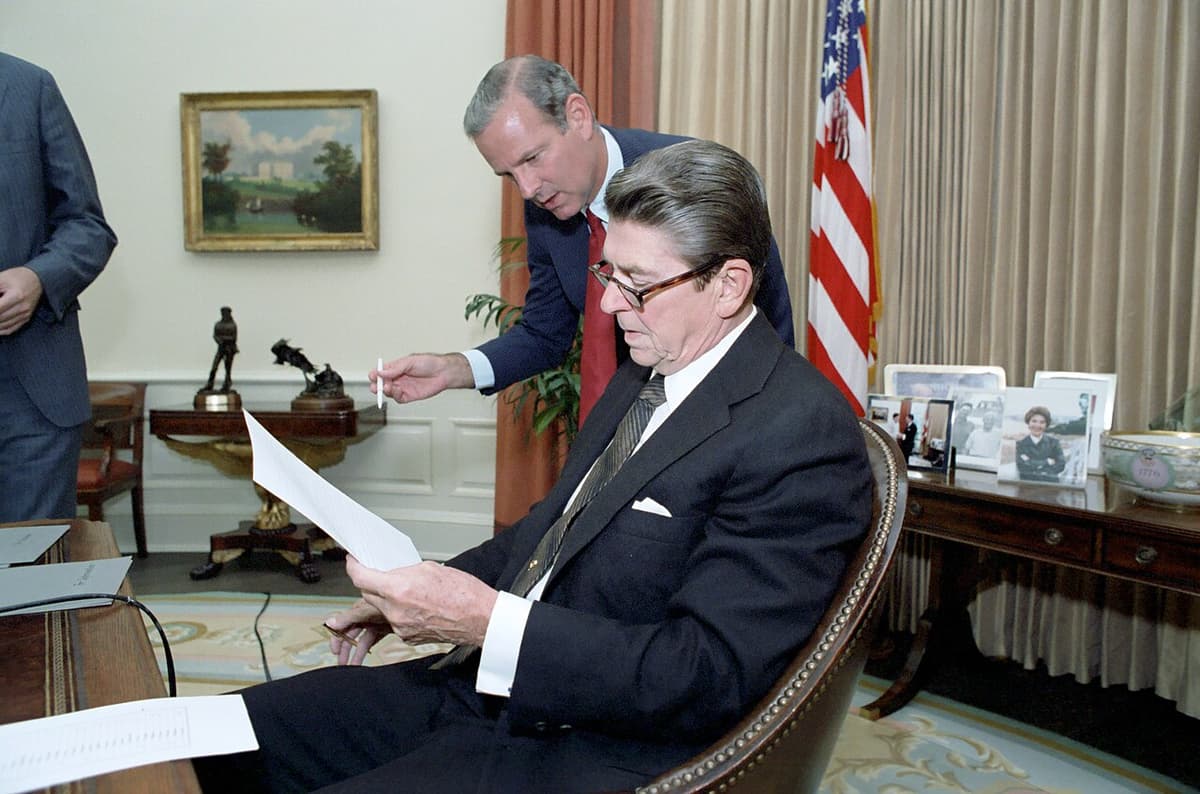
President Reagan and his chief of staff, James Baker, at the Oval Office on October 28, 1981 after the Senate failure to block the sale of Awacs to Saudi Arabia. Via Wikimedia Commons

President Trump’s vow to sell F-35 fighters to Saudi Arabia is sparking criticism that evokes the pushback when President Reagan forged a weapons deal with Riyadh. The point of contention in 1981 was the Airborne Warning and Control System, known as Awacs, which Reagan sought to sell to the Saudis. The proposal pitted the White House against Israel, and one of the leading voices against the arms deal was the Times’ columnist, William Safire.

The episode helps illuminate today’s debate. What was the logic, Safire asked, of selling the Awacs radar aircraft, one of “our most guarded technological military secrets,” to the Saudis, “whose blackmail payments supply weapons to the P.L.O.”? Congress, though, failed to block the deal. While the fears mooted over the sale of the Awacs failed to materialize, neither did the sale of the high-tech jets live up to the Reagan White House’s expectations. 

Selling F-35s to Riyadh raises fears that the technology could end up in the hands of Communist China. Plus, too, critics warn that “an unconditional sale of the cutting-edge U.S. weapon system could erode Israel’s advantage in the region,” the Wall Street Journal reports. Similarly, Safire in 1981 warned that “with a fleet of Awacs jets the Saudis could lay bare Israel’s defenses,” leaving the Jewish state, “in Shakespeare’s phrase, ‘naked to mine enemies.’”

Yet Reagan saw the sale of Awacs as critical to shoring up American influence in the Mideast against the sway of the Soviets. The high-tech jets were also seen as needed to protect Saudi oil fields from, say, the militant regime that had just captured Iran. Some even feared that the House of Saud, led today by the crown prince, Mohammed bin Salman, could go the way of Iran’s toppled shah. Yet the proposal faced resistance on Capitol Hill. 

“This is one of the worst and most dangerous arms sales ever proposed,” thundered Senator Ted Kennedy. Israel’s premier, Menachem Begin, expressed “profound regret” over Reagan’s decision to sell the aircraft. The Saudis hired a consultant, Frederick Dutton, to push the sale. Pointing to the Israeli opposition, Dutton suggested to Time that “If I had my way, I’d have bumper stickers plastered all over town that say REAGAN OR BEGIN.”

A Reagan White House official, and critic of Israel, Pat Buchanan, was pushing for the sale. President Nixon piped up, too. “If it were not for the intense opposition by Begin and parts of the American Jewish community, the Awacs sale would go through,” Nixon said. Alluding to this line of criticism, Reagan averred that “it is not the business of other nations to make American foreign policy.” He warned of “a perception that we are being unduly influenced.”

Amid a rising furor Reagan sought to close ranks around the idea of presidential prerogative. Safire was skeptical, explaining that “we do not strengthen our Presidents, or help along their ability to conduct foreign policy, by acquiescing in blunders.” He called the Awacs sale “not a test of strength between President and Congress, nor a partisan fight,” but “a test of wisdom that supporters of Ronald Reagan must not let him flunk.”

One factor mitigating the risk to Israel today, our Benny Avni reports, is a law enacted in 2008 that requires America to ensure that Israel preserves a “qualitative military edge” against its opponents in the Mideast. “We are sure that that advantage will be maintained,” Israel’s envoy to the United Nations, Danny Danon, told the Sun following Mr. Trump’s announcement of the planned F-35 sale to the Saudis.

In 1981, Congress lacked the votes to prevent the Awacs sale, and, Safire reported, “exactly one day after its triumph in the U.S. Senate, Saudi Arabia raised the price of its oil by $2 a barrel.” That was an early signal, he later wrote, that “the overtures to the Arabs produced nothing.” In words that echo amid today’s proposed F-35 sale, Safire said: “We should remind ourselves that in the end, our most reliable allies are nations that share our democratic traditions.”


The New York Sun

© 2025 The New York Sun Company, LLC. All rights reserved.

Use of this site constitutes acceptance of our Terms of Use and Privacy Policy. The material on this site is protected by copyright law and may not be reproduced, distributed, transmitted, cached or otherwise used.

The New York Sun

Sign in or  create a free account

or
By continuing you agree to our Privacy Policy and Terms of Use