Mamdani’s Land Holding in Uganda Clashes With His Socialist Intentions for New York City Property Owners
The New York City mayoral frontrunner has presented himself as a man of the people while owning verdant property in an impoverished country.
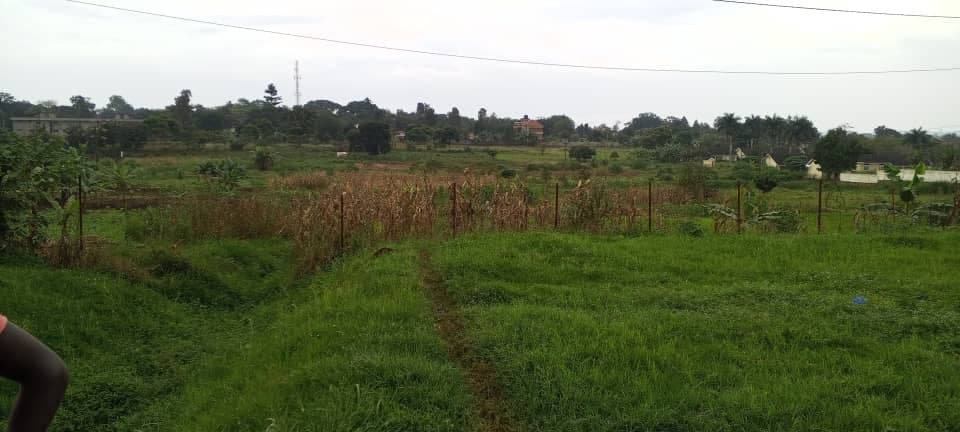
At Jinja, Uganda, a lush green tract of land stretches along the Victoria Nile — four acres of fertile ground, fenced off, and fiercely guarded. It belongs to the New York assemblyman and Democratic nominee for New York City mayor, Zohran Mamdani, who has made his name railing against landlords, championing rent freezes, and calling for the “de-commodification of housing.”
The contrast is striking: a politician who openly muses about abolishing private property quietly holding a sizable plot of foreign land in his country of birth.
On paper, Mamdani insists he is no landlord. His official disclosures show he is leasing a rent-stabilized apartment in Queens, reporting a modest net worth of approximately $200,000, and forgoing the use of a car. He has styled himself as the progressive son of immigrants, fighting entrenched inequality in one of the world’s most expensive cities.
Yet in Uganda, where average annual income hovers below $1,000, his four-acre holding is no minor investment. Financial disclosures filed in 2024 valued the property between $150,000 and $250,000 — making it both his most significant personal asset and a lightning rod for critics.
A Land Few Dare Approach
The plot itself, visited by the New York Sun, is lovely from afar.
“There’s nothing built yet, it’s an empty plot,” one Jinja resident familiar with the property tells the Sun. “The problem is that they don’t want me near. The guy showed me from a distance, after a very long discussion. He said no one is allowed to enter without his boss’s authorization.”
Another contact in Jinja said he was warned that he could only be escorted onto the land if Mr. Mamdani or his mother, filmmaker Mira Nair, gave personal authorization.
“I don’t want to attract Ugandan security services toward me,” the man says.
Sources suggest the family’s reach extends beyond Jinja to other locations and connections as well, with holdings in the northeastern Karamoja region and ties to powerful Ugandan military officers. One Ugandan resident recalled being questioned by officials when he asked about the Jinja property.
“It seems like they are scared,” the man tells the Sun. “One thing for sure is that Zohran owns not only one land here, but many.”
Legally, Mr. Mamdani may not be required to disclose all foreign property holdings on public filings in America, particularly if they do not generate income or are co-owned with a relative. The lack of reporting leaves the extent of his assets uncertain, but sources across Uganda claim that the family is immensely wealthy and powerful, and they warn that any questions raised could attract unwanted attention.
The Politics of Hypocrisy
The disclosure of Mr. Mamdani’s Jinja land might have attracted less attention if not for the resurfacing of an older video this summer in which the mayoral hopeful called for the abolition of private property as a way to solve New York’s housing crisis.
“Housing should be a human right,” he argued, portraying property ownership as an obstacle to equity.
That footage collided head-on with the details of his financial filings, prompting headlines that branded him a hypocrite. As one report declared, “Socialist Zohran Mamdani owns $250,000 in land and a $1 million compound in Uganda but wants to abolish private property in New York.”
A former governor and Mr. Mamdani’s mayoral opponent, Andrew Cuomo, went further, arguing that Mr. Mamdani’s continued investment in his native country and subsequent silence on Uganda’s anti-LGBT laws was telling for a politician who had spoken so forcefully about justice in the United States.
“Silence is violence,” Mr. Cuomo charged.
Mr. Mamdani has pushed back, accusing his detractors of playing “gotcha games” and arguing that his focus has always been on housing inequality at New York. His defenders point out that owning a plot of land abroad is not, on its face, incompatible with advocating for reforms at home.
Politically, however, the optics are potentially damaging. In one setting, he is the tenant-activist demanding the dismantling of property rights, while in another, he is a landholder in a poor country where ownership of anything valuable, much less property, is a mark of privilege.
Radical Promises, Awkward Realities
Yet Mr. Mamdani’s personal assets tell only part of the story. He is the son of a renowned Ugandan scholar, Mahmood Mamdani, and a celebrated filmmaker whose career spans decades, Mira Nair. The family has long maintained substantial property holdings. In 2019, they sold a Chelsea loft for $1.45 million. In Uganda, they still maintain a multimillion-dollar compound on Buziga Hill outside Kampala, a wealthy enclave overlooking Lake Victoria.
It was at that compound that Mr. Mamdani hosted his lavish three-day wedding over the summer. The celebration drew criticism not only for its opulence but also for its security presence, which included heavily armed guards and masked special forces. Neighbors put the value of properties in the area at more than $1 million, underscoring the wealth at the family’s disposal.
Against this backdrop, Mr. Mamdani’s claims of modest means ring hollow to opponents who see his campaign as an exercise in “champagne socialism.”
“It is one thing to call for dismantling the private property system while living modestly in a rented apartment,” a source with close connections to Democratic politics in New York, but who did not want to be named tells the Sun. “It is another to make that case while holding land abroad, behind fences and guards, in a country where the majority of citizens will never own land of their own.”
Mr. Mamdani’s political platform remains unapologetically progressive. He has called for sweeping rent freezes, the expansion of social welfare, government-owned grocery stores, and the dismantling of both Immigration and Customs Enforcement and the New York Police Department. At times, he has openly questioned the legitimacy of private property itself.
To his supporters, these proposals are bold and necessary interventions in a city wracked by inequality. To his critics, they are ideological fantasies untethered from reality. One New York Republican representative, Nicole Malliotakis, compared them to the policies that forced her family to flee Communist Cuba.
The controversy over his Ugandan holdings only sharpens those lines.
“A person from a life of privilege versus a person from a life of poverty will have differing authenticity when it comes to the issues they espouse,” a global risk analyst who specializes in affordable housing, Dennis Santiago, tells the Sun. “It can seem awkwardly hypocritical, even when true.”
What is unclear is how much of the Mamdani family fortune actually belongs to Zohran solely, and how much is wrapped up in his parents’ estates and assets. His official financial disclosures may check the legal boxes, but the broader brushstrokes of elaborate family real estate holdings in at least three different locations paint a portrait of a politician who has never been far from privilege.
As Mr. Mamdani campaigns for mayor, critics question whether his politics are built on principle or on a kind of convenient radicalism that costs him little personally. Supporters counter that these attacks are a distraction from a campaign they see as rooted in equity and justice.
Still, one image lingers: four acres of Ugandan land, lush, and quiet, shielded from public view and guarded with unusual care. For a candidate calling for the end of private property, it is a symbol that speaks louder than any speech — and one that will not fade easily.