
A Fundamental Decency Is the Foundation of a Big-Hearted New Musical, ‘Saturday Church’
The characters are brought to vivid, invigorating life by an array of talented young performers who all get to sing catchy, soulful tunes crafted by Sia, whose flair for sunny hooks and sinuous grooves is very much in evidence here.
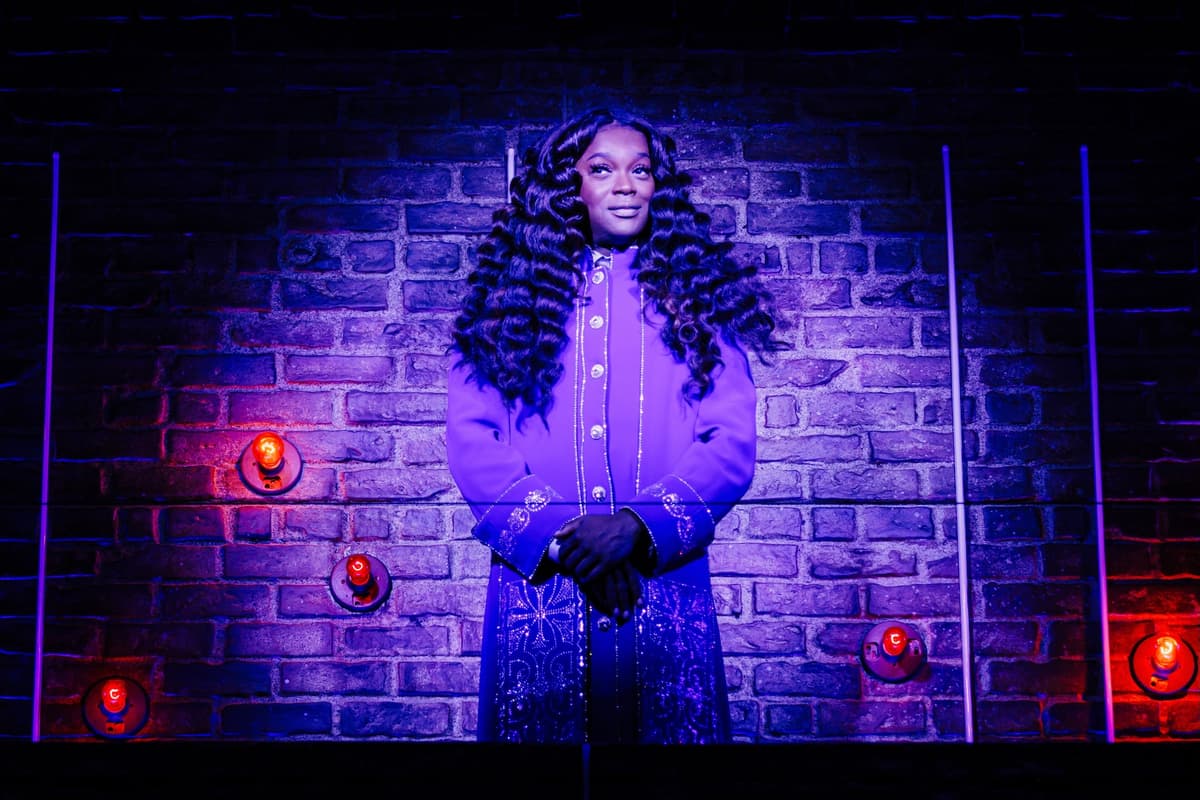
No one treading the boards at New York right now is likely busier backstage than J. Harrison Ghee. In an irrepressibly, irresistibly big-hearted new musical called “Saturday Church,” the performer — who two years ago became the first non-binary person to win a Tony Award for best actor in a musical, for “Some Like It Hot” — juggles two principal roles: a church pastor and a much more flamboyant figure named Black Jesus.
In the latter role — part narrator, part spiritual guide, part fairy godmother — J. Harrison Ghee has to change in and out of a succession of wigs (designed by Dhairius Thomas) and sleek, dazzling costumes (by Qween Jean), notable among them a pair of painted-on, hot-pink boots that stretch to just above the knees. In between those appearances, the performer pops up as the distinctly masculine and conservatively dressed Pastor Lewis.
What’s most striking, though, and most endearing about “Church” — which is based on a 2017 film of the same title, written and directed by Damon Cardasis, who conceived this project for the stage — is what Black Jesus and Pastor Lewis have in common: a fundamental decency. The pastor’s may not glitter as brightly, but it’s there beneath his neatly pressed suit, just waiting to be revealed.
The protagonist of this musical, which features a book by Mr. Cardasis and James Ijames — the latter earned a Pulitzer Prize a few years ago for “Fat Ham,” a similarly exuberant and irreverent takeoff on “Hamlet” — is a teenager named Ulysses, who is grappling both with the recent death of his father and his budding realization that he is different from other kids.

As Ulysses’s Aunt Rose puts it to his grieving, overworked mom, Amara, when she tries to relay her son’s wish to sing in the church choir, “He’s too much. … You know … flouncy.” The word Rose is skirting around, of course, is gay.
So Ulysses finds refuge in another church, or what Black Jesus identifies as another family: one led by Ebony, a maternal figure who happens to be a transgender woman — as do her sassiest charges, who call themselves Heaven and Dijon. Ulysses is introduced to their sanctuary, which holds festive gatherings on Saturday nights, by Raymond, a cute guy he meets on the subway.
These characters are brought to vivid, invigorating life by an array of talented and energetic young performers, who all get to sing catchy, soulful tunes crafted by Sia, a famous (and famously camera-shy) performer and songwriter whose flair for sunny hooks and sinuous grooves is very much in evidence here. (Honey Dijon provides additional music, with Messrs. Cardasis and Ijames contributing to the lyrics.)
Whitney White directs the cast with as much infectious warmth as B Noel Thomas’s ebullient Ebony guides her charges. Other standouts include, in addition to the divine J. Harrison Ghee, Caleb Quezon, whose Dijon gorgeously channels Beyoncé of the “Single Ladies (Put a Ring on It)” era, and a spry Jackson Kanawha Perry, who captures both Raymond’s sex appeal and the sweetness the character has sustained under terrible circumstances.
An adorable Bryson Battle makes the more sheltered Ulysses’s journey of self-discovery accessible and touching, and Kristolyn Lloyd and Joaquina Kalukango bring grit and glistening voices to the respective roles of his mother and aunt.
It’s worth noting that in the end, Rose doesn’t emerge as a fire-breathing bigot any more than Pastor Lewis does — or any more than Black Jesus is intended to replace or defy more conventional notions of Jesus Christ, rather than reflect associated ideals such as love and mercy, albeit in a distinctly nontraditional context.
At a time when social media and tragic events might have you believing that the world is divided between cultural extremists on the right and left with irreconcilable differences, “Saturday Church” makes the radical proposal that, as Black Jesus puts it, “We are communal creatures” who are “not made to be alone,” either as individuals or within separate silos. Surely, we can all say amen to that.