

A Make or Break Moment for Trump’s Presidency
On the power to set tariffs, the Supreme Court will have to exercise its ‘duty,’ as Marshall put it, to ‘say what the law is.’
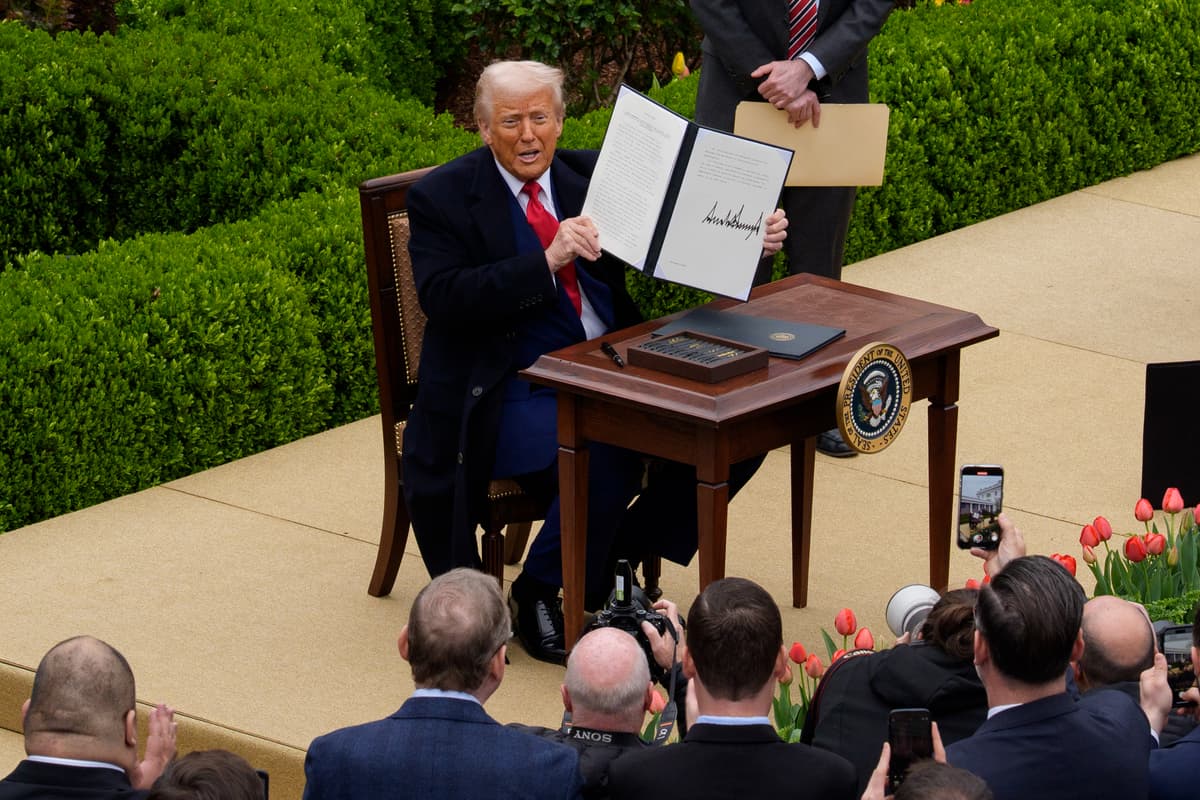
Friday’s appellate ruling striking down much of President Trump’s unilateral tariff regime will raise the constitutional, and political, stakes for the Supreme Court’s fall term. On what is shaping up as a momentous separation of powers question — whether authority to impose import levies rests with Congress or the president — the Nine will be asked “to say what the law is,” as Chief Justice Marshall more than 200 years ago described the high court’s “duty.”
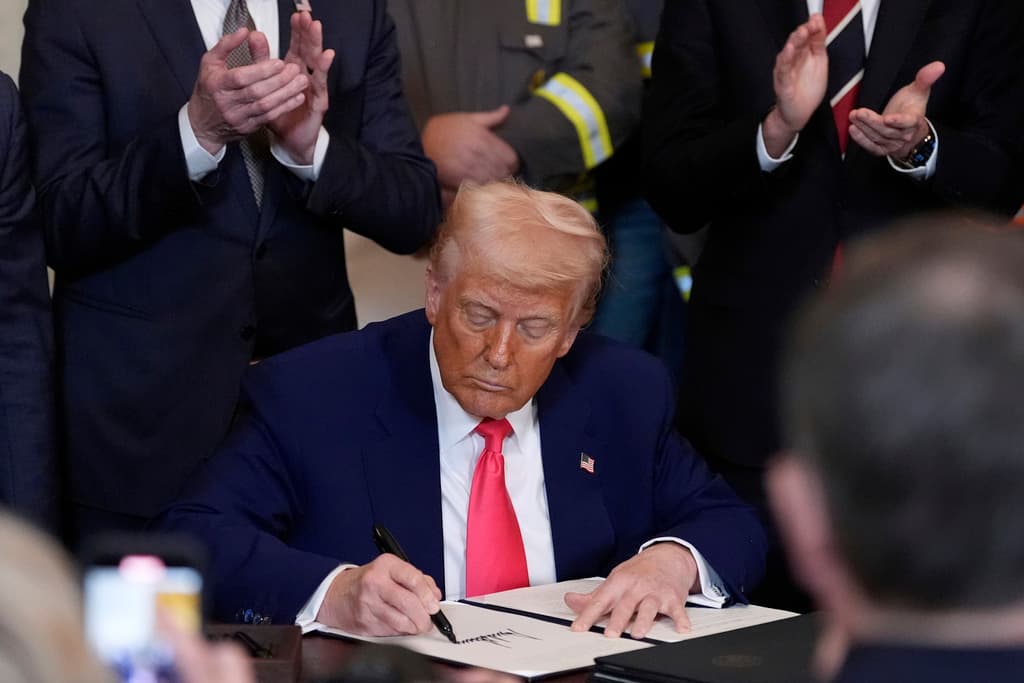
As a matter of politics, too, this case, V.O.S. Selections, Inc. v. United States, is no less freighted in light of Mr. Trump making tariffs a keystone of his economic policy and his agenda of industrial renewal. In that sense, the high court’s action on the tariff dispute — including the question, which is not certain, of whether the Nine will take the case at all — could prove a make or break moment for Mr. Trump’s presidency.
Friday’s ruling by the United States Court of Appeals for the Federal Circuit was, to a degree, unsurprising. Of 11 judges on the panel that in July heard arguments in the case, eight had been nominated by Democrats. The questioning from the bench was skeptical toward the president’s power over the levies. The ruling handed down by the court reflected the views of a majority of seven, but a dissent by four judges could give Mr. Trump some solace.
The divided decision reflects the fact that, as a matter of law, the tariff dispute is, in the words of Harvard Law’s Jack Goldsmith, “hard and close.” Even some conservative legal scholars, in what the Times described as a “fiery brief,” have raised doubts about whether the constitution grants the president on his own the power to set tariffs. They are, after all, a tax. The enumerated power to lay and collect tariffs rests with the Congress.
That point rests front and center in the federal circuit’s majority opinion in V.O.S. Selections. “Tariffs are a tax, and the Framers of the Constitution expressly contemplated the exclusive grant of taxing power to the legislative branch,” the majority writes. They reach back to the debate in Virginia over whether to ratify the Constitution. It was Patrick Henry, they say, who raised the fear that the parchment meant the president “may easily become king.”
Not so, James Madison averred, in the majority’s telling. He assured Henry — of “give me liberty or give me death” fame — that the president’s powers were circumscribed by a critical limitation. The power of “the purse is in the hands of the representatives of the people,” Madison said. In other words, the federal government’s most potentially oppressive authority, that of levying taxes and spending money, were delegated to the Congress.
On this head, though, Congress in the 20th century ceded much of its constitutionally-granted power to the president. Mr. Trump finds in a 1977 law, the International Emergency Economic Powers Act, the authority to set levies. The law does grant the president power, in an emergency, to “regulate” trade. Yet the statute does not deploy the noun “tariff.” This, the appellate majority says, suggests that Congress did not mean to give the president this authority.
Yet the dissenters are not without their points. They emphasize the “emergency” aspect of the 1977 law, pointing to Mr. Trump’s concerns over trade deficits as an “unusual and extraordinary threat, having foreign sources, to the national security or foreign policy or economy of the United States.” They call the law an “eyes-open congressional grant of broad emergency authority in this foreign-affairs realm.”
The dissenters aver, too, that “the strong principles of deference in the foreign-affairs area” — a theme likely to catch the attention of the Supreme Court — as well as the “broad interpretation and permissible greater leeway of delegation” all have “constitutional foundations.” In light of the high court’s track record of discerning the constitutional underpinnings behind Mr. Trump’s policy, one can envision this case proving, indeed, “hard and close.”