
A New Version of Ibsen’s ‘The Wild Duck,’ After an Acclaimed Run at London Two Decades Ago, Finally Makes It to Brooklyn
This staging, co-produced by Theatre for a New Audience, underlines both the tragic foundation and the comic flourishes in ‘Duck,’ which dramatist David Eldridge has mined with an emphasis on clarity and accessibility.
Is honesty an overrated virtue? It’s a bold question, but Henrik Ibsen was not one to worry too much about ruffling feathers, and while the great Norwegian playwright could powerfully document the wages of hypocrisy and deceit, one of his most harrowing works considers the dangers of pursuing the truth at any cost.
“The Wild Duck,” published in 1884, isn’t one of Ibsen’s more frequently staged plays; it was last produced on Broadway in 1967. Two decades ago, though, a new version by a British dramatist and screenwriter, David Eldridge, was produced to acclaim at London; now it arrives on our shores, in a new production helmed by the artistic director of the Washington, D.C.-based Shakespeare Theatre Company, Simon Godwin.
This staging, which is co-produced by Theatre for a New Audience and makes its premiere at that company’s Brooklyn home, underlines both the tragic foundation and the comic flourishes in “Duck,” which Mr. Eldridge has mined with an emphasis on clarity and accessibility.
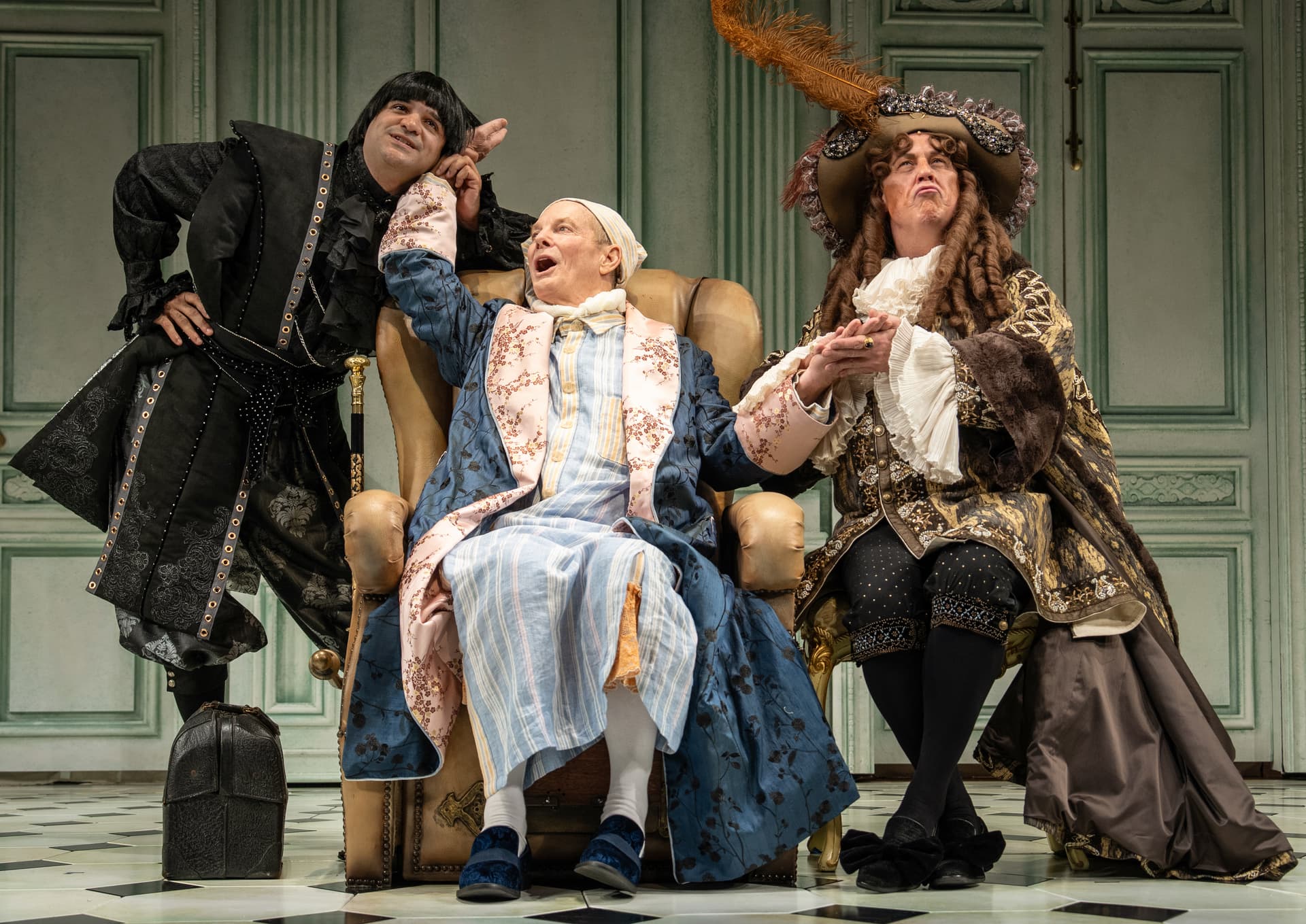
The first of the play’s five acts, presented with an intermission between the third and fourth, almost suggests a drawing room comedy, with performers in handsome period costumes (by Heather C. Freedman) bantering at a dinner party. The host is Håkon Werle, a wealthy merchant and widower whose son, Gregers, has returned home after a period of estrangement; also present is Gregers’s old buddy, Hjalmar Ekdal, the son of Håkon’s former business partner.

Hjalmar’s father, Old Ekdal, also turns up unexpectedly, a grizzled shell of a man; we learn that Håkon has been supporting him since a scandal related to their partnership landed him in prison. Hjalmar, too, has benefited from Håkon’s seeming generosity: The older Werle set him up with a photography studio and a wife, Gina, who had been one of Håkon’s servants.
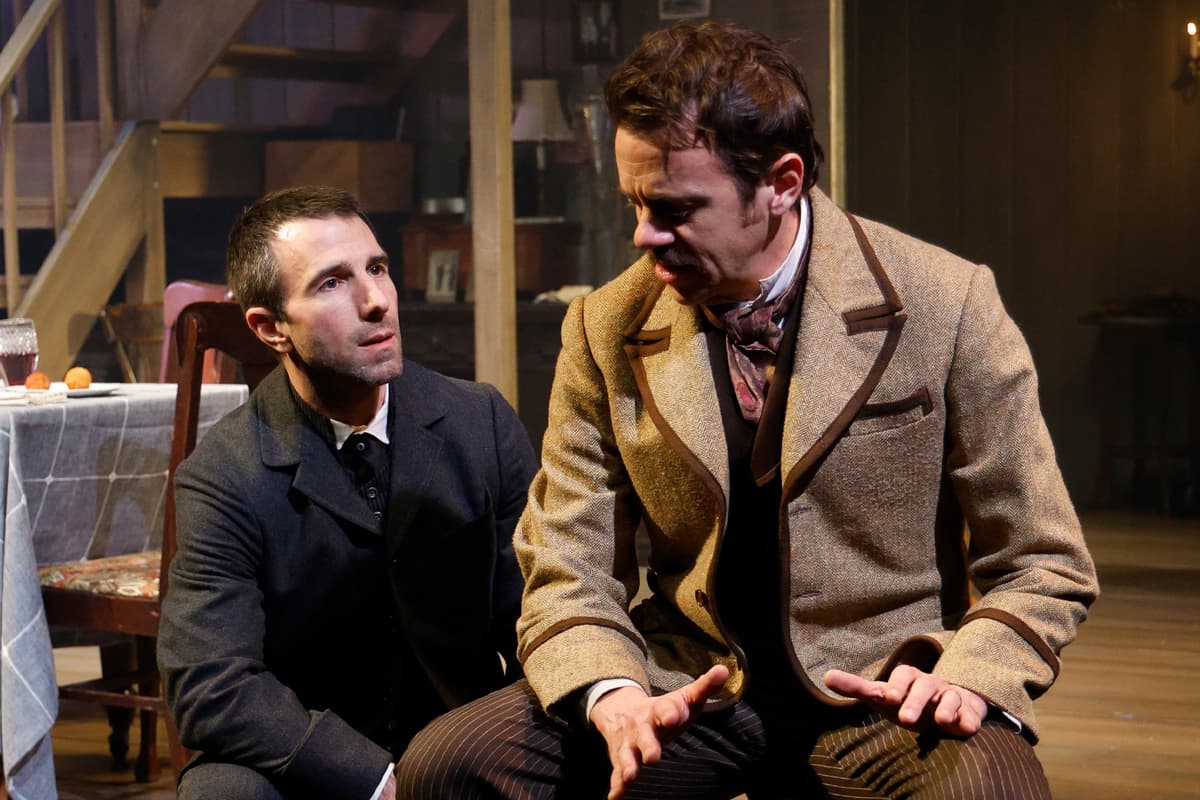
Hjalmar nonetheless resents Håkon, though not as bitterly, at first, as Gregers, who has arrived with a mission: to strip his old friend of his delusions about the relatively comfortable life he’s been afforded. In the following acts, Gregers — played here with chilling poise and discretion by Alexander Hurt — meticulously plots what he intends to be Hjalmar’s enlightenment, and in the process threatens to destroy not only his marriage but his relationship with the daughter, Hedvig, he’s raising with Gina.
Hedvig is about to turn 15 as the play unfolds, but her vision, like both Old Ekdal’s and Håkon’s, is already failing — a point that is both symbolic and relevant to the plot. Played with a charming and ultimately heartbreaking girlishness by Maaike Laanstra-Corn, she seems even younger than her age, particularly when expressing her adoration for her father and for the titular duck, a wounded animal — also highly symbolic — that the Ekdals keep in their attic.
In a lovely exchange, Gregers and Hedvig discuss the creature and seem to form a bond. It becomes plain, however, that while the girl’s earnestness is rooted in her youth and the sheltered life her parents have provided, Gregers’s “claim of the ideal,” as other characters refer to it, derives from privilege, as well as a lack of practical engagement with the world, more by choice.
Hjalmar, too, has been more coddled than he realizes; in dialogue that can prove as humorous as it is revealing, he speaks of how busy and pressured he is, and alludes to some grand invention he’s planning, though he never seems to get anything done. Nick Westrate’s wry performance stresses the haplessness and entitlement that make him a perfect target for Gregers’s machinations.
Gina is, in contrast, a paragon of pragmatism; Melanie Field’s crisp, sturdy portrait highlights both her essential goodness and her instinctual distrust, and eventual loathing, of Gregers. David Patrick Kelly, the duly beloved stage and screen veteran, lends predictable poignance and wit to the role of Old Ekdal. (Robert Stanton’s Håkon, by comparison, seems a little stiff, if appropriately stuffy.)
Matthew Saldívar, another accomplished trouper, is equally sharp as Relling, an apparently dissolute but world-wise doctor who emerges as Gregers’s most pointed foil, diagnosing the intruder with “chronic righteousness.” Asked at one point what he would suggest for Hjalmar’s malaise, Relling responds, “What I usually prescribe my patients — the life lie.”
The doctor warns, “If you take the life lie from an ordinary man then you take away his happiness as well.” Ibsen wasn’t encouraging his audiences to be fantasists; “The Wild Duck” is rather a plea for common sense and empathy, and a testament to the forward-thinking realism and deep humanism that make his plays so enduring.