A Texas Father Could Soon Be Executed Based on the Questionable Science Surrounding ‘Shaken Baby Syndrome’

The National Registry of Exonerations lists 34 people in 18 states who have had shaken baby convictions overturned, raising concerns that junk science could be leading to wrongful accusations.

Bruno Vincent/Getty Images
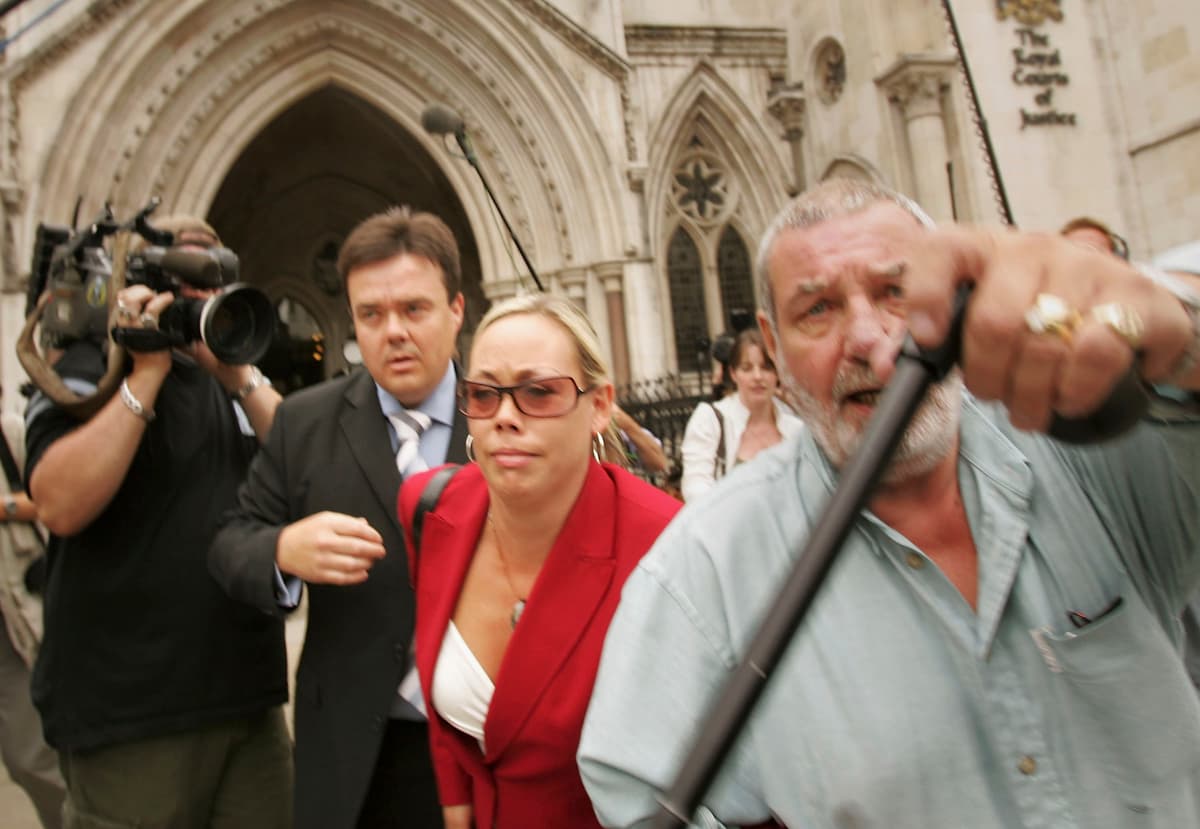
A man exonerated of shaken baby charges, Raymond Rock, and his ex-wife, Lisa Davies, leave the Royal Courts of Justice, on July 21, 2005 at London. Bruno Vincent/Getty Images

Chelsea F.’s baby, Teddy (both pseudonyms used at the family’s request), was born with serious genetic problems — heart defects, breathing issues and brain abnormalities. Yet when Chelsea rushed the 5-month-old to a Texas emergency room in January after he developed a fever, seizures, vomiting and what was later determined to be a brain bleed, the doctor on call didn’t see a fragile infant with complex medical needs.

She accused Chelsea and her husband of child abuse.

The hospital’s child abuse pediatrician accused Chelsea and her husband of shaking their baby. The diagnosis, now labeled abusive head trauma, is the rebranded form of “shaken baby syndrome,” a theory increasingly understood as junk science. (The National Registry of Exonerations lists 34 people in 18 states who have had shaken baby convictions overturned.)

The child abuse pediatrician acknowledged baby Teddy’s extensive health problems but claimed she could not rule out trauma, even though Teddy showed no bruises or neck injuries — signs you would expect if a baby had been violently shaken.

Child abuse pediatricians are a relatively new phenomenon, but they are embedded in children’s hospitals across the country. Usually paid by the state, child abuse pediatricians work closely with police and child protective services to decide if a child’s injury or illness is due to abuse. Parents often mistake them for part of their child’s care team, unaware that they may also be gathering evidence.

Because of the accusation, Teddy was taken from his parents and placed in foster care. His parents were allowed to see him for only two hours a week. Their two older children were also removed by the Department of Family and Protective Services — placed with a relative but still only accessible to their parents during supervised visits.

Attorney Bradley Scalise (who also represented the family in the high-profile Boatright child abuse case) took on their defense. He was alarmed to see shaken baby allegations still so common, despite the American Academy of Pediatrics noting in its analysis of Abusive Head Trauma that the classic triad of symptoms — brain bleed, hemorrhaging behind the eyes, swelling — may be present without a baby being shaken. “Medical diseases that can mimic the findings commonly seen in AHT are increasingly recognized,” according to the pediatrics academy.

Minor falls, viral illnesses or medical conditions causing seizures can produce similar symptoms of abusive head trauma. Teddy, medically fragile from birth, had several risk factors. “The underlying medical issues seemed to be completely ignored,” Scalise told me. He also noted that the baby had hemorrhaging behind only one eye: “How do you shake just one eye?”

The district attorney pressed ahead anyway, even threatening to bump the case up to “aggravated circumstances.” This is done when parents’ behavior is deemed so heinous that the courts are allowed to speed up the process of terminating their rights. While Mr. Scalise assembled independent medical experts, Chelsea and her husband complied with every demand of Department of Family and Protective Services, including attending parenting classes and undergoing psychological evaluations by a private psychologist rather than the state’s, as allowed by Texas law.

Six months after Teddy was seized — half of his short life — the family finally faced a permanency hearing: Would they get to keep their kids?

The judge swiftly ordered all three children returned home.

A Department of Family and Protective Services spokeswoman, Tiffani Butler, said the department could not discuss the case. Yet Mr. Scalise remains concerned about other shaken baby cases — including that of Robert Roberson, who has been on death row since 2003 after being convicted of allegedly shaking his chronically ill 2-year-old daughter to death, based on the same “triad” of symptoms.

As C.J. Ciaramella reported in Reason earlier this year, even the Texas legislature has stepped in, expressing “major, bipartisan doubts about the integrity of the death penalty” in Roberson’s case. His execution is currently set for October 16.

Bipartisan doubts be damned.

Creators.com


The New York Sun

© 2025 The New York Sun Company, LLC. All rights reserved.

Use of this site constitutes acceptance of our Terms of Use and Privacy Policy. The material on this site is protected by copyright law and may not be reproduced, distributed, transmitted, cached or otherwise used.

The New York Sun

Sign in or  create a free account

or
By continuing you agree to our Privacy Policy and Terms of Use