

Actor Matthew Broderick Pulls Out Some Old Tricks for New Production of ‘Tartuffe’
Under Sarah Benson’s rather hapless direction, Broderick leans into that wide-eyed, winking affect he has brought, with varying degrees of irony, to numerous other performances.
In the 1980s, Matthew Broderick became a movie star playing clever teenagers in films like “WarGames” and “Ferris Bueller’s Day Off,” but he’s portrayed naifs and goofballs in many of his stage and screen roles — or at least, they’ve come across that way in his work.
Over the past decade, the likable but limited actor seems to have made a particular effort to take on more calculating and even sinister characters, from a controlling, creepy husband in the film “Manchester by the Sea” to Satan himself (in human form) in Irish Repertory Theatre’s 2018 revival of Conor McPherson’s “The Seafarer.”
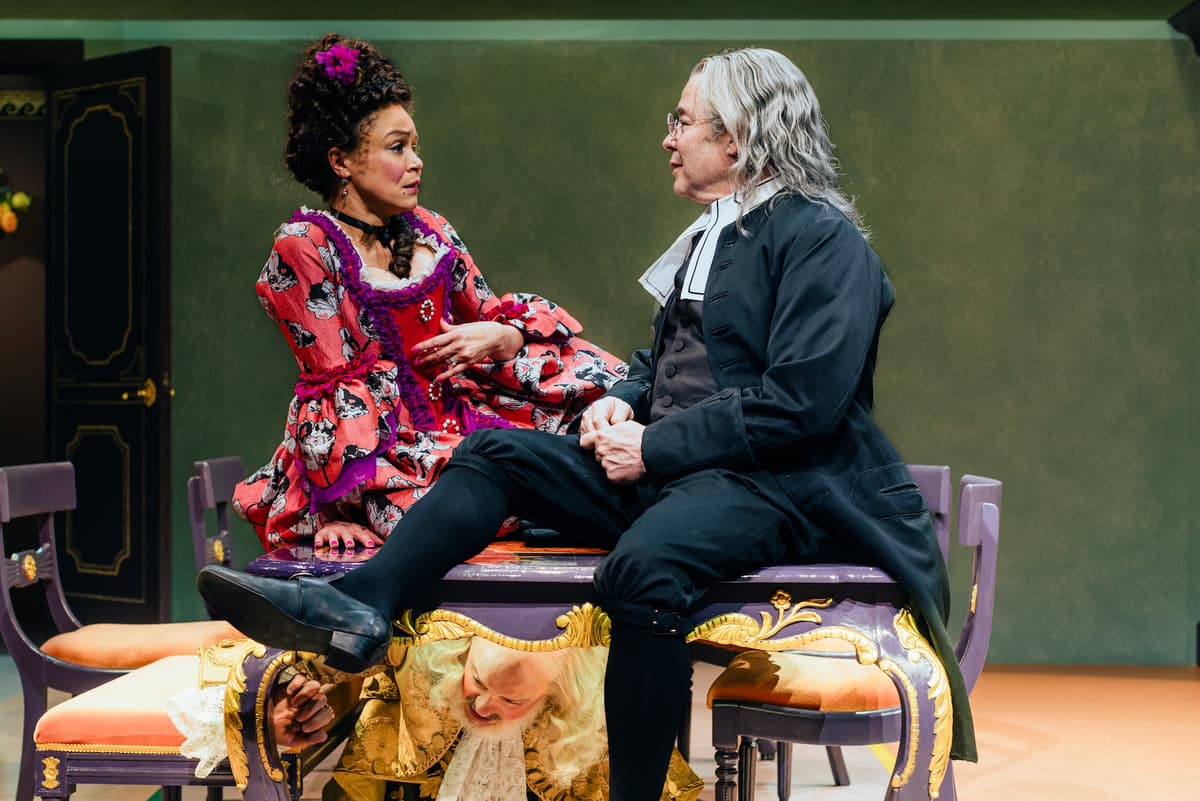
So it’s not surprising that in New York Theatre Workshop’s new production of “Tartuffe,” Mr. Broderick is cast in the title part: a scheming fraud — Molière published his play, in French, as “Tartuffe; ou, I’imposteur” — who adopts a veneer of piety to insinuate himself into the life and fortune of a well-off but credulous landowner. That gullible fellow, named Orgon, would seem like a more natural fit for the star.
Instead, under Sarah Benson’s rather hapless direction, Mr. Broderick leans into that wide-eyed, winking affect he has brought, with varying degrees of irony, to numerous other performances. The result is that however pronounced the irony is in this case, Tartuffe and Orgon, played by David Cross — an actor, writer, and comedian who has won wider recognition for his work on television, including the acclaimed “Arrested Development” — can come across as equally dopey.
That dulls the potency, to put it mildly, of Molière’s initially controversial, now long-beloved satire of religious and social hypocrisy, presented here in a new version by Lucas Hnath, who has addressed related concerns in some of his plays. Mr. Hnath’s script is pocked with profanity, some of it distinctly contemporary: At one point, Orgon’s daughter’s maid declares him a fool, except the term she actually uses combines “dip” with a four-letter word rhyming with “hit.”

In revisiting the rhyming couplets in which the comedy was written, the latter-day playwright also comes up with such doozies as, “I’ve had so much success and I’ve made lots of money, but how I got it left me feeling pretty scummy,” and, when Orgon recalls first encountering Tartuffe, “I followed him right out into the street — I called out, ‘Hey you, I think you’re neat!’”
There are, nonetheless, some winning performances from the undeniably impressive collection of troupers Ms. Benson has recruited. Bianca Del Rio, who became famous as a champion on “RuPaul’s Drag Race,” proves enormously entertaining as a preening Madame Pernelle, Orgon’s mother and the only family member who shares his faith in and adoration of Tartuffe; one wishes she had more time onstage.
Lisa Kron is pleasingly prickly as the maid, Dorine, and Amber Gray brings a sharp wit and understated warmth to Elmire, Orgon’s second wife and the object of Tartuffe’s lust, while looking sumptuous in Enver Chakartash’s fanciful period costuming. Francis Jue, fresh off his Tony Award win for last season’s production of “Yellow Face,” lends the right unfussy integrity to Elmire’s brother, Cleante, a foil to both Tartuffe and Orgon in representing morality and reason.
Emily Davis is a tad cutesy as Orgon’s daughter, Mariane, but Ikechukwu Ufomadu is delightfully droll as her fiancé, Valère, and in few smaller roles that add charm to this production just as it’s wrapping up. Unfortunately, his efforts and those of his castmates can’t save this “Tartuffe” from its own misguidedness.