Brazilian Thriller ‘The Secret Agent’ Is Outed as One of the Year’s Best Films

The film is a celebration of a people and culture, a memory piece of a bygone era, a valentine to the movies, a deconstructed drama, and an encapsulated history lesson.
Via NEON
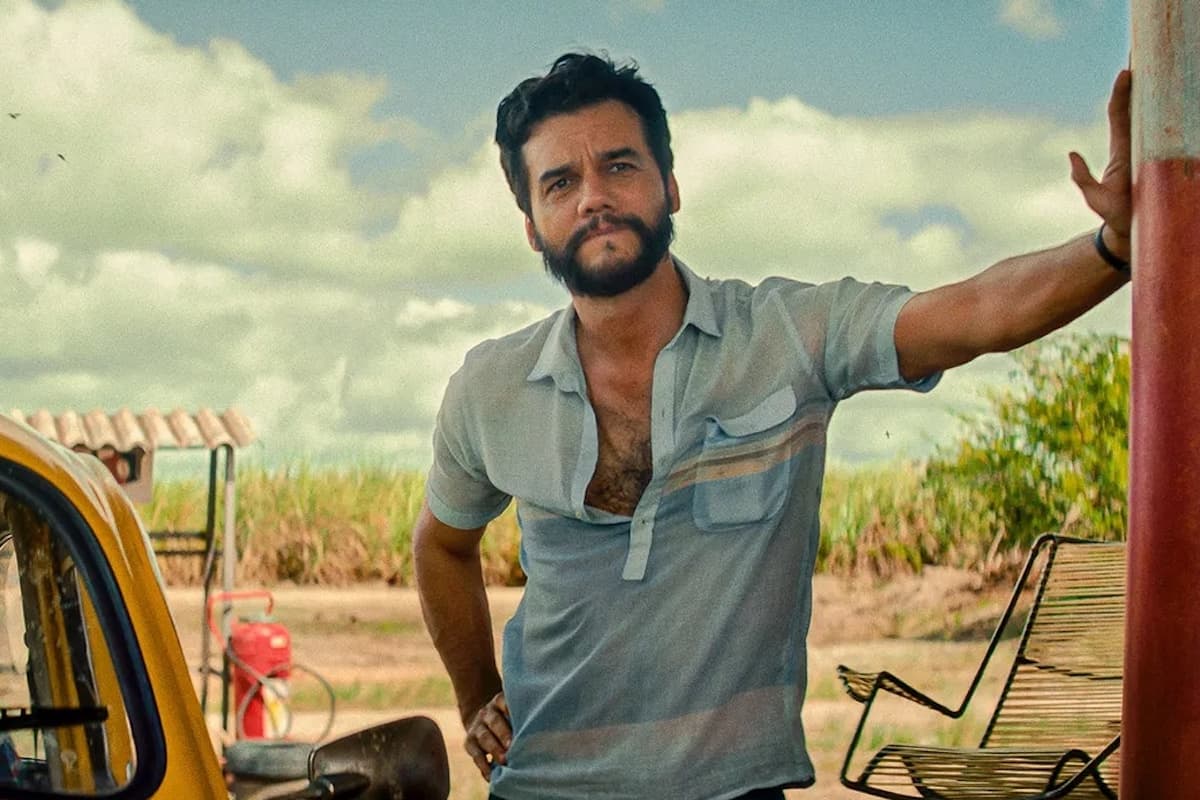
Wagner Moura in ’The Secret Agent.’ Via NEON

The protagonist of the outstanding new Brazilian film “The Secret Agent” is not an agent exactly, like those featured in the namesake Joseph Conrad novel and Hitchcock movie, though he is in hiding. Having run afoul of a powerful businessman/bureaucrat during the country’s military dictatorship, our hero goes by the name of Marcelo despite Armando being his real name. 

A decent, apolitical man in fear for his life, Armando returns to his hometown of Recife, one of the nation’s biggest northern cities, to lay low for a while and reunite with his young son. Yet crime, corruption, and absurdity lie everywhere in the Brazil of 1977, like the dead body left to decay for days in the film’s first scene, and eventually they rise to the level of perversity and tragedy. 

While basically a thriller, the film is also so much more: a celebration of a people and culture, a memory piece of a bygone era, a valentine to the movies, a deconstructed drama, and an encapsulated history lesson. It works on so many levels and does so with such style and skill that it elevates director Kleber Mendonça Filho, a former critic, to the top rank of contemporary filmmakers. 

His winning of the Best Director award at this year’s Cannes Film Festival only solidified the opinion that Mr. Filho possesses rare talent for melding drama, sensuality, politics, escapism, horror, and humor to create vibrant, essential cinema.

Maria Fernanda Cândido in ’The Secret Agent.’ Via NEON

Another honor bestowed on the film at the festival was Wagner Moura’s Best Actor award for his portrayal of Armando/Marcelo. A Brazilian actor primarily known to American audiences for his roles in the Netflix series “Narcos” and the feature “Civil War,” Mr. Moura embodies both an everyday man and a courageous moral citizen in a time of great unease. Throughout, as the character encounters blatant corruption, intimidation, or licentiousness, the actor’s expressions amuse viewers with their subtle irony and worry us with their sad-eyed caution. 

Armando is no heroic operative, just a scientist who clashed with big business, lost his wife under suspicious circumstances, and is looking to live with his son in peace and security. With his good looks, deep voice, and warm demeanor, Mr. Moura invests Armando with such instant appeal and gives such a lowkey yet complex performance that he’s likely to be recognized by American film institutions as well.

Besides Mr. Moura’s handsome mug, the film contains a myriad of attractive, arresting, distinctive, and/or fascinating faces — a veritable portrait gallery of Brazil’s ethnic and racial diversity. There’s Tânia Maria as Dona Sebastiana, the charming septuagenarian who hosts/hides several political refugees and persecuted individuals, including Armando; Carlos Francisco as Sr. Alexandre, Armando’s loveable, fearful father-in-law; and Maria Fernanda Cândido as Elza, the ravishing and real secret agent who alerts Armando of contract killers out to murder him.

These hitmen are father-and-son team Augusto and Bobbi (Roney Villela and Gabriel Leone, respectively), and Mr. Filho also explores other paternal bonds, such as that of the corrupt, moronic, negligent chief of police, Euclides (Robério Diógenes), with his two sons, Sergio and Arlindo (Igor de Araújo and Italo Martins). Father-son relationships directly relate to the director’s inquiry into the effects of violence and authoritarianism. 

Each of these striking actors and others are afforded memorable moments or striking scenes. Indeed, the film is filled with absorbing scenes, such as when Euclides and sons “investigate” a human leg found in the body of a dead shark, or when said leg later attacks gay men in a park at night in a horror parody set piece. References to “Jaws,” other contemporaneous films, and newspaper articles illustrate how movies and media can magnify or distract from pressing sociopolitical issues. 

Mr. Filho hews to basic screenwriting’s three-act structure via three chapters, though the adroit director includes non-sequiturs and side stories to elaborate on his colorful characters and setting. A crucial flashback in which we see Armando’s wife, Fátima (the stunning Alice Carvalho), recounts how Armando came to be in mortal danger. This sequence is followed by our hero, back in 1977, walking into a crowded street as revelers party during Carnival, with the frenzy offering the character both anonymity and frightening chaos. 

A soundtrack of fantastic songs, many of them Brazilian, and a potent score enhance the alluring viewing experience. Ace work from Russian cinematographer Evgenia Alexandrova adds gorgeous widescreen framing and smoothly shifting camerawork, aligning the film with its stylistic antecedents. 

At about the third act, the plot both coagulates around its murder-for-hire storyline and thins out during a touching scene amongst dissidents. Yet after a gripping climactic sequence, an intriguing flashforward that had appeared intermittently throughout eventually takes over. 

This present-day passage is so masterful in how it reveals narrative information and reinforces metaphorical allusions — while addressing the limits of cinema and the erasure of history — that it may well be studied by film students and budding filmmakers for years to come. That it also provides the drama with a satisfying, if sad, conclusion for cineastes and casual viewers alike only proves Mr. Filho’s achievement.  

A masterpiece all around, and with a star-making performance by Mr. Moura, “The Secret Agent,” for me, is the best film of the year so far and a must-see.


The New York Sun

© 2025 The New York Sun Company, LLC. All rights reserved.

Use of this site constitutes acceptance of our Terms of Use and Privacy Policy. The material on this site is protected by copyright law and may not be reproduced, distributed, transmitted, cached or otherwise used.

The New York Sun

Sign in or  create a free account

or
By continuing you agree to our Privacy Policy and Terms of Use