California Legislators Nearing Approval of New Fees for Grocery Stores That Recover Stolen Shopping Carts

The senate has already passed legislation that would allow cities to impose fees if police recover stolen property.

Mario Tama/Getty Images
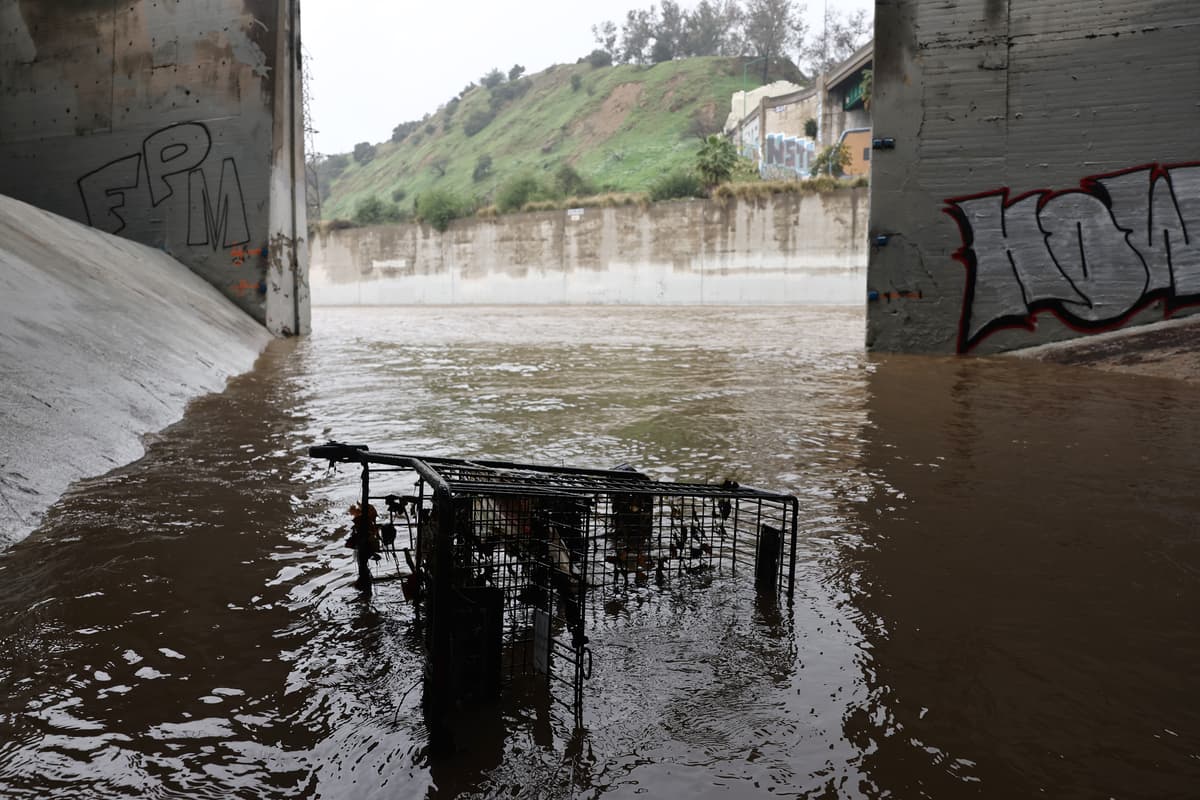
FILE: A shopping cart sits in an overflow area of the Los Angeles River, swollen by storm runoff, on February 19, 2024, at Los Angeles, California. Mario Tama/Getty Images

Imagine having your laptop stolen and recovered by the police only to have them charge you a return fee when they drop it off or you go to pick it up from the station. 

That’s the comparison California grocers are giving to a bill about to go to the California assembly that would allow cities to charge a recovery fee to stores for every cart that is stolen and returned. 

Sponsored by California’s 15th district senator, Dave Cortese, who represents Silicon Valley, the bill would streamline existing law to permit counties and municipalities to deliver the abandoned carts back to the stores or impound the carts for pickup. Cities could set a fee for costs related to their retrieval and return not to exceed $500 per cart and impose a fine of up to $150 if carts are not picked up from impoundment within three days.

Aiming to streamline a persistent problem, the bill would amend existing law that requires jurisdictions to hold the carts for at least three days in impound lots before the owner can come pay the fine and pick them up.

The legislation, which also declares it illegal to remove a cart from the premises of its designated owner, has already passed the California senate. A key assembly committee approved it last week. 

“Abandoned shopping carts are more than just an eyesore, they create safety hazards, block sidewalks, pollute our creeks, and cost cities time and taxpayer money to clean up,” Mr. Cortese said in a statement following the committee vote. 

More than 150 cities in California currently have abandoned cart policies, including the city of San Jose, which has a combined homelessness and budget problem. It is leading the push for the statewide legislation even as it works on its own city model. Last year, San Jose reportedly retrieved more than 2,000 abandoned carts and issued 166 citations that generated $39,000 in revenue from grocers. 

In May, the city proceeded with a pilot program for a new cart retrieval system, hiring Retail Marketing Services to identify a new mechanism for reporting and returning carts. The city’s ordinances already call for store owners to install theft-prevention devices and signage that displays ownership and addresses on the carts. The city council will review the pilot program when it meets in September.

The California Grocers Association supports efforts to return abandoned carts. However it expressed doubt that this type of legislation is the answer when the state is also looking for ways to bring down food costs.

“#caleg leaders have rightly called for focus on affordability, yet #SB753 by @DaveCortese would do the exact opposite. Ask him why you should pay higher grocery prices so cities can sell stolen shopping carts back to grocery stores?” the group said in a post.

The grocers association also said it doesn’t believe the majority of thefts is by the homeless population, contending that most homeless take a cart and keep it, not abandon it. 

While San Jose’s mayor, Matt Mahan, has addressed the blight created by carts, he added that the problem is also environmental, as carts pollute storm drains and the water supply. 

“Nearly every week, I stand shoulder to shoulder with residents pulling shopping carts out of our waterways — it’s clear something needs to change,” Mr. Mahan said. SB 753 is “a step toward safer streets, cleaner creeks, and a more responsive government.”


The New York Sun

© 2025 The New York Sun Company, LLC. All rights reserved.

Use of this site constitutes acceptance of our Terms of Use and Privacy Policy. The material on this site is protected by copyright law and may not be reproduced, distributed, transmitted, cached or otherwise used.

The New York Sun

Sign in or  create a free account

or
By continuing you agree to our Privacy Policy and Terms of Use