Confetti and Controversy: NBA Cup Faces Growing Human Rights Firestorm Over Ties to Middle East Airline

‘It hides the suffering of millions of Sudanese people behind a trophy,’ one NGO says.
Ethan Miller/Getty Images
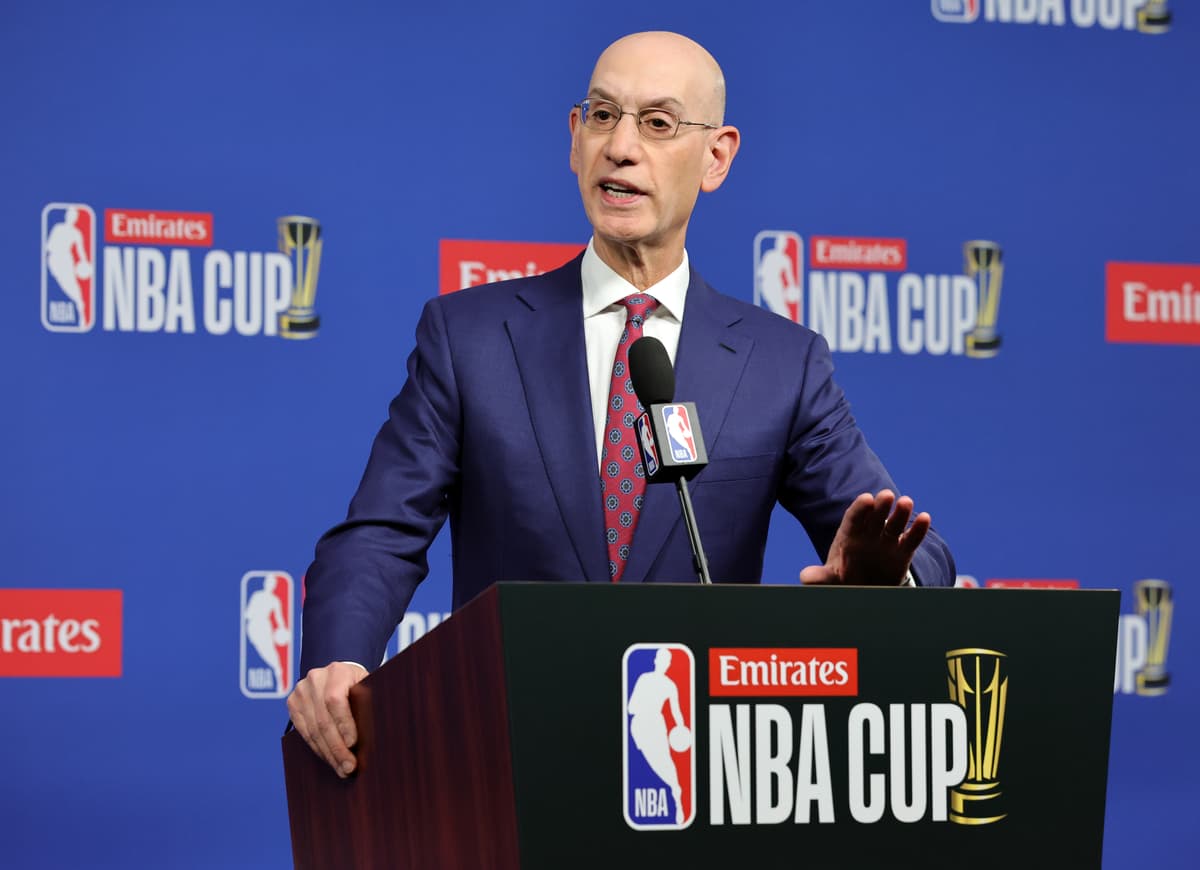
NBA Commissioner Adam Silver speaks before the championship game of the Emirates NBA Cup. Ethan Miller/Getty Images

As confetti fell from the rafters of T-Mobile Arena in Las Vegas Tuesday night, the New York Knicks celebrated defeating the San Antonio Spurs to win the Emirates NBA Cup, a tournament inaugurated three years ago to create some in-season intrigue and award $530,933 to each member of the winning team.

Ratings are up, and so is interest. Yet, the NBA Cup is coming under scrutiny not for something on the court, but everything to do with war politics and the moral cost of doing business globally.

Multiple human rights organizations are intensifying pressure on the NBA to sever its partnership with Emirates, a Dubai government-owned airline. Human rights advocates staged a protest outside T-Mobile Arena before the NBA Cup Finals, accusing the United Arab Emirates of using the NBA’s platform in the United States and globally to enhance its image while allegedly enabling atrocities in Sudan’s brutal civil war. It’s a clear case of “sports washing,” critics say.

“This partnership is not innocent,” read a petition posted by Speak Out on Sudan. Supported by 14 organizations, the petition accuses the NBA of “letting itself be used as a pawn to distract people from what the UAE is doing in the world. It hides the suffering of millions of Sudanese people behind a trophy.”

The human rights group alleges that UAE is directly supplying arms, cash and diplomatic cover to the Sudan’s paramilitary Rapid Support Forces or RSF, which has been accused by the United States and international human rights group of crimes against humanity and genocide.

Sudan’s conflict, now approaching its third year, has displaced more than 12 million people and killed an estimated 150,000, many of them civilians.,

Though a United Nations Security Council expert panel described the accusations as credible, UAE has said the warring parties, the Sudanese Armed Forces and the RSF are responsible for  “atrocities committed against civilians and for blocking humanitarian access.” The UAE affirmed its humanitarian contributions are second only to the United States in terms of aid deliveries to Sudan.

The NBA has defended the partnership as part of its broader international mission. In a letter to Refugees International last year, Deputy Commissioner Mark Tatum wrote the partnership was “consistent with the NBA’s mission to inspire and connect people everywhere through the game of basketball.”

In addition to being the title sponsor for the NBA Cup, the agreement announced in February 2024 makes Emirates the league’s official global airline partner. Emirates’ logo also appears on the jerseys of NBA, WNBA, and G League referees. The company’s branding is on special tournament courts and displayed virtually during nationally televised games. The advertising revenue could be worth $500 million, according to reports.

“The UAE wants to project a modern image — vibrant, cultured, globally engaged,” Jeremy Konyndyk, president of Refugees International, said. “They invest heavily in sports, arts and entertainment to curate the brand. At the same time, they are enabling and fueling horrific mass atrocities in Sudan. That contradiction has a real Jekyll-and-Hyde quality.”

The NBA has been vocal on social justice issues in the United States but continues to distance itself from Emirates’ alleged links to the atrocities in Sudan. Activists say the league cannot credibly separate its commercial decisions from the humanitarian consequences abroad.

A legal advisor at the Raoul Wallenberg Center for Human Rights, Mutasim Ali, is appealing to the court of public opinion to raise awareness. “The players should be concerned,” he said. “The fans should be concerned. When the NBA elevates the UAE brand as a symbol of excellence and victory, it is polishing and protecting a global image that does not reflect reality on the ground in Sudan.”

The activists are determined to be heard. As the NBA expands its global footprint, including plans for regular-season games in Europe and perhaps establishing a new league on the continent, it could be forced to decide what values it is willing to trade for access, money and influence.


The New York Sun

© 2025 The New York Sun Company, LLC. All rights reserved.

Use of this site constitutes acceptance of our Terms of Use and Privacy Policy. The material on this site is protected by copyright law and may not be reproduced, distributed, transmitted, cached or otherwise used.

The New York Sun

Sign in or  create a free account

or
By continuing you agree to our Privacy Policy and Terms of Use