Corporation for Public Broadcasting Is Shutting Down After Congress Ends Federal Funding Due to Liberal Bias at NPR, PBS

The corporation says it ‘remains committed to fulfilling its fiduciary responsibilities and supporting our partners through this transition with transparency and care.’

Zach Gibson/Getty Images
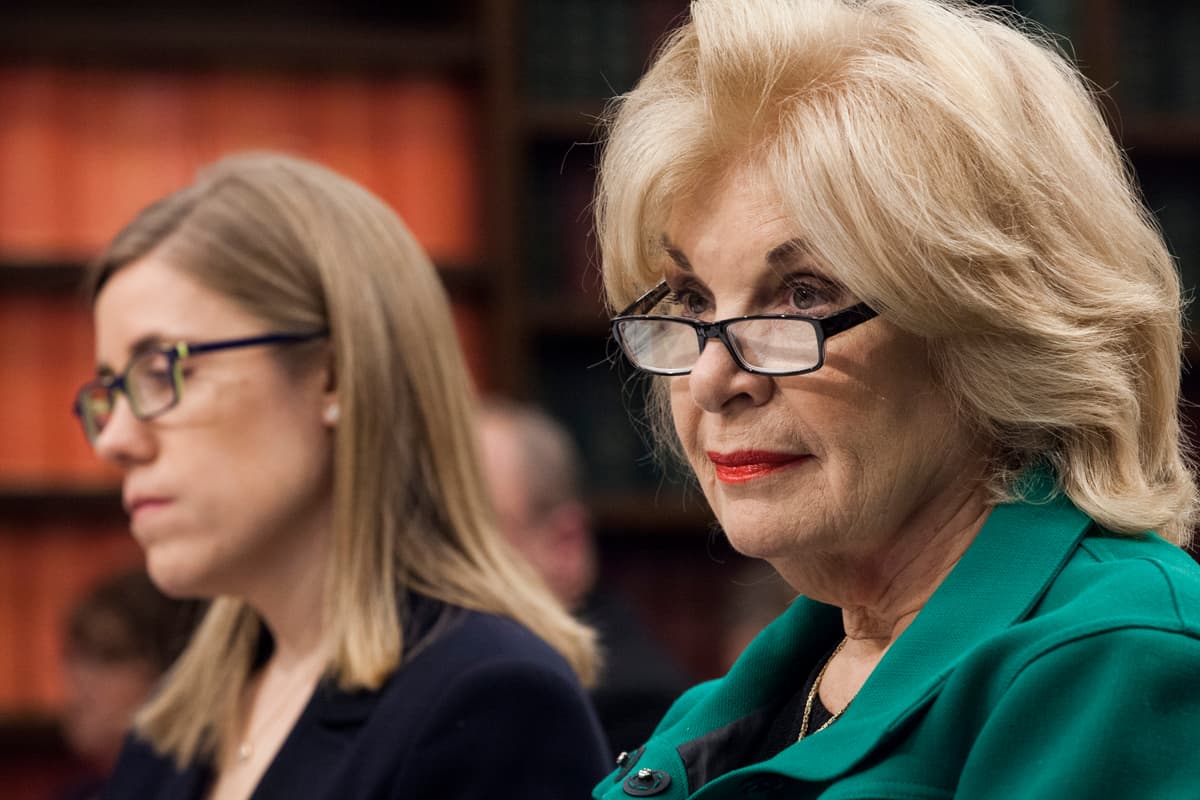
Patricia de Stacy Harrison (R), president and CEO of the Corporation for Public Broadcasting (CPB). Zach Gibson/Getty Images

The Corporation for Public Broadcasting says it will be shutting down after nearly six decades of doling out federal funds to public broadcasters, following Congress’s vote to end its annual federal funding of about $1.1 billion. 

In a statement on Friday, the president of the CPB, Patricia Harrison, said, “Despite the extraordinary efforts of millions of Americans who called, wrote, and petitioned Congress to preserve federal funding for CPB, we now face the difficult reality of closing our operations. CPB remains committed to fulfilling its fiduciary responsibilities and supporting our partners through this transition with transparency and care.”

“Public media has been one of the most trusted institutions in American life, providing educational opportunity, emergency alerts, civil discourse, and cultural connection to every corner of the country. We are deeply grateful to our partners across the system for their resilience, leadership, and unwavering dedication to serving the American people,” Ms. Harrison said. 

Republicans had been trying for decades to end federal funding for public broadcasting due to persistent allegations of liberal and anti-Israel bias by the national news operations at NPR and, to a lesser extent, PBS. Every budget cycle, however, public broadcasting would survive, largely due to voter affection for their local public television and radio stations.  But this year, with the Trump administration and its congressional allies determined to break some of the most powerful liberal institutions, the defunding effort finally succeeded. 

Republicans were helped in their effort by the CPB board’s decision last year to hire Katherine Maher as NPR’s new CEO, despite her history of racist, anti-Trump, and far-left comments on social media (she had written that “America is addicted to white supremacy” and that President Trump was “a deranged racist” and “a fascist”). Throughout the funding debate this summer, Ms. Maher remained unrepentant and in media interviews, denied that NPR was biased.

On Friday, the CPB told most of its roughly 100 employees that their jobs would end on September 30. A transition team will continue operating through January 2026.

The corporation says it will “focus on compliance, final distributions, and resolution of long-term financial obligations.”

Last month, Congress passed a rescission package, a key part of which was ending funding for public broadcasting. 

The rescission impacts federal funding allocated for the next two fiscal years. This week, Republican senators advanced a bill that does not include federal funding for public media. 

After the rescission package passed, the CPB’s board members met for an emotional virtual meeting that featured a quote from Shakespeare and from the movie “Master and Commander” as they insisted they would carry on their mission while they figured out how to move forward. 

“With apologies to Shakespeare and King Henry V, whose ragtag army was outnumbered by the French at the Battle of Agincourt, but won despite those odds,” Ms. Harrison said. “King Henry said, sort of, after winning the battle, ‘And those now against us shall think themselves accursed they were not here. And hold their honor cheap when any speaks that fought with us upon Saint Crispin’s Day.’”

Ms. Harrison said, “Aim for that win for public media.”

During the meeting, the board members said that the corporation would distribute funds for as long as it could. The chairwoman of the board, Ruby Culvert, said that the corporation’s work “does not stop” and would not stop “for the next couple of months.”

The funding cut-off is expected to be felt in October, the beginning of the 2026 fiscal year. 

The CPB did not respond to the Sun’s request for comment by the time of publication.

During the meeting, Ms. Harrison admitted that there is bias in left-wing media, but said that it is “not a legitimate reason to shut down everything.” She argued the answer to bias was for Congress to continue funding public media and to work to reform it. 

The decision to rescind the federal funds raised questions about the future of the CPB, as the move did not formally dissolve the corporation, but it did eliminate its primary mission of distributing money to the national NPR and PBS operations as well as to local broadcasters. 

What’s unclear is how the “wind down” of the CPB will affect governance of NPR and PBS, and if the CPB board will remain intact to continue oversight of the national news operations. Board members are paid only $150 for each day they spend on board matters. 

Further, despite the end of federal funding being inspired by NPR and PBS, those national outlets will continue to operate. While small local broadcasters are being hit hard by the cutbacks, the national news operations that provoked the cuts are largely insulated from them, as they get most of their revenue from corporate sponsors, fees from affiliates, and donations, rather than direct federal funding.

The decision to wind down operations comes as the Trump Administration is suing to fire two of the remaining four board members (the nine-seat board has five empty seats, which are filled by presidential appointments).

President Trump tried to fire the three board members — Diane Kaplan, Laura Ross, and Thomas Rothman — in April. However, they quickly sued, seeking to save their jobs as they argued the president did not have the authority to fire them.

In June, a federal judge, who was appointed by President Obama, declined to issue a preliminary injunction blocking their firing, though the jurist said Congress “intended to preclude the president (or any subordinate officials acting at his direction) from directing, supervising, or controlling the Corporation.” 

Despite their setback in court, the three fired board members would not budge, and Ms. Harrison, at the time, signed a document stating the trio is still on the board.

In July, the Trump administration sued to force the ouster of the three board members as it said they were “defiantly acting as if the Court granted the relief the Court denied—raising the question of why they bothered to seek preliminary relief and consume the resources of the Court and the parties if they were simply going to ignore any adverse ruling.”

The lawsuit also seeks to invalidate any actions they took since April.

Last week, Ms. Ross said she was resigning from the board, and the Trump administration said it was dropping its claims against her, but intended to pursue its case against Mr. Rothman and Ms. Kaplan.

The CPB statement said the board will continue to operate “to address the legal, financial, and operational requirements of the closure.” It’s unclear if the board will continue governance over NPR and PBS. 

The decision to close the CPB means local stations will have to try to make up for the loss of federal funding on their own. Despite the warnings about the consequences of cutting off federal funding, a firm that tracks donations to public media, the Contributor Development Partnership, reported that in the last three months, there has been a wave of donations to public broadcasters, up about $70 million from the previous year.

Indeed, in the emotional meeting, Ms. Kaplan noted the example of a local station at Seattle, KUOW, which raised $1.5 million in 10 hours.

While public media stations seek to fill the gaps left by the loss of federal funding, conservatives argue that if the demand for the content produced is as strong as proponents of public media insist it is, then stations should be able to raise funds to keep operating. 

Ms. Maher saw a bright spot for the end of federal funds, telling a far-left media reporter, Oliver Darcy, “We will no longer have the congressional funding Sword of Damocles over our heads.” 

Her comment seemed to imply that she is glad NPR will no longer need to deal with meaningful congressional oversight.


The New York Sun

© 2025 The New York Sun Company, LLC. All rights reserved.

Use of this site constitutes acceptance of our Terms of Use and Privacy Policy. The material on this site is protected by copyright law and may not be reproduced, distributed, transmitted, cached or otherwise used.

The New York Sun

Sign in or  create a free account

or
By continuing you agree to our Privacy Policy and Terms of Use