Sad Public Broadcasting Board Members Cry, Quote Shakespeare, Admit Bias After Congress Ends Funding Over NPR and PBS’s Liberal Slant
The head of the CPB says she has ‘great sorrow’ for America after Congress rescinded federal funds.
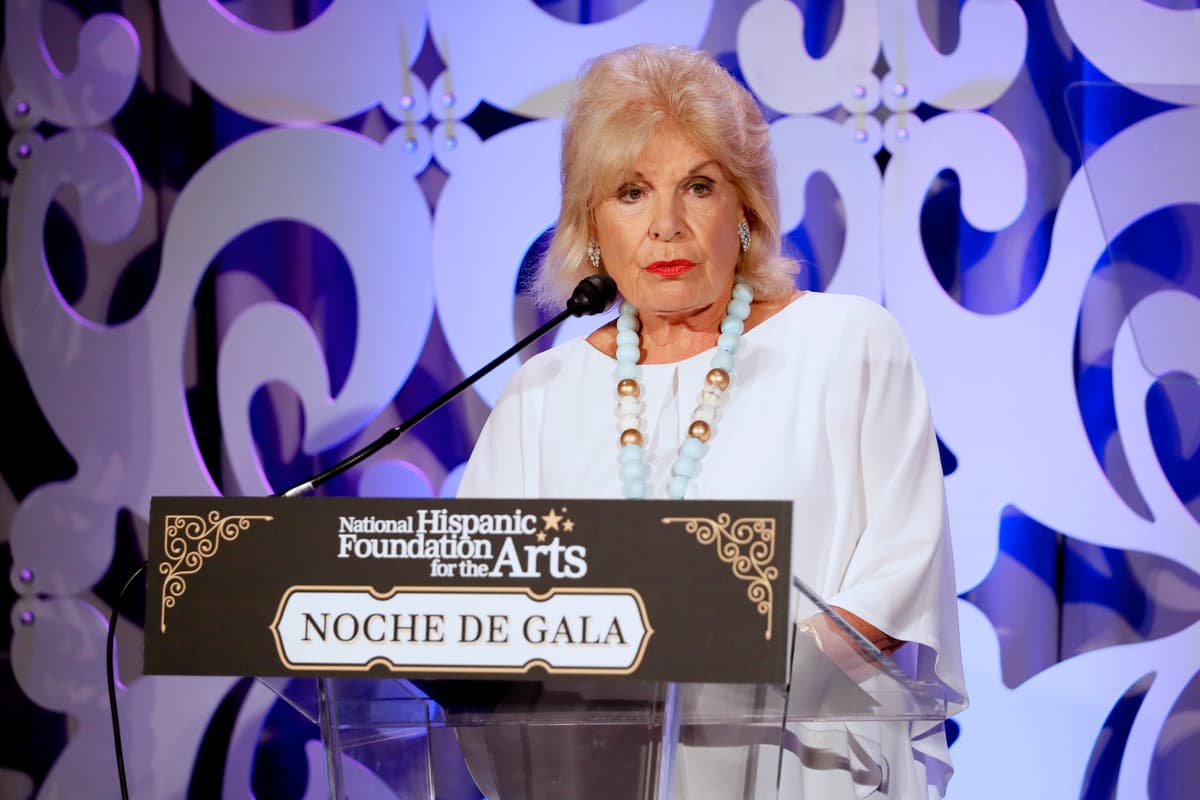

Days after lawmakers voted to rescind all $1.1 billion of federal funding to the Corporation for Public Broadcasting, which oversees NPR radio and PBS television, the organization’s board members held a virtual meeting where they emotionally bemoaned the cuts — and quoted Shakespeare and Russell Crowe.
The chief executive of the CPB board, Patricia Harrison, said during the meeting that she was speaking with a “great sorrow for our country” as she said public media is being “dismantled.” Ms. Harrison said the funding cuts will “hurt” rural stations “first and foremost.”
Ms. Harrison also addressed one of Republicans’ main arguments against funding public media: an alleged liberal bias.
“Is there bias?” she asked. “Sure, we’re not perfect, but we were working on that.”
However, she said that bias — NPR and PBS’s national news programming has been dogged for decades by allegations of liberal, anti-conservative, and anti-Israel bias — is “not a legitimate reason to shut down everything.” The far-left chief executive of NPR, Katherine Maher, has repeatedly denied that the outlet is biased or “woke.” Similarly, the CEO of PBS, Paula Kerger, has denied liberal bias.
During the board meeting, Ms. Harrison ended her remarks by quoting Shakespeare, seeming to tear up as she did.
“With apologies to Shakespeare and King Henry V, whose ragtag army was outnumbered by the French at the Battle of Agincourt, but won despite those odds,” Ms. Harrison said. “King Henry said, sort of, after winning the battle, ‘And those now against us shall think themselves accursed they were not here. And hold their honor cheap when any speaks that fought with us upon Saint Crispin’s Day.'”
Growing emotional, Ms. Harrison said, “Aim for that win for public media.”
Another board member, Thomas Rothman, who was appointed by President Biden, likened Ms. Harrison to a character from the movie “Master and Commander.”
“The captain of the ship, they’re under heavy fire. There’s a little boy, a little midshipman, and he ducks down. And the captain, played by Russell Crowe … he reaches over to the little boy, and he says, ‘Stand tall on the quarterdecks,’’ Mr. Rothman said as he grew emotional. “That’s what I think I’m gonna think about you, Pat. You’ve stood tall in the quarterdeck under heavy and unfair fire.”
A different board member, Diane Kaplan, delivered emotional remarks with long pauses as she said, “My beloved state of Alaska is in mourning.”
Despite mourning the cuts, Ms. Kaplan noted that the local public radio station at Seattle, KUOW Radio, raised $1.5 million in 10 hours. She said that there are 25 other radio stations in the area, but that KUOW was still able to raise those funds from its listeners. However, she said it was “emergency time” for stations in smaller and rural communities such as those in Alaska.
Ms. Kaplan complained about President Trump’s attempt to fire her, Mr. Rothman, and Laura Ross, all of whom are Democratic appointees.
“We have not only been chastised, we’ve been sued, and then just last week, three of us were personally sued for serving in a public service role on a board where we were nominated by the President of the United States,” Ms. Kaplan said.
Mr. Trump tried to fire the three Democrat-appointed board members in April. However, they refused to go and sued, arguing that the law establishing the CPB does not grant him the authority to remove them. In June, a federal judge declined to issue a preliminary injunction blocking their firing, though the jurist said Congress “intended to preclude the president (or any subordinate officials acting at his direction) from directing, supervising, or controlling the Corporation.” Nevertheless, the three fired board members would not budge, and Ms. Harrison, at the time, signed a document stating the trio is still on the board.
In July, the Trump administration sued to force the ouster of the three board members as it said they were “defiantly acting as if the Court granted the relief the Court denied—raising the question of why they bothered to seek preliminary relief and consume the resources of the Court and the parties if they were simply going to ignore any adverse ruling.”
The lawsuit also seeks to invalidate any actions they took since April.
The CPB did not respond to the Sun’s request for comment by the time of publication. The board has come under scrutiny for hiring Ms. Maher in January 2024 despite her public history of extremist comments about race and gender on social media (such as, “America is addicted to white supremacy”). During the defunding debate on Capitol Hill, Senator Schmitt of Missouri read some of Ms. Maher’s most colorful tweets in a video that his office posted on social media.
While federal funding for the CPB has been rescinded through the next two years, seemingly ending its main mission of distributing funds to local stations, the corporation has not been dissolved, and it’s likely that its board, as currently constituted, will continue to advocate for a future Congress to restore federal funding for public broadcasting.
Indeed, while small local broadcasters are being hit hard by the cutbacks, the national news operations that provoked the cuts are largely insulated from the cuts, as they get most of their revenue from corporate sponsors, fees from affiliates, and donations, rather than direct federal funding.
Ms. Maher even celebrated the end of federal funding in an unguarded interview with a far-left media reporter, Oliver Darcy, saying, “We will no longer have the congressional funding Sword of Damocles over our heads.” Her comment seemed to imply that she is glad NPR will no longer need to deal with meaningful congressional oversight.
PBS and NPR will continue operating, business as usual, with Ms. Maher and Ms. Kerger at the helms, reporting to the board.
Despite the grave warnings about funding drying up, a firm that tracks donations to public media, the Contributor Development Partnership, reported that in the last three months there has been a wave of donations to public broadcasters, up about $70 million from the previous year.
Conservatives have argued that if NPR and PBS’s content is as sought after and thought-provoking as proponents of public media insist, then they should be able to survive through donations and other private sources like countless other news organizations.