
Detroit Considers Cash Handouts as Part of Costly Reparations Program

One recommendation is $40,000 grants to buy a home in the city.
AP/Corey Williams
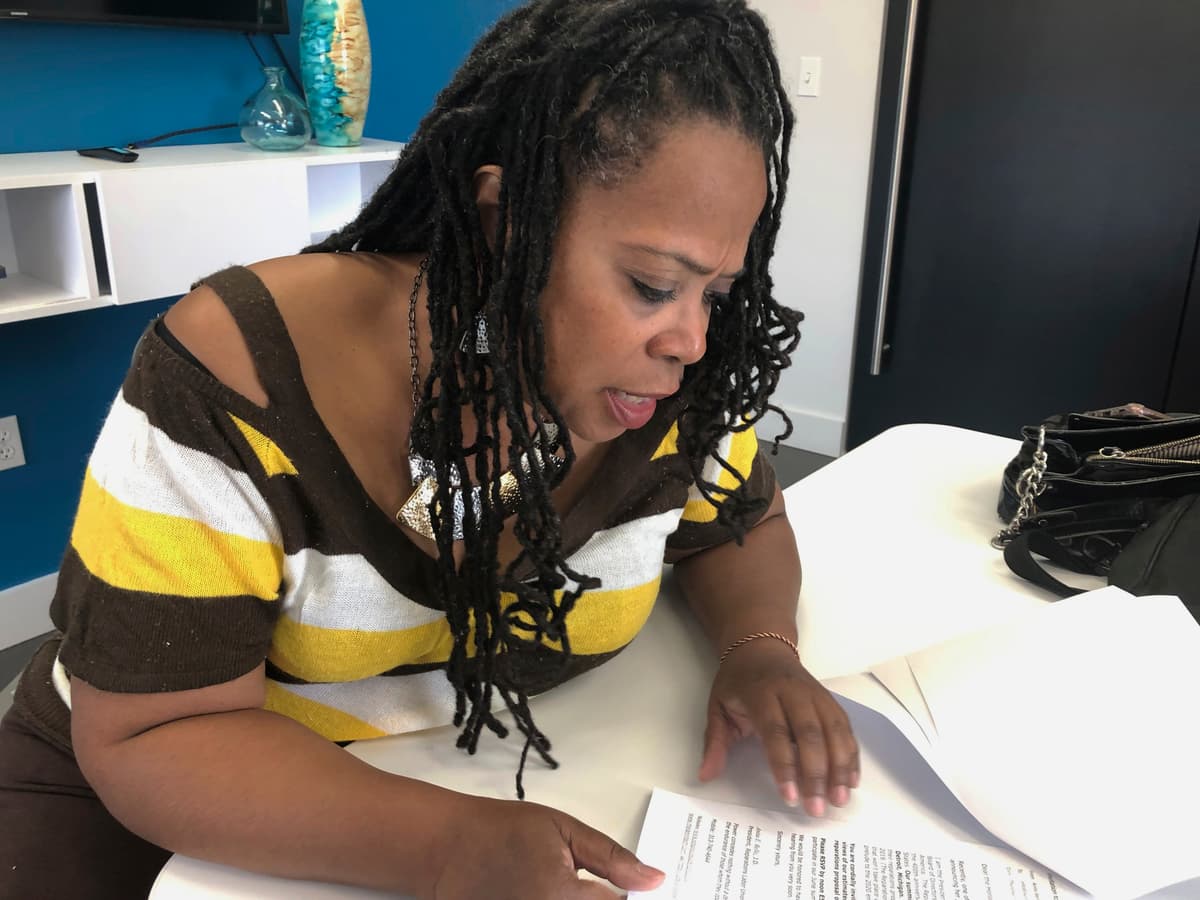
Anita Belle, founder of the Reparations Labor Union in Detroit, discusses slave reparations during an interview on April 10, 2019. AP/Corey Williams

Detailing “historical atrocities,” a years-long reparations study in Detroit has a lengthy list of expensive recommendations but doesn’t put a final price tag on how much it would cost.

The Detroit Reparations Task Force produced a 558 page report with programs to compensate residents who are descendants of slaves and those affected by “unjust” city policies. The report comes a full year after it was originally due after a series of missed deadlines.

A final report it generated for the city council — first obtained by local news outlet Bridge Detroit — calls for cash payments to be made to black residents and descendants of slavery. The exact amount of the cash payments was not detailed in the report.

The reparations program — coming more than 150 years after the abolition of slavery — would be open for any descendant of a slave who is at least 21 years old and has lived in Detroit for at least 20 years.

One recommendation is to offer up to $40,000 to purchase a home in Detroit or up to $30,000 for home repairs with priority given to people and families who were displaced by urban renewal projects.

The task force also suggests freezing property taxes for residents who it claims have been historically overtaxed and refunding black property owners who have lost homes to tax foreclosure.

Another proposal would end water shutoffs for unpaid bills and limit charges for water service to no more than three percent of household income.

Businesses that have been displaced by urban renewal projects should be awarded grants up to $100,000, according to the task force.

Another recommendation would be to expand African-centered education in schools and provide free internet to all students.

The task force also came up with recommendations related to the police. The report calls for paying restitution for people injured or killed by police and firing so-called “high risk” officers. The report also called to “demilitarize” the police force by discontinuing the use of tanks and other war equipment.

The Detroit Reparations Task Force was established by a ballot initiative in 2021. Its 13 members have held public hearings and meetings over several years to come up with the recommendations.

The report doesn’t put a price tag on the reparations but just the handouts for home purchases and repairs could be in the tens of millions of dollars. The task force recommends creating a downtown entertainment tax and adding a new fee on casino revenue to pay for the program.

The first reparations program in the country had to stop making payouts earlier this year because of struggles to come up with funds. A key funding source for Evanston, Illinois — a 3 percent sales tax on recreational marijuana sales in the city of 75,000 — has not raised as much money as anticipated.

The Evanston reparations program is also being sued because only black residents were allowed to apply for the $25,000 cash hand outs.

Boston, Detroit, and St. Paul are in various stages of studying or implementing their own reparations programs. California and New York are considering reparations at the state level.


The New York Sun

© 2025 The New York Sun Company, LLC. All rights reserved.

Use of this site constitutes acceptance of our Terms of Use and Privacy Policy. The material on this site is protected by copyright law and may not be reproduced, distributed, transmitted, cached or otherwise used.

The New York Sun

Sign in or  create a free account

or
By continuing you agree to our Privacy Policy and Terms of Use