
Documentary ‘Trains’ Illuminates European History During the First Half of the 20th Century

The film finds the poetry in vintage footage of trains and passengers and related imagery. It is a wordless yet lyrical meditation on industry, leisure, war, and peacetime.
Via EPF Media
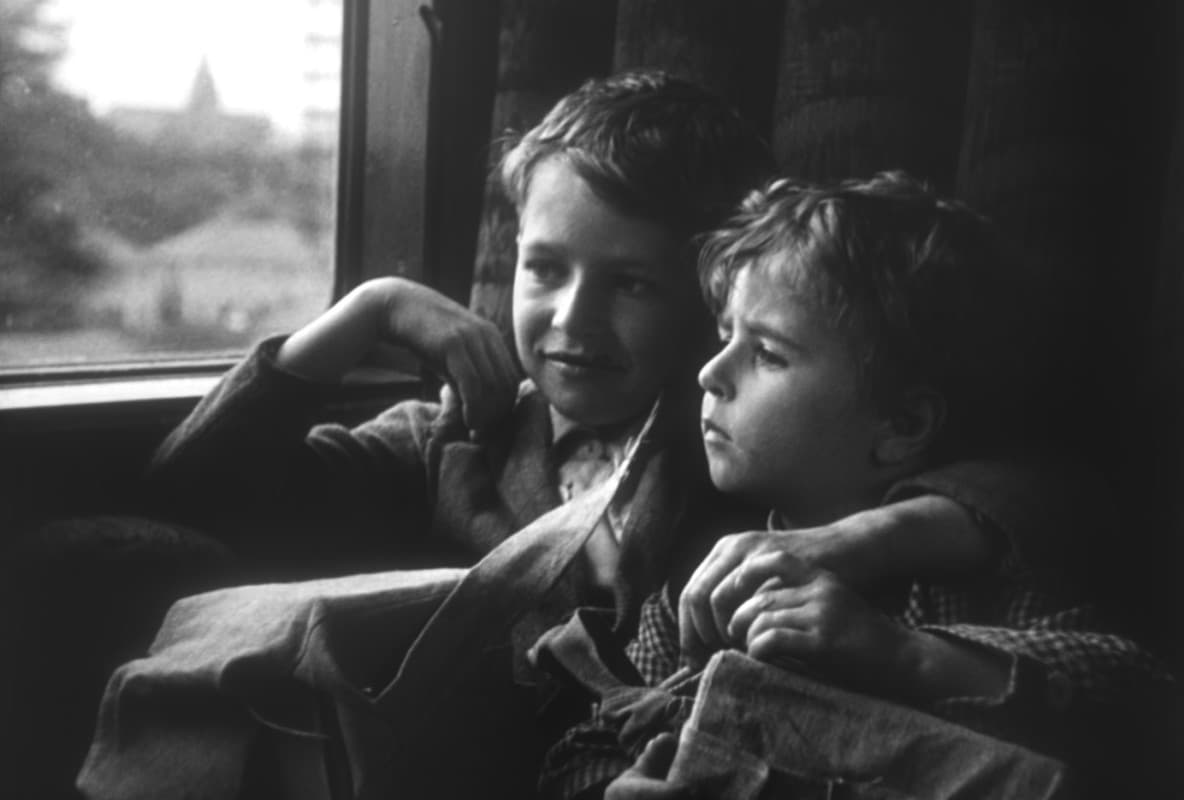
Still from documentary ‘Trains.' Via EPF Media

Fans of historical documentaries know what to expect, particularly with an entire television network dedicated to them: archival footage, expert commentators, narration, text and maps, and the occasional flourish of dramatic music. A new documentary arriving in theaters this week, “Trains,” rejects most of these, creating instead a quietly transporting film centered on the locomotive’s role in European history in the first half of the 20th century.

Piecing together scores of black-and-white clips in which trains figure prominently, the Polish director, Maciej J. Drygas, and editor, Rafał Listopad, have crafted a wordless yet lyrical meditation on industry, leisure, war, and peacetime. Without talking heads, scene-setting information, or voiceover, the film finds the poetry in vintage footage of trains and passengers and related imagery, connecting them to the major events of the century’s first 50 years. 

Although chronological, the moments portrayed are less “this is what happened and why” and more a time capsule of the everyday and the tragic, illuminating history rather than explaining it. Featuring many recorded moments never screened before, it is a window on the past as much as a feat of editing and assemblage. 

Trains are not only the documentary’s central motif but also its driving force, with the narrative depicting the mode of transport’s evolution from peak usage onto destruction and renewal, with the cycle repeated. Right from the start, fascinating footage of the construction of a steam engine pulls one in, as do the score’s industrial echoes and recurring tones and the sound design’s subtle recreation of key sounds. These sounds — of hissing, clanking, squeaking, etc. — are often low in the mix, never as loud or multifarious as they would have been in real life, yet all the more effective for their faint evocation. Together with the soundtrack, they immerse the viewer in a pensive aural atmosphere without overwhelming what we see.   

Still from documentary ‘Trains.’ Via EPF Media

From two men cowering within a piece of machinery that will link to a larger section hanging above, to scenes of men and women in turn-of-the-century garb waiting on station platforms, the footage chosen by Messrs. Drygas and Listopad early-on is filled with anecdotal detail and little dramas. The locations are never identified, though we can spot signage in English and German. It is the so-called golden age of European railways, and the filmmakers have gathered motion picture material of trains and settings from across the continent. 

Images of civilians soon give way to soldiers, and it’s clear we’re in the lead-up to World War I. Different kinds of tracks are pictured, such as ones made up of marching infantry. Smiling recruits packed onto train cars eventually become serious soldiers getting on more rudimentary ones. Other materials are carted as well, bringing raw minerals to sooty factories. One standout vignette features glowing ghosts of metal just out of the furnace, future bombs to be transported via trains.

The two world wars loomed over the first half of the 20th century and, naturally, the film devotes a large portion of its brief runtime to the horrors of war. The train turns into an instrument of destruction and displacement through the shuttling of troops, tanks, and artillery, no longer merely conducting men and women between places but also used in the process of clearing them out of areas. 

After a post-World War I segment highlighting fun, frivolity, and cinema — that other modern invention often featuring trains — the documentary segues to a prelude of World War II, with the editing continuing to perceptively juxtapose isolated clips. Hitler is shown being cheerfully greeted by hundreds at a station, mirroring an earlier clip of arrival involving Charlie Chaplin, and the connection between the two goes beyond “The Great Dictator” to the cult of personality.

Footage of seemingly affable German military officers relaxing in deluxe compartments generates not only discomfort but outrage when contrasted with Jewish people shunted onto cramped cattle cars. The terror doesn’t end there, as we know, and in a clip apparently filmed by American liberation forces, we see emaciated bodies piled within a train car. The pessimistic Kafka quote that opens the film rings out even clearer with these images of the Holocaust: “There is plenty of hope, an infinite amount of hope … but not for us.”

After the slaughter and devastation of World War II, the last section of “Trains” can only feel like an anticlimax, though there are still compelling clips of reconstruction and reunions. The filmmakers end with the beauty and complexity of railway lines as they curve and intersect, raising the question: Where does Western civilization go from here? Of course we know the answer, with more than 75 years since the last world war. The question is, can we stay on track?


The New York Sun

© 2025 The New York Sun Company, LLC. All rights reserved.

Use of this site constitutes acceptance of our Terms of Use and Privacy Policy. The material on this site is protected by copyright law and may not be reproduced, distributed, transmitted, cached or otherwise used.

The New York Sun

Sign in or  create a free account

or
By continuing you agree to our Privacy Policy and Terms of Use