Far From ‘Plenty of Nothing,’ Met’s New Production of ‘Porgy and Bess’ Is the Operatic Production of Our Dreams
This is a production that George and Ira Gershwin would have loved, although they would take exception to calling it ‘The Gershwins’ Porgy and Bess.’
‘Porgy and Bess’
The Metropolitan Opera
Through January 24, 2026
For some — including myself, much of the time — the greatest moment in all of music is the clarinet glissando at the opening of “Rhapsody in Blue.” But lately, I have been getting even more of a thrill from another Gershwin masterpiece, the “Overture” to “Porgy and Bess.”
When I heard it on Tuesday evening at the start of the Metropolitan Opera’s latest production, it sent chills down my spine: we open with clattering xylophones and high pitched violins, playing a tightly percussive pattern, contrasting with a dramatic blast from the horns and lower strings.
The overture is only two minutes, and like “The Carousel Waltz” and the “Candide” overture, is a thoroughly original piece of music and not a medley of themes from the score itself, although it does point directly to “There’s A Boat That’s Leaving Soon For New York,” which we won’t hear in full until another three hours at least.
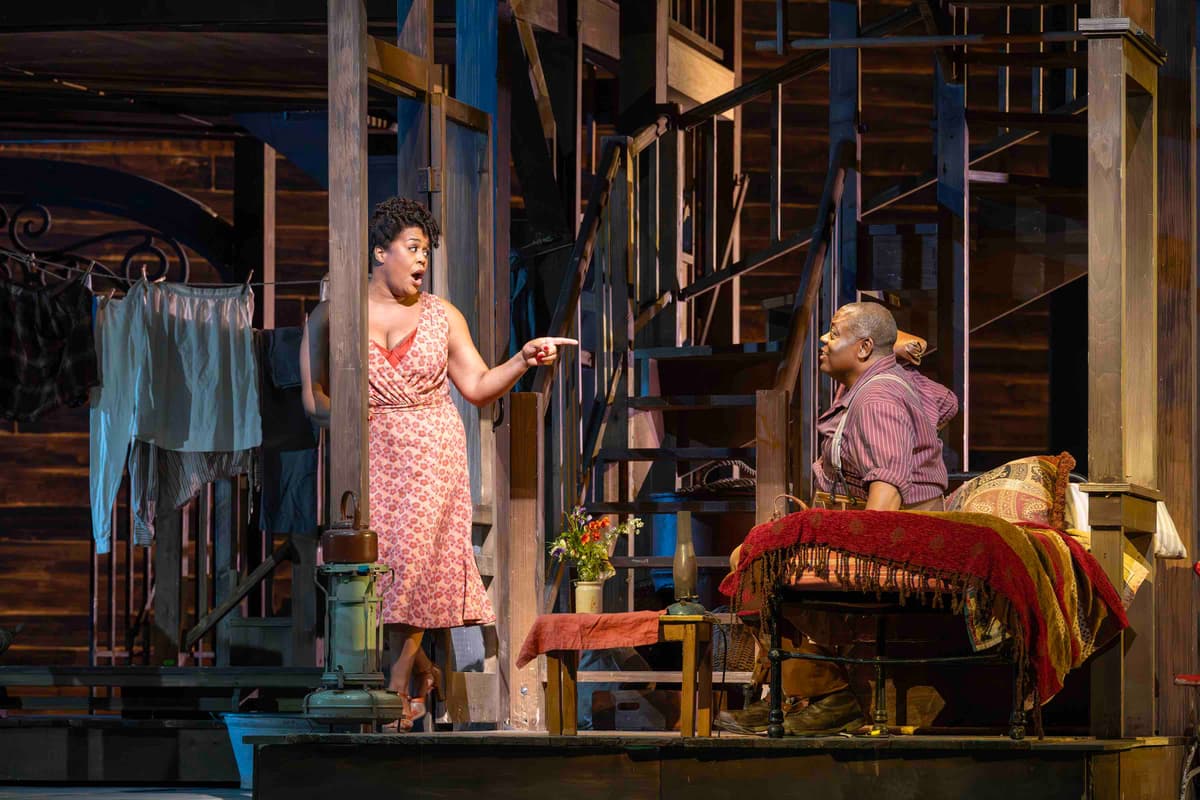
This latest production — all three and half hours of it — is fully the operatic production of our dreams. In the contemporary tradition, Alfred Walker is an almost fully ambulatory leading man, as opposed to the more traditional Porgies who travel across the stage by means of a goat cart. (I’m not about to discuss the work in terms of political correctness, but I will observe that these days “Porgy and Bess” is more likely to be criticized with regard to ableist prejudices, rather than racial ones.)
Ryan Speedo Green is a thoroughly villainous, swaggering bully boy of a Crown, whose every step and every note is supercharged with menace. Brittany Renee is a sweet and sincere Bess, the sympathetic but weak-willed leading lady who can resist anything but temptation.

This is a production that George and Ira Gershwin would have loved, although they would certainly take exception to the current-day proclivity to give the work’s name as “The Gershwins’ Porgy and Bess.” The brothers would have balked at receiving name-above-the-title credit at the expense of DuBose Heyward, who created the story and the characters that the opera is based on, wrote all of the book with his wife Dorothy, and then further wrote a goodly share of the lyrics alongside Ira Gershwin. Alas, Heyward, who wrote several other successful plays before he too, like George Gershwin, died relatively young, is not the marquee name that the composer is.
There are generally two modes for presenting the work, as something closer to an opera or more like a musical theater piece. The advantage of the operatic productions are getting to hear the full sumptuous glory of the score, bereft of microphones, testing the skill of conductor Kwamé Ryan, to bring out every nuance of the orchestra while still allowing the unamplified voices to be heard.
Ironically “Porgy and Bess,” which celebrates its 90th anniversary this year, was considered “uncommercial” when it first opened on Broadway in 1935. Today, however, the score seems like a greatest hits compilation. This is particularly true of the more show-tune-y numbers written by Ira Gershwin, like “It Ain’t Necessarily So,” enthusiastically delivered with Cab Calloway-style call-and-response lines exchanged with the chorus (I’m surprised the audience doesn’t sing along) by Frederick Ballantine as Sportin’ Life, and “I Got Plenty o’ Nuttin,” Porgy’s most upbeat aria.
The operatic version is the best opportunity to revel in the glories of Heyward’s lyrics. The original 1927 play, though far from a “musical” the way we understand the term today, incorporated traditional African American spirituals and folk songs as performed not by the principals but by a choir in the background.
For the Gershwin version, the collaborators wrote their own such songs: a prayer (“Oh, Doctor Jesus”), a gambling song (“Roll Them Bones”), a work song (“It Takes A Long Pull To Get There”), a rather saucy blues (“A Red Headed Woman”), and three street vendor songs, including “Here Comes De Honey Man,” which were apparently cut from the 2012 hit Broadway production. I’m personally most moved by the funeral song (“Gone, Gone, Gone”) although ironically it’s Heyward and Gershwin’s lullaby, “Summertime,” that has become the most enduring number in the score.

Most of these are sung by the chorus and the full company rather than the individual characters — it might be best described as an example of a Soviet mass hero. The production and costumes by Luke Halls and Catherine Zuber are perfect; the denizens of Catfish Row are definitely proletarian, but honest and certainly not squalid. The show runs long, but the story is much more eventful and fast-paced than your average opera, in which it takes Madama Butterfly almost an hour to hari-kari herself. “Porgy” is still the Great American Opera; it’s hard to think of another work that even comes close.