
Finance World Roundly Pans Trump Suggestion of 50-Year Mortgages as Solution to High Cost of Housing in America
Trump floats the longer mortgage payback period as a way to reduce monthly payments and make homes more affordable.
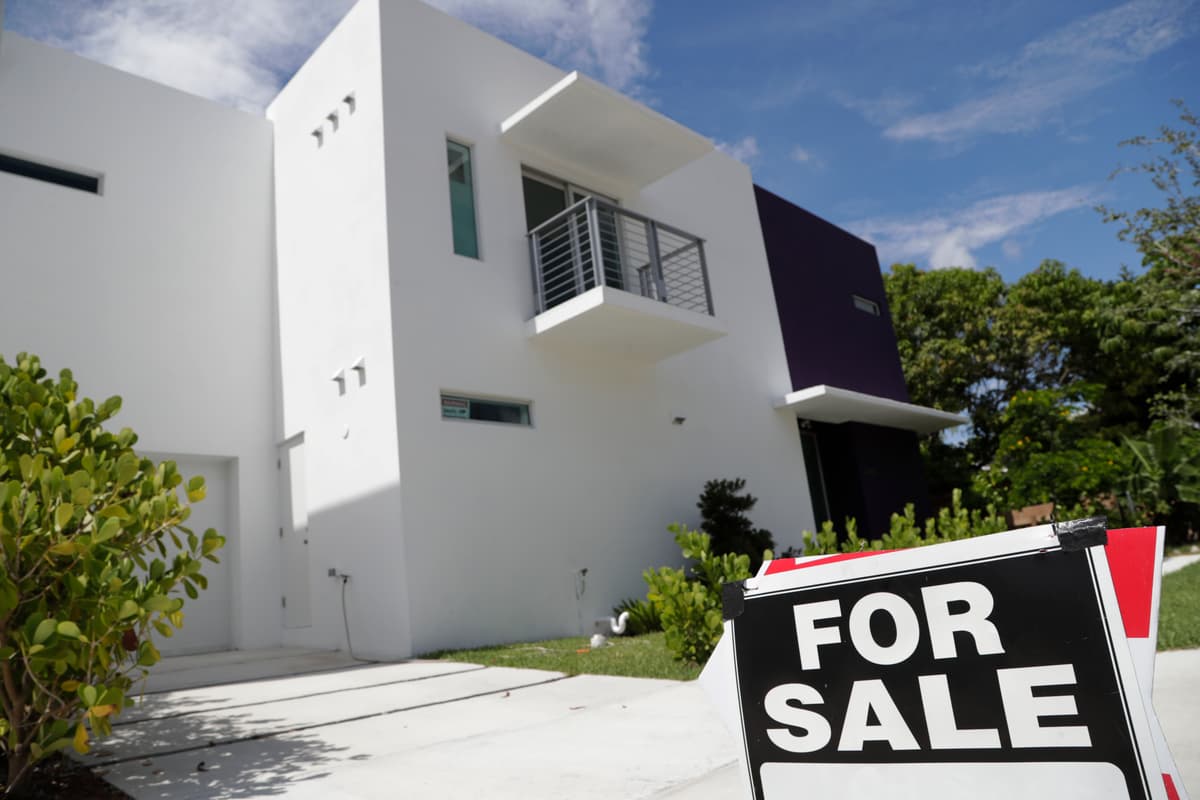
A proposal being floated by the Trump administration to create a 50-year mortgage option for American homebuyers, a move aimed at lowering monthly payments, is being panned by financial advisors and lawmakers from both parties, some of whom call it the equivalent of renting from a bank.
Trying to emulate Franklin D. Roosevelt, who established a 30-year-mortgage to increase home ownership during the Great Depression, President Trump posted an image of himself and the former president Saturday with the words “50-year mortgage” under his name.
Mr. Trump suggested the longer mortgage payback period as a way to reduce monthly payments, a suggestion echoed by the president’s chief of federal housing finance, Bill Pulte, and others in the administration.
“We are laser focused on ensuring the American Dream for YOUNG PEOPLE and that can only happen on the economic level of homebuying. A 50 Year Mortgage is simply a potential weapon in a WIDE arsenal of solutions that we are developing right now. STAY TUNED!” wrote Mr. Pulte in a post on X.
The 30-year mortgage, a staple of housing finance in America, was created in the 1930s to increase homeownership at a time when mortgages averaged three to five years, required large down payments up to 50 percent, and ended with balloon payments. It is largely credited with raising homeownership rates from 43.6 percent in 1940 to a peak 69.2 percent in 2004. Homeownership currently hovers around 65 percent, but is taking an increasingly larger chunk of monthly household income.
Concerns have been raised that the 50-year plan will lock homeowners into a lifetime of debt. The reason: with a 6.26 percent interest rate on a mortgage — the average 30-year-rate at the moment, according to Bankrate.com — principal and interest on a $300,000 30-year loan with no down payment would cost $1,849 per month. If the same-size loan at that rate was spread over 50 years, it would cost $1,637 per month. While the total amount of interest paid on a 30-year mortgage would be $365,677, the interest paid on a 50-year mortgage over the life of the loan would be $682,294. The total cost of the home in such a scenario would be an extra $240,319.
Critics of the plan say the proposal will result in longer and larger debts, and homeowners will not earn equity nearly as quickly as with a shorter loan.
“It will ultimately reward the banks, mortgage lenders, and home builders while people pay far more in interest over time and die before they ever pay off their home. In debt forever, in debt for life!” wrote Representative Marjorie Taylor Greene. Instead, she suggested making homes more affordable by ending capital gains taxes on the sale of primary residences.
“This will help people keep the equity they have earned owning their home for a very long time and likely allow them to lower the price of their home for sale since they won’t be paying taxes after they sell their home,” she wrote.
Another critic, mortgage industry executive and senior vice president at AnnieMac Home Mortgage, Fobby Naghmi, said the assumptions about the rates going down skip over the fact that the longer the loan is, the higher the interest rate will be.
“If a lender is going to extend the repayment horizon by 20 additional years, they are not doing so at the same interest rate. Just as 15-year mortgages often carry lower rates due to lower risk, a 50-year loan would carry higher rates due to greater risk,” he wrote in an analysis shared on LinkedIn.
Mr. Naghmi noted that Japan tried the 50- and 100-year mortgage experiment in the 1980s.
“Payments went down, but equity built extremely slowly. When housing values corrected in the early 1990s, many families ended up inheriting loans that were larger than the value of the home. The intention was affordability. The result was multi-generational debt,” he wrote.