Free Speech Concerns Over Kimmel’s Suspension Unite Left and Right, After ‘Dangerous’ Remarks by FCC Chief Brendan Carr
The controversy reminds of the days of ‘Radio Free America.’
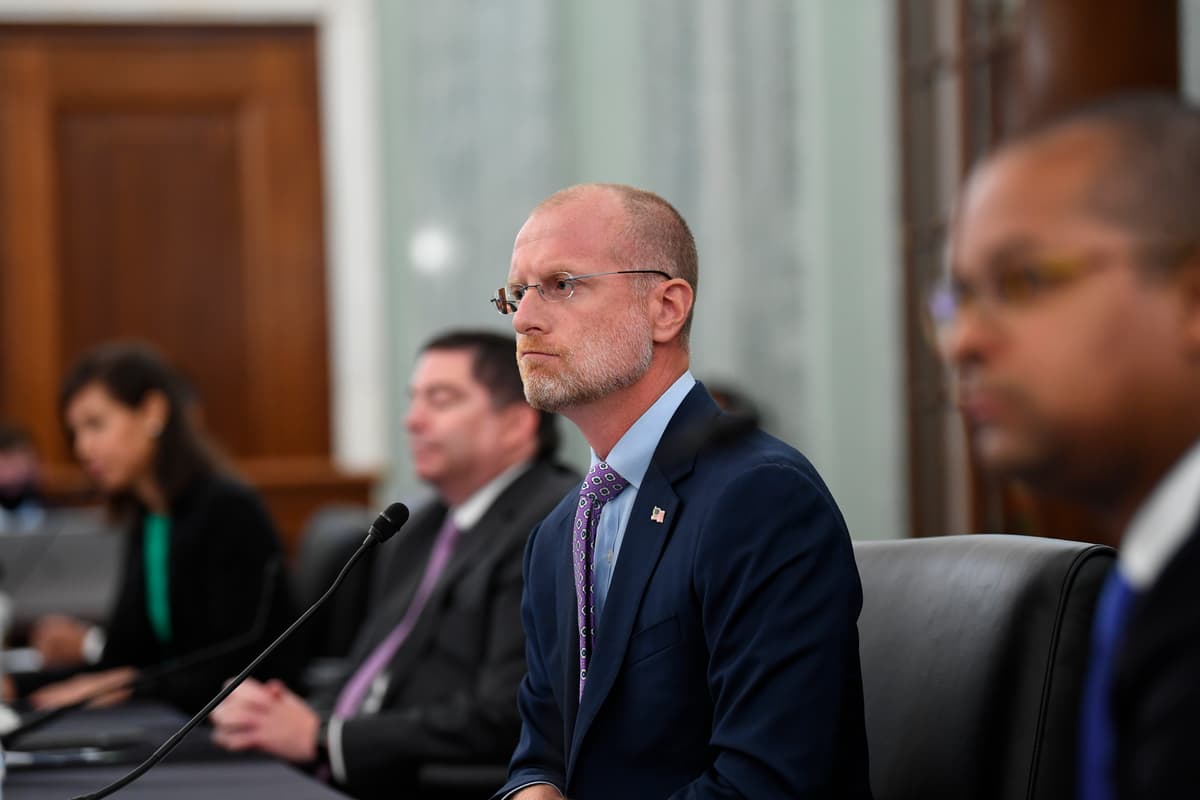
The Federal Communications Commission’s chairman, Brendan Carr, is providing a rare opportunity for agreement in the wake of Charlie Kirk’s assassination. The left and right are objecting to Mr. Carr’s suggestion that the agency, long the bane of broadcasters, might retaliate against ABC for their late-night host, James “Jimmy” Kimmel.
On Wednesday, ABC announced that “Jimmy Kimmel Live!” would be “pre-empted indefinitely.” The host had alleged that Kirk’s accused assassin, Tyler Robinson, was part of “the MAGA gang.” Charging documents and characterizations by family members — as well as his writing, “Hey Fascist! Catch!” on a bullet casing — indicate he was on the left.
“There are calls for Kimmel to be fired,” Mr. Carr said on Thursday’s “Benny Johnson Show.” He added that “you could certainly see a path” to “a suspension” and that “the FCC is going to have remedies that we could look at. This is a very, very serious issue right now for Disney,” which owns ABC.
ABC, Sinclair Broadcasting, and Nexstar Media Group’s benched Mr. Kimmel. According to the the Hollywood Reporter, ABC hoped he’d apologize after a backlash from viewers, but the move was seen as caving to FCC pressure rather than a straight business decision. Broadcast licenses were inferred to be under threat.

“Mr. Kimmel’s remarks,” Sinclair’s vice chairman, Jason Smith, said in a statement, “were inappropriate and deeply insensitive.” He expressed appreciation for Mr. Carr, adding that the “incident highlights the critical need for the FCC to take immediate regulatory action to address control held over local broadcasters by the big national networks.”
Mr. Carr gave Democrats the opportunity to shift the focus from Kirk, casting Mr. Kimmel as under assault by President Trump. “In 1934,” a California Democrat, Congressman Eric Swalwell, posted Thursday on X, Nazi Germany “passed a law making it a crime to tell jokes or laugh at its leaders.”
Thursday on the “Verdict With Ted Cruz,” the Texas senator said that Mr. Carr’s remarks were “dangerous as hell.” While Mr. Cruz professed to being “thrilled” with Mr. Kimmel’s suspension, he described the chairman’s remark that “we can do this the easy way or the hard way” as “right out of a mafioso” intimidation racket.
Mr. Cruz said that “if the government gets in the business of saying we’re going to ban you from the airwaves if you don’t say what we like, that will end up bad for conservatives.” When a Democrat “wins the White House,” he warned, “they will silence us. They will use this power … ruthlessly.”

The FCC has often sought to police speech across the political spectrum. In 1973, they threw a radio preacher, the Reverend Carl McIntire, off his more than 400 stations. He responded by buying a World War II minesweeper and broadcasting “Radio Free America” from off the coast of New Jersey’s Cape May.
In 1978’s FCC v. Pacifica Foundation, the Supreme Court upheld the FCC’s regulatory power after it warned a Pacifica radio station about content. At issue was a liberal comedian, George Carlin, performing his legendary “Seven Dirty Words You Can’t Say on Television” routine, which prompted a complaint.
On Thursday, the late Carlin’s official Instagram account posted his commentary on the issue. The FCC, he said, decided “that radio and television were the only two parts of American life not protected by the free speech provisions of the First Amendment to the Constitution.”
In 2014, the Obama Administration announced plans to send “FCC contractors” into newsrooms to determine whether what was being produced met the public’s “critical information needs.” This columnist’s former boss, Rush Limbaugh — often targeted by government officials — sounded the alarm alongside liberals.
“They used to be called ‘commissioners,’” Limbaugh, now gone, alas, said of the FCC members, “but I’m calling these people ‘commissars,’” naming the Republican commissioner, Ajit Pai, among the group. “They don’t care,” the broadcaster added, “what the First Amendment says.” The plan was never put into action.
Americans are in broad agreement about resisting government regulation of speech. With calls for Mr. Carr to testify before Congress, he may soon be reminded of that by legislators mindful of the Constitution’s wisdom: Whether it’s Mr. Kimmel today or a conservative tomorrow, the FCC undermining the First Amendment is dangerous indeed.