FX’s ‘Alien: Earth’ Combines Aliens and AI To Bring Bloody Mayhem to Our Little Planet
When it comes to delivering the scary goods, the series succeeds, with several heart-stopping and yet pulse-pounding action sequences in the second episode.

Artificial intelligence occupies the minds of many these days, including the showrunner, Noah Hawley, of a new FX series based on the long-lurking “Alien” franchise, “Alien: Earth.”
Mr. Hawley informs us via introductory text of three different engineered beings that will populate the show: cyborgs (humans with both biological and artificial parts), synthetics (human-looking robots with AI), and the latest invention, hybrids (robots infused with human consciousness). Difficulty telling them apart and the distinctions between the three — one wonders whether all cyborgs have a flesh-and-blood brain — are presumably part of the horror awaiting the viewer, in addition to the titular alien species.
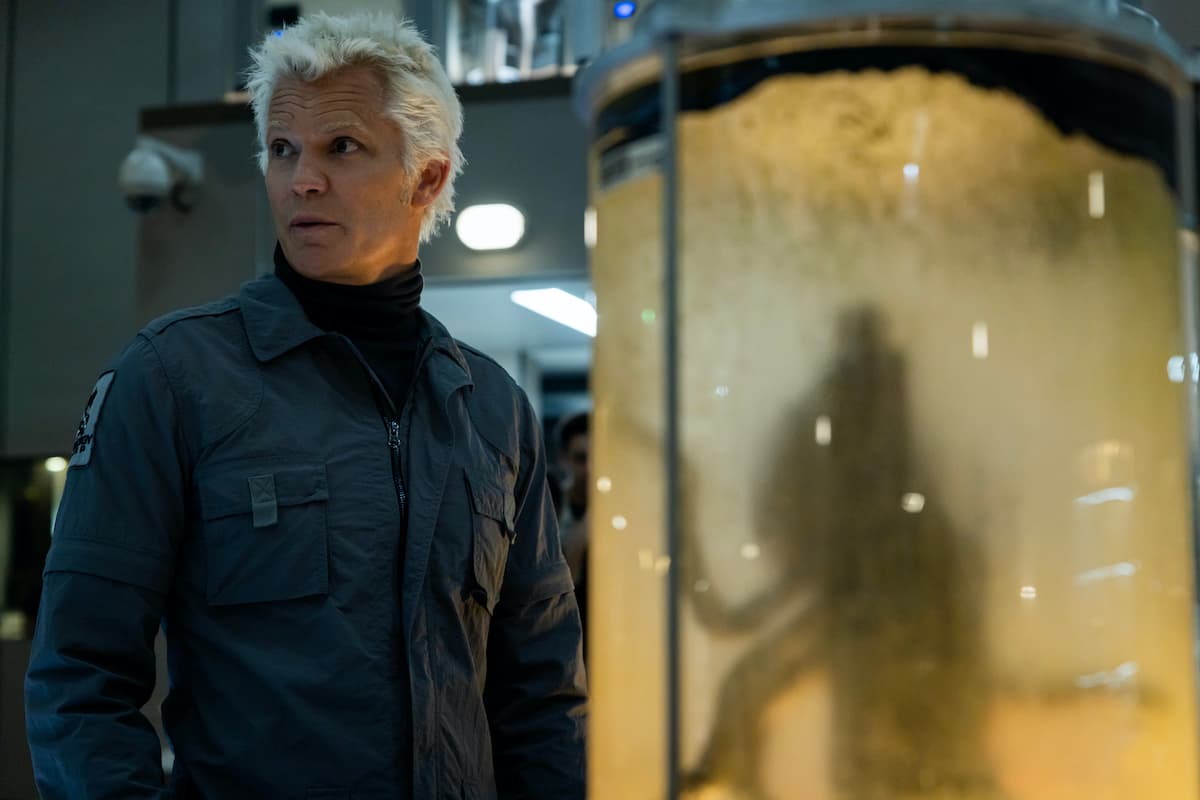
Yet along with the several artificially enhanced humanoid types, the first two episodes of the series also introduce multiple extraterrestrials besides the now-iconic xenomorphs. The year is 2120, two years before the events of the first “Alien” movie, and there’s a whole host of creepie-crawlies, such as a small octopus-like creature with multiple eyes as well as legs, and a dolphin-snouted organism that may turn out to be a pernicious plant. Continuing with the cataloguing of the show’s universe, we’re told that five corporations control Earth’s landmasses, including the conglomerate for which Sigourney Weaver’s Ripley worked for and against in the original films, Weyland-Yutani.
The mention of our planet and its incorporation is purposeful in the first few scenes set on a spaceship, as the ship soon crash-lands in the middle of New Siam, also known as Prodigy City to denote its corporate owner. The research vessel carries several alien lifeforms, and with its crash it’s clear that unearthly beings will no longer be relegated to distant planets or creaky spacecraft. In conceptualizing the program, Mr. Hawley, who additionally serves as showrunner of the acclaimed anthology series based on “Fargo,” may have been inspired by prior unproduced screenplays in which the xenomorphs breach our world, with even “Alien3” at one point involving an alien-ridden Earth.

The collision of the ship with several skyscrapers is just as harrowing as the bloodletting that occurs later. Yet the first episode has an eerily placid side as well, as we meet several characters who will eventually tangle with the aliens, including hybrid Wendy, whom we see transition into the robotic, “healthy” physique of a young woman from the body of a dying girl, and synthetic Kirsh, who, like other androids in the franchise, is icily intelligent.
We also get acquainted with Boy Kavalier, the so-called genius behind Prodigy and its hybridizing technology, who comes across as part Elon Musk, part Shakespeare’s Puck, and part J.M. Barrie’s Peter Pan. Indeed, the Peter Pan allusion is rendered not just through the “Wendy” character but by having Kavalier read from the novel and present clips from Disney’s animated movie.
The show’s philosophical themes become clear in the second episode when the cocky Kavalier directly discusses AI with Sylvia, a doctor tasked with overseeing the well-being of a group of emotionally and intellectually adolescent but young adult-looking hybrids, including Wendy. He speaks of increasing human potential to counteract intelligent machines, yet Sylvia wonders if their souls will remain intact considering their supercomputer brains and bodies. That question will be put to the test in subsequent episodes, as the hybrids are soon commandeered to find the precious, otherworldly cargo onboard the fallen Weyland-Yutani vessel.
Back at the crash site, Wendy’s fully human brother, Hermit, who believes his sister died from her illness, serves as a medic in a military unit of the Prodigy Corporation sent to secure the area and evacuate the affected, collapsing buildings. The reunion of the radically transformed sister with her brother provides the episodes’ biggest emotional moment; otherwise the story resembles past “Alien” entertainments: several different groups tread dark passageways and enter various rooms in search of survivors and strange lifeforms.
Regarding this perambulation, some scenes already betray errors of logic and physics, while the bones of the plot structure already bear sizable fractures — such as how could a corporation as sizable and sophisticated as Prodigy not be aware that a large spacecraft was about to enter its airspace. Still, when it comes to delivering the scary goods, the series succeeds, with several heart-stopping and yet pulse-pounding action sequences in the second episode.
The art direction, costuming, and sets reflect not only the show’s big budget but the creative team’s considerable contemplation and consummate talent. Sometimes, though, these very elements lead to distracting instead of disconcerting shots, particularly on a small screen. The series also suffers from a certain cheesiness when it comes to its digital effects, the occasional hammy performance, and stiff, portentous pauses — a television cliché.
As the show unfolds over the coming weeks, one is curious to see how the immature and inexperienced hybrids will engage with the classic xenomorphs, particularly as Wendy seems to be able to hear some type of clicking frequency. Will she eventually be able to understand them and, in turn, circumvent their evisceration of every Homo sapien — enhanced or otherwise? And will her humanness prove to be more than just a ghost in her machine body? It’s possible these questions are markers of this reviewer’s all-too-human mind.