
Grokipedia Is Misunderstood
Elon Musk’s latest XAI product is not a particularly compelling Wikipedia alternative, but it’s very valuable as an AI tool.
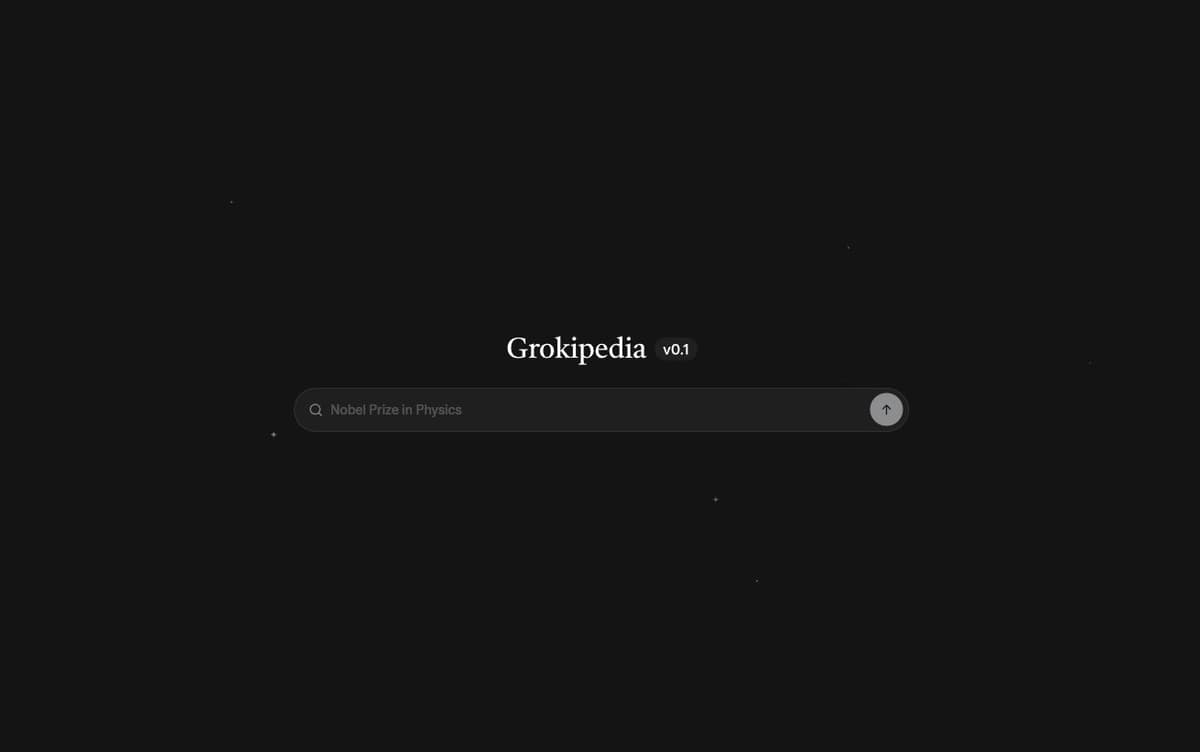
After years of complaining that Wikipedia is a font of misinformation and wokeness, Elon Musk has finally taken action. Last week, he released Grokipedia, a Wikipedia alternative designed around XAI’s chatbot Grok. The responses were somewhat split.
Critics of Musk and fans of Wikipedia argued that the new version was, at best, a blatant rip-off — quoting entire entries word for word from Wikipedia — and, at worst, a platform built around exactly the kind of biased misinformation Musk claimed to be combating. Even a Musk fan would raise an eyebrow at how the Tesla page handles the company’s various controversies and critics, or how the entry on Mr. Musk himself credits his weight loss of about 20 pounds to intermittent fasting — an oddly flattering detail absent from other celebrity pages and one that ignores the more likely explanation of GLP-1 medications. The entry on the Russian invasion of Ukraine includes Kremlin talking points, describing the war as potentially a “denazification” effort.
Others, however — particularly those who had been ill-treated by Wikipedia’s bias — noticed that Musk’s alternative treated them differently. Tablet magazine founder Alana Newhouse noted that while Wikipedia would not link to Tablet articles directly — even on the page for Tablet itself — Grok does. Bryan Caplan found that the description of himself on Grokipedia was accurate and even included anecdotes that he didn’t think were remembered.
Both responses are true, and misunderstand the purpose of this platform. Wikipedia is a forum, managed by hundreds of dedicated volunteer moderators, and that group inherently has its own biases and groupthink that end up reflected in their moderation decisions. It’s made by people, for people.
By contrast, Grokipedia is made by the AI of the title, assembling information it finds online into one single repository. This different approach means that Grok has far fewer concerns about plagiarism, and can find information that is forgotten by most people, leading to more detailed articles; but also doesn’t have the kind of human moderating and fact-checking processes. Grok is an information vacuum, making opaque judgment calls on what is accurate — but it isn’t a neutral vacuum. XAI engineers have added system-level prompts that bias its outputs to align with Mr. Musk’s personal political views, even where inappropriate or inaccurate, which explains why Grok became fixated on white genocide for a period. Becuase of this, Grokipedia’s inaccuracies and bias will be far more random, and harder to correct, than Wikipedia’s. Grokipedia has no public changelog, nor is there a way to flag an error, and it also doesn’t have any pictures.
But then again, Grokipedia isn’t actually meant to be used by people. Rather, it’s intended to be the primary reference for Grok to go to when answering user questions, without having to use costly search queries.
Chatbots have a knowledge base they can reference, but all have a cutoff date. Claude’s new Sonnet 4.5 model has a knowledge base cutoff dated at January 2025. To provide information about events that have occurred since this, it has to search online, which uses far more compute, and takes far more time.
By contrast, if Grokipedia operates as Grok’s knowledge base, Grok will always be more up to date than other LLMs, while also being able to answer user queries more cheaply and quickly than other chatbots, by just referencing this database. Its answers will be broadly correct, and theoretically Grok will continually update and refine Grokipedia with new information.