

Indiana Republicans Move Redistricting Plan Forward
The new voting map would likely flip the only two Democratic Congressional seats in the state to Republicans.
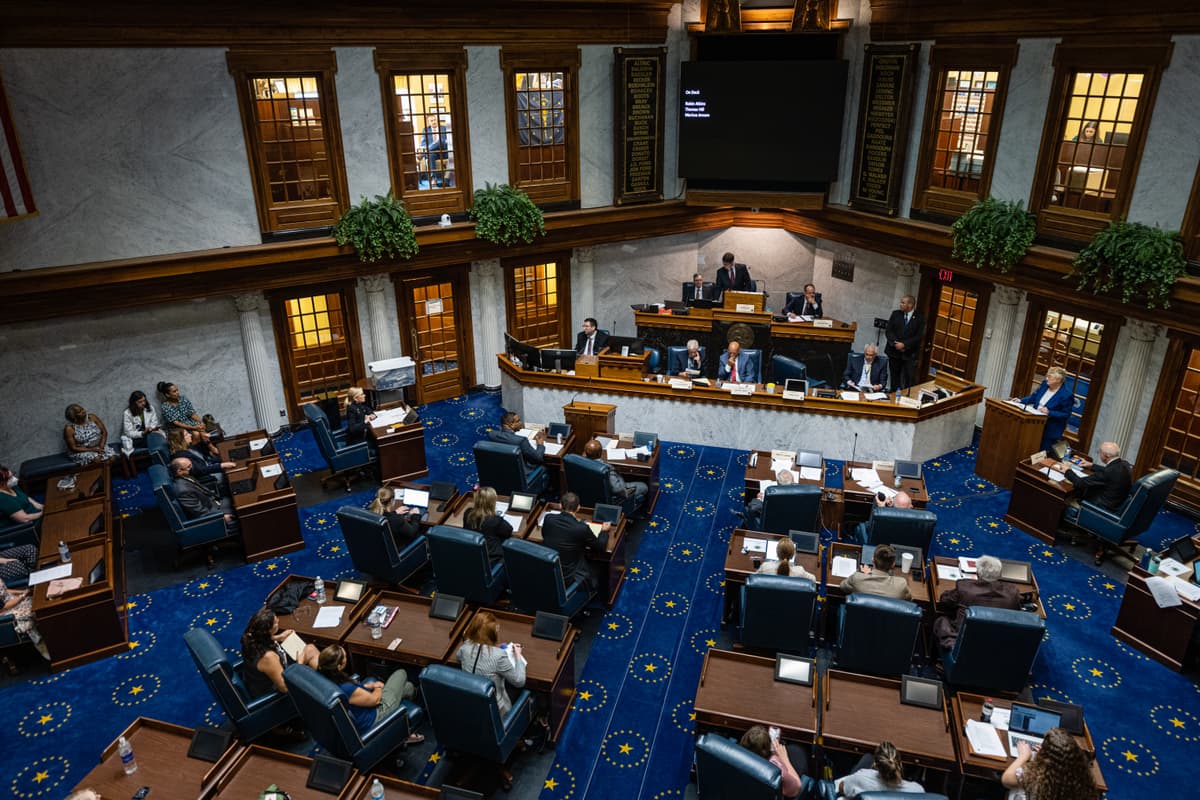
The Indiana House of Representatives approved a bill on Friday that aims to create additional Republican-friendly voting districts, increasing the likelihood that all nine of the stateâs congressional districts will be won by Republicans.
The mid-decade redistricting would most likely flip two Democratic House seats in Congress.
The map splits Indianapolis four ways and incorporates them into suburban districts that Democrats claim will dilute the power of black voters. The billâs sponsor, Representative Ben Smaltz, has carefully framed the redistricting as simply to create a partisan advantage and is not motivated by racial gerrymandering, which could draw legal challenges.
The 57-41 vote came after a long line of Democratic lawmakers spoke out against the plan. Twelve Republicans voted against the new map but it didnât matter with the overwhelming control the party has in the statehouse.
The bill now moves on to the stateâs senate, which will convene on Monday. The Republican leader of that chamber, Rodric Bray, previously insisted that there was not enough support to pass the redistricting plan but that might change with additional political pressure.
President Trump has promised to support primary challengers against any Senate Republicans who are against redistricting and on Friday, the political action arm of Charlie Kirkâs Turning Point organization announced that it would partner with other PACs to spend âeight figuresâ to get Republican defectors defeated, Politico reported.
The Associated Press notes, however, that half of the Republicans in Indianaâs Senate are not up for reelection until 2028.
Mr. Trump has pressured Republican-controlled states to carry out redistricting in an attempt to keep the House of Representatives from flipping to Democratic control during the midterm elections. Thatâs what happened during Mr. Trumpâs first term in the White House.
Indianaâs redistricting vote comes a day after the Supreme Court allowed Texas to use its newly drawn congressional maps for the 2026 elections. The decision was 6â3, with all conservative justices voting to let the maps take effect.
Missouri, North Carolina, and Ohio have also approved new voting maps that are expected to favor Republican candidates. Each of those states is expected to pick up one Republican seat.
Democratic-controlled states have started their own redistricting plans to counter the Republicans. California voters approved a gerrymandered map that is expected to favor Democrats. Illinois, Maryland, and Virginia are also considering Democratic-favored redistricting.
The end result could be a string of states with more single-party dominance but little change to the overall balance of power in Congress.