
Jack Smith’s Final Dossier of Defiance — His Secret Report on Mar-a-Lago Prosecution of Trump — Finds New Champions Pushing Publication
The special counsel failed to convict the 47th president, but his report could amount to a political embarrassment.
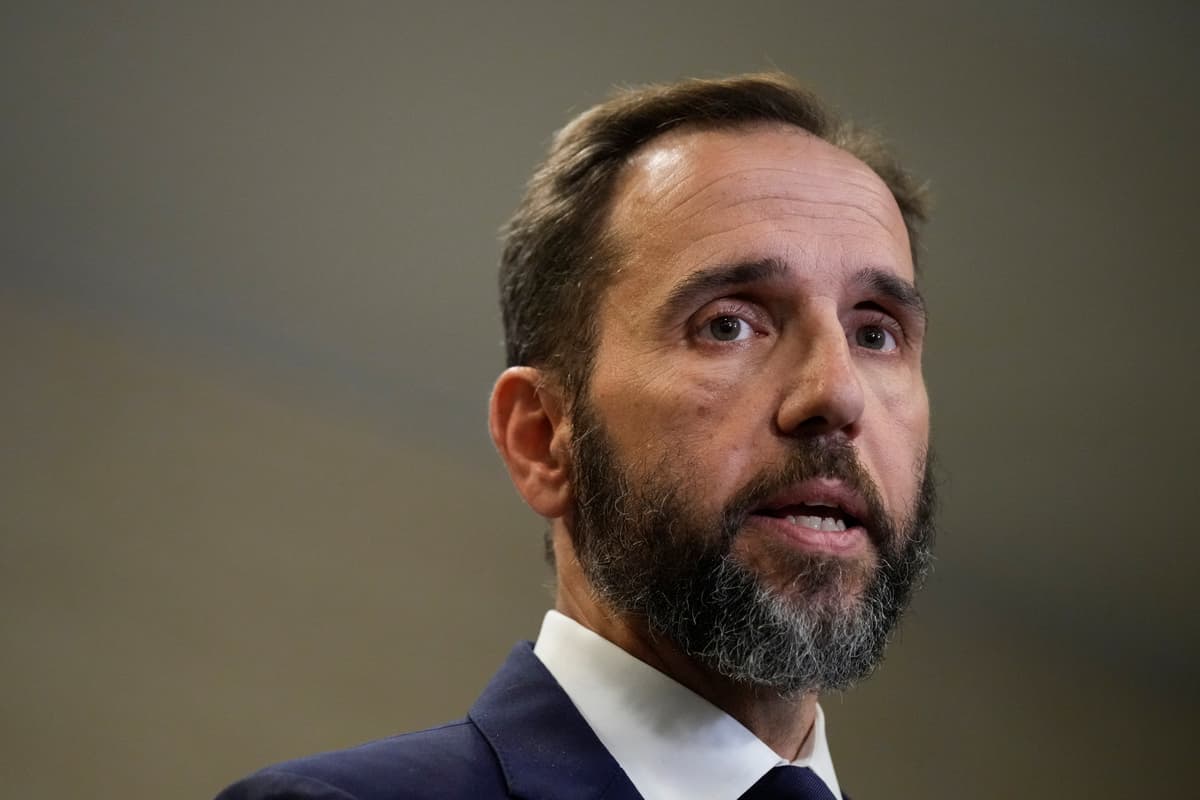
Special Counsel Jack Smith’s final report on his Mar-a-Lago prosecution of President Trump could soon see the light of day — if one of America’s top courts greenlights publication.
The Knight First Amendment Institute at Columbia University and American Oversight have filed petitions to the 11th United States Appeals Court to overrule the decision by a trial judge, Aileen Cannon, to seal the report. They accuse Judge Cannon, an appointee of Mr. Trump, of “undermining both accountability and the rule of law” by keeping the dossier under wraps.
Judge Cannon in January blocked the release of the report, reasoning that charges were outstanding against two of Mr. Trump’s co-defendants- and former employees — Carlos De Oliveira and the valet Waltine Nauta. Mr. Trump pardoned both after he regained the White House. Judge Cannon’s hold, though, is still in place, and it covers releasing the report beyond the Department of Justice.
Now the left-leaning groups want the appellate court to issue a writ of mandamus, considered an “extraordinary” remedy, ordering Judge Cannon to release the report. The judge ruled in July 2024 that Mr. Smith was unlawfully appointed by Attorney General Merricka Garland, and disqualified both Mr. Smith and the case he brought. Mr. Smith appealed that ruling to the 11th Circuit, but the case was eventually dismissed when Mr. Trump was reelected and secured the “categorical” immunity afforded sitting presidents.
The Knight Institute argues that Judge Cannon’s ruling on the report asserts “a common law and First Amendment right of access” and reasons that “the postponement of disclosure … may have the same result as complete suppression.” The brief describes “the extraordinary significance to the public of the record being suppressed, a record whose disclosure would shed light both on the scope and integrity of the Special Counsel’s investigation and on the character and actions of the nation’s highest official.”
In denying Mr. Garland’s proposal that the Mar-a-Lago report be released Judge Cannon asserted her prerogative “‘to remedy violations of recognized rights, to protect the integrity of the federal courts, and to deter illegal conduct by government officials.” The Knight Foundation, though, reckons that the continuing force of her order long after the case has ceased to be active is “manifestly unreasonable.”
Some saw Mr. Smith’s Mar-a-Lago case as the strongest of the four criminal prosecutions faced by Mr. Trump. Dozens of boxes full of classified materials — some top secret — were found at the Palm Beach mansion. Surveillance footage disclosed efforts by Messrs. Nauta and De Oliveira to hide documents from federal agents and even one of Mr. Trump’s own attorneys, Evan Corcoran. The Espionage Act violations alleged by Mr. Smith could have sent Mr. Trump to prison for decades.
The 11th Circuit has not been shy about reversing Judge Cannon. At an earlier stage of the Mar-a-Lago case she ordered that a special master be appointed to supervise the government’s handling of the evidence collected in the case during the search of Mar-a-Lago. The appellate court accused her of “a radical reordering of our case law limiting the federal courts’ involvement in criminal investigations” and decided that her ruling “would violate bedrock separation-of-powers limitations.”
The executive director of American Oversight, Chioma Chukwu, says in a statement that the “public has a right to know what Special Counsel Smith found.” However, the special counsel regulations put in place by Attorney General Janet Reno pointedly mandate that the public does not have such a right.
Instead, the special counsel “shall provide the Attorney General with a confidential report explaining the prosecution or declination decisions.” Responsibility for releasing the report then falls to the attorney general, who “may determine that public release of these reports would be in the public interest.” Judge Cannon’s ruling reasoned that Mr. Garland’s discretion was not so wide as to allow for the release of a report that could injure the due process rights of the defendants.
The executive director of the Knight Institute, Jameel Jaffer, declares in a statement that “this report is of singular importance to the public because it addresses allegations of grave criminal conduct by the nation’s highest-ranking official. There is no legitimate reason for the report’s continued suppression, and it should be posted on the court’s public docket without further delay.”
The first volume of Mr. Smith’s report, which covered his election interference case against Mr. Trump, was released in January, after charges were dismissed and days before the 47th president retook the White House. In that dispatch Mr. Smith struck a defiant note, accusing Mr. Trump of an “unprecedented criminal effort” to cling to power. Mr. Smith wrote that the “admissible evidence was sufficient to obtain and sustain a conviction.”
The 137-page volume contended that the DOJ’s “ view that the Constitution prohibits the continued indictment and prosecution of a President is categorical and does not turn on the gravity of the crimes charged, the strength of the Government’s proof, or the merits of the prosecution.” Mr. Trump responded to that on Truth Social by declaring that “Jack is a lamebrain prosecutor who was unable to get his case tried before the Election, which I won in a landslide.”
The Trump administration has kept the heat on Mr. Smith, launching an investigation, at the behest of Senator Tom Cotton, into whether the timing of his prosecutions violated the Hatch Act. That law prohibits federal employees from taking certain steps to influence elections. Mr. Smith, in a speech last month at George Mason University, shared that “what I see happening at the Department of Justice today saddens me and angers me.”