Japan’s Unstoppable Rise to the Top of America’s Favorite Sports
The Land of the Rising Sun shines bright at Breeders’ Cup and World Series.
Not so long ago, Japan’s impact on American sports was an occasional crossover athlete with a fighting spirit and distinct style that was more an individual than collective. Not any more.
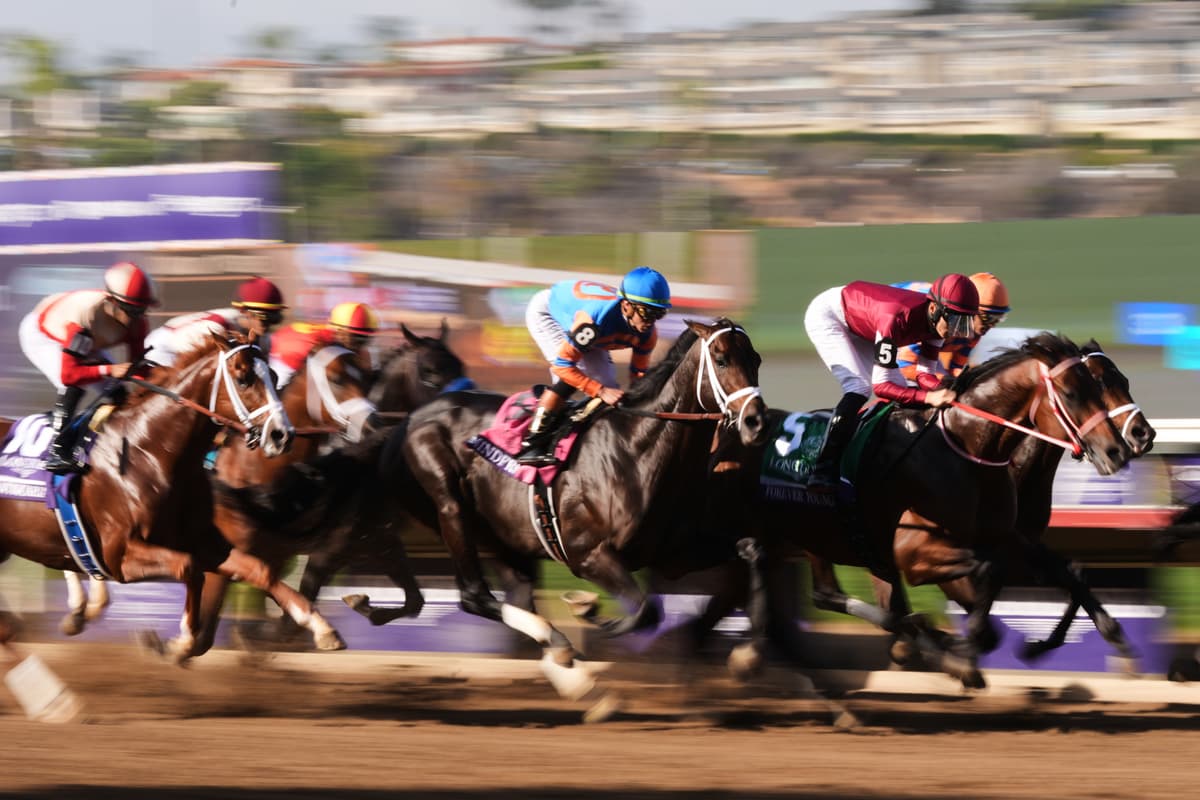
With Japanese thoroughbred Forever Young’s historic victory in Saturday’s $7 million Breeders’ Cup Classic at Del Mar and Shohei Ohtani and Yoshinobu Yamamoto powering the Los Angeles Dodgers to their second straight World Series title, Japan’s influence in two of America’s most cherished sports has never been stronger.
Hours before Mr. Yamamoto won his third game of the World Series to make the Dodgers the first back-to-back champions in 25 years, Forever Young made his own history by giving Japan a dazzling triumph in North America’s richest horse race.
The 4-year-old trained by Yoshito Yahagi and ridden by Ryusei Sakai became the first Japan-based horse to win the Breeders’ Cup Classic, defeating defending champion Sierra Leone by a half-length in the 1 ¼ mile race.
After finishing third in last year’s Classic behind Sierra Leone and Fierceness, Forever Young stalked the leaders early before claiming the lead at the stretch and holding off both challengers to earn redemption.
“It went as I planned, and he is a great horse who can make my plan real,” Mr. Yahagi said, adding his horse is geared for a dominant run. “He will stay in training, and we would like to win all races he will run all over the world.”
Once a respected outsider in the world of horse racing, Japan has become a consistent threat on American soil. Multimillion-dollar investments in infrastructure, breeding, and international collaborations have elevated Japan’s thoroughbred industry to world-class levels.
Forever Young ran third at the 2024 Kentucky Derby, the highest finish ever for a Japanese horse in the Run for the Roses, and Mr. Yahagi’s first victory in the Classic was his third at the Breeders’ Cup, a two-day event featuring 14 races.
“This is like the Japanese football team winning the World Cup,” he said. “Horse racing people never expect [Japan] to win the Breeders’ Cup Classic, so this means a lot.”
Japan’s most significant achievement in horse racing on American soil was followed by the most significant impact a collective group of Japanese players have had on a World Series.
Mr. Ohtani, baseball’s greatest two-way sensation since Babe Ruth, was the Dodgers’ starting pitcher for Game 7, and Mr. Yamamoto ended the best-of-seven series by getting the Blue Jays to hit into a double play.
The Dodgers’ 5-4 triumph in 11 innings made them the first back-to-back World Series winners since the New York Yankees won the last of three straight in 2000. Mr. Yamamoto was named the World Series Most Valuable Player after a remarkable postseason. He pitched a rare-complete game victory in Game 2, won a must-win Game 6, and finished Game 7 with 2 2/3 scoreless innings. Mr. Yamamoto’s Game 7 cap is reportedly being sent to the Hall of Fame at Cooperstown, New York.
“He’s elite,” George Springer of Toronto said of Mr. Yamamoto. “There’s no other way to describe it. He’s elite.”
Mr. Ohtani is, too. The three-time league Most Valuable Player carried the Dodgers throughout the regular season, hitting 55 home runs. He added another eight homers during the postseason, as well as posting a 2-1 record in the playoffs as a pitcher.
Japanese players have starred in the major leagues before. Hideo Nomo broke through in 1995, and Ichiro Suzuki was recently inducted into the Baseball Hall of Fame. But the current wave is different: deeper, more prepared, and dominant. That success stems from elite development systems from an early age, a Japanese pitching culture that teaches mastering a wide variety of pitches, and coach and cultural exchanges between the U.S. and Japan.
An estimated 11 million viewers watched each game of the World Series in Japan and fans began spilling into the streets in Tokyo to celebrate after the Dodgers won Game 7. “I am so proud today to be Japanese,” Seiichiro Okada, a Tokyo cab driver, told the Independent. “To be able to watch these legends in real time is something else.”
In horse racing and baseball, Japanese players aren’t just fitting in — they’re leading.

