Judge Denies Sean ‘Diddy’ Combs’s Fifth Bail Request, Claims Ex-Billionaire Is Too Dangerous To Release From Squalid Brooklyn Jail
Combs must await his sentencing behind bars.
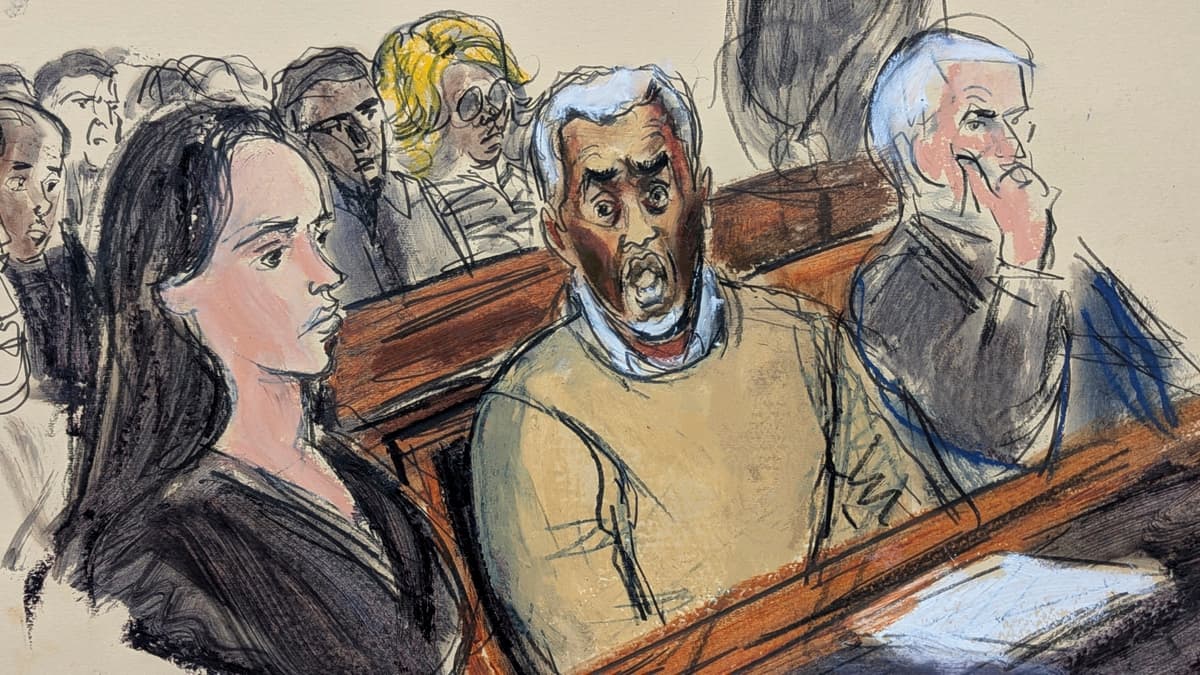
The district judge presiding over the sex-trafficking case against music producer Sean “Diddy” Combs denied the hip-hop mogul’s latest bail application on Monday evening. Mr. Combs will remain incarcerated at the notorious Metropolitan Detention Center in Brooklyn until his sentencing hearing on October 3.
“Increasing the amount of the bond,” Judge Arun Subramanian wrote in his order published on Monday, “doesn’t change the calculus given the circumstances and heavy burden of proof that Combs bears.”
The judge was referring to Mr. Combs’s recent offer to secure a $50 million bond to get out of jail, where he has been detained since his arrest in September 2024.
Defense attorneys had lamented the squalid living conditions at the federal detention center, claiming that these conditions had worsened after the “aggressive” budget cuts recently implemented by the Trump administration.

The judge was unmoved by their complaints. “Combs also points to squalor and danger at the Metropolitan Detention Center, conditions that he says have been aggravated by the federal government’s aggressive budget cuts this year. The public outcry concerning these conditions has come from all corners,” the judge wrote.
Regardless of the conditions, the judge pointed out that “as Combs acknowledges,” corrections officers were “able to keep him safe and attend to his needs, even during an incident of threatened violence from an inmate.”
It’s unclear what specific incident to which the judge was referring, but it appears that Mr. Combs may have been threatened by another inmate.

Mr. Combs, who was charged by the federal government with racketeering conspiracy, sex trafficking, and transportation for the purpose of prostitution, was found not guilty of the most serious charges after an eight-week trial at the Southern District for New York.
Federal prosecutors had alleged that Mr. Combs coerced his two former girlfriends, Cassandra Ventura and a woman who testified under the pseudonym Jane, into separately having sex with male escorts during hours long drug-fueled sex marathons he called “Freak Offs,” while he watched and pleasured himself, using physical violence against the women as one of his coercion tactics.
The rapper pleaded not guilty and argued that he led the lifestyle of a “swinger” and that all sexual encounters were consensual.
The jury sided with Mr. Combs, acquitting him of the more serious charges, but did convict the rapper of two counts of transportation for the purpose of prostitution, a crime laid out in the Mann Act, a federal law that prohibits the interstate transportation of prostitutes, for which the defendant has yet to be sentenced.

On July 2, the day of the verdict, his attorneys requested that their client be released on bail until the sentencing hearing, which is scheduled for early October. But the judge denied the application, reasoning that due to Mr. Combs’s self-admitted acts of violence against his former girlfriends, as well as against former employees and others, the defendant posed a danger to his community.
Last week, defense attorneys filed another bail application, offering, as the Sun reported, a $50 million bond and travel restrictions, such as house arrest at his Miami estate, electronic monitoring, private security guards, and other requirements.
Prosecutors opposed releasing Mr. Combs, writing that his “extensive history of violence — and his continued attempt to minimize his recent violent conduct — demonstrates his dangerousness and that he is not amenable to supervision.”
During the trial, both Ms. Ventura and Jane, as well as numerous of Mr. Combs’s former employees, detailed the physical violence they either witnessed or experienced.

Ms. Ventura showed photographs of an open wound above her eye taken after, as she alleged, Mr. Combs had slammed her head into a bed frame. Jane alleged that the rapper punched her in the face, and slapped her so hard in the bathroom that she collapsed onto the tiles.
Surveillance footage from the InterContinental Hotel at Los Angeles captured Mr. Combs kicking Ms. Ventura as she lay curled up on the floor of the hotel hallway.
On Sunday, defense attorneys submitted a letter by another ex-girlfriend of Mr. Combs, Virginia Huynh, who wrote that the rapper had made “visible efforts to become a better person.”
Ms. Huynh, who was listed in the indictment as “Victim 3,” had been subpoenaed to testify at trial, but for unexplained reasons disappeared shortly before the trial began and was then dropped from the case.

In 2019, Ms. Huynh had told the blogger Tasha K that Mr. Combs was violent toward her during their five-year relationship and that in one instance he stomped on her stomach and hit her in the head after he saw her texting another man.
In her recent letter, however, Ms. Hugh contradicted these statements and insisted that Mr. Combs embodies an “energy of love, patience and gentleness” that is “different from his past behavior,” and that he was fit to be released on bail.
The judge was not convinced.
“As for risk of flight or danger, Combs fails to meet his burden by clear and convincing evidence for the reasons set forth on the record at the July 2, 2025 hearing,” the judge ruled. He repeated what he told the attorneys in court that the defense had “conceded the defendant’s violence in his personal relationships,” and that “this type of violence, which happens behind closed doors … is impossible to police with conditions,” concluding that on “this basis alone, Combs’s application is denied.”

The judge reminded the attorneys that the defendant carries the burden of proof if he wants to be released on bail.
“This statutory framework creates ‘a presumption in favor of detention’ that places a ‘plainly substantial’ burden of proof on the defendant seeking release,” the judge wrote in Monday’s order, adding that to be granted bail, the defendant must prove “exceptional reasons” or “a unique combination of circumstances giving rise to situations that are out of the ordinary.”
In their recent bail application, the defense insisted that such exceptional circumstances exist in Mr. Combs’s case.
For example, most people convicted of Mann Act crimes, the attorneys argued, benefited financially from the prostitution. But Mr. Combs merely used the escorts as a customer. Furthermore, he did not have sex with the prostitutes himself. Instead he hired men to have sex with his then-girlfriends, while he watched.

“Combs’s Mann Act arguments might have traction in a case that didn’t involve evidence of violence, coercion or subjugation in connection with the acts of prostitution at issue,” Judge Subramanian wrote, “but the record here contains evidence of all three.”
Mr. Combs faces 20 years behind bars. Each Mann Act count carries a maximum of 10 years in prison. However, similar convictions have mostly been sentenced with more leniency, often three to four years or less.
In their bail letter, submitted on July 2, defense attorneys wrote that Mr. Combs should receive “21 to 27 months,” adding that their client has “already been incarcerated for 10 months.”
Prosecutors signaled that they may seek a prison sentence of at least four to five years, specifically asking for a sentence ranging between 51 and 63 months, though they could ask for more.
Judge Subramanian will ultimately decide how many more years or months Mr. Combs will spend behind bars.