
‘Köln 75’ Reconstructs the Unique Circumstances Behind Jazz Pianist Keith Jarrett’s Legendary 1975 Concert

The recording of this performance, ‘The Köln Concert,’ would be hailed as a masterpiece and go on to become the best-selling solo jazz record and piano album in history.
Via Zeitegist Films and Kino Lorber
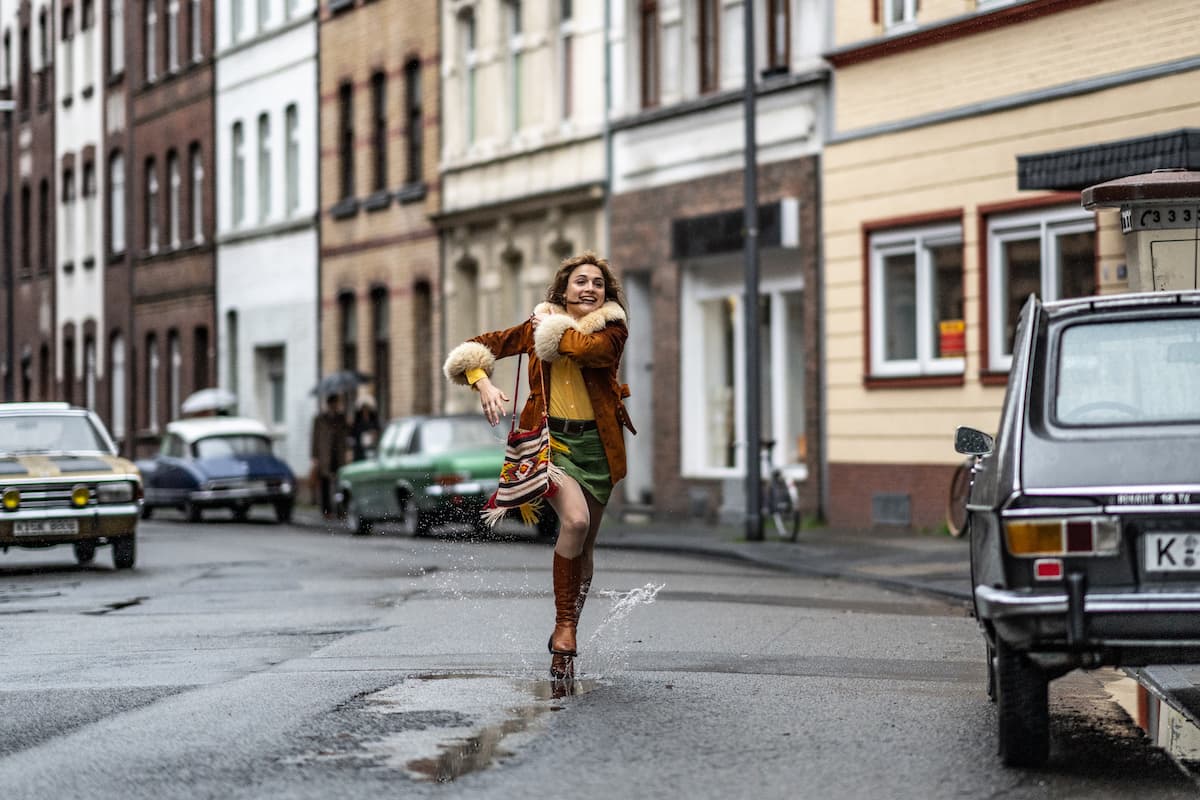
Mala Emde in 'Köln 75.' Via Zeitegist Films and Kino Lorber

Fifty years ago, acclaimed jazz pianist Keith Jarrett sat down at a worn-down practice piano that was mistakenly brought to the Cologne Opera House stage to play a concert of improvised music for more than an hour with no breaks. The recording of this performance, “The Köln Concert,” would be hailed as a masterpiece and go on to become the best-selling solo jazz record and piano album in history. 

Furthermore, the unique circumstances surrounding the concert have become the stuff of legend, and the new film “Köln 75” turns the legend into a playful, tuneful sort of truthful drama, one that’s less focused on Jarrett and the vagaries of artistry than on its young German promoter.

Vera Brandes was only 16 when she began to organize concerts in 1973, starting with British saxophonist Ronnie Scott. Having no real idea of what the job entailed, only an appreciation of music and specifically jazz, she nonetheless was determined to succeed. Early in the film, we see the actress portraying the teenager, Mala Emde, rehearse several canned statements before calling venues, with a photo of Miles Davis pinned to a wall ultimately inspiring her to “just improvise.”

This improvisational, galvanizing spirit can be found in the film as well. Opening moments portray Vera as a middle-aged woman (Susanne Wolff), starting the story off with a traditional framing structure. This strained scenario is quickly dropped, though, for a vignette on false starts. A fictional music writer, Michael Watts (Michael Chernus), plays us a few recorded false starts, including one from Bob Dylan. 

Michael Chernus in ‘Köln 75.’ Via Zeitegist Films and Kino Lorber

Taken together, these prologue scenes cue us into how Israeli-born, Brooklyn-based writer/director Ido Fluk will leverage different kinds of narrative styles, including instructional segments, documentary interludes, and fourth-wall-breaking asides, to tell Vera’s story and how the Cologne concert almost didn’t happen for several reasons. 

Once she hears the musician perform in 1974 at Berlin, which hosted a major jazz festival, Vera makes it her mission to stage a Jarrett concert in her hometown. But the Cologne Opera House requires a large down payment, and she unsuccessfully entreats her dentist father for financial assistance, though prior scenes had already shown us how Herr Brandes is a controlling, disapproving patriarch.

Mr. Fluk contrasts this tense home life with her close-knit group of friends, including best friend Isa, new kid in town Oliver, and big lug boyfriend Jan. These characters create a fun ensemble atmosphere, such as during rock music interludes, even if none of them is given much depth. 

As older brother Fritz, actor Leo Meier is given more to work with, particularly when he begrudgingly becomes Vera’s employee and joins her “other family,” despite being jealous of his freewheeling sister. A lovely late scene in which the siblings bond over their shared disdain of their father represents the movie’s bruised emotional peak.  

After Vera secures funds from her sympathetic mother to book the concert, the director changes chords, leaving the heroine behind for a while to catch us up on where Jarrett was in early 1975. Before it transitions to this look at the pianist, though, Michael shows up again to give viewers, especially those not versed in jazz, a quick history lesson. 

Some enthusiasts may balk at his superficial, flippant, even reductive, survey of the art form, yet it does resonate when he explains how Jarrett “freed” jazz even further — how the innovator turned improvisation into “pure music,” without the traditional supports of composition and collaboration.

Interrupting the story midway through for a ruminative 15-minute interlude on Jarrett could have been too jarring a change of pace even for a film this loose and free-flowing. Yet Mr. Fluk pulls it off by tying it to the real-life drive the musician and his manager took to Germany from Switzerland, with the fictional writer along for the ride. Quick details about his life and career slip a sad, weary undertone within actor John Magero’s portrayal of the exacting artist. Particularly effective, and even amusing, are some of his interactions with journalist Michael, who can’t “stop thinking” and questioning. 

Throughout the film, Ms. Emde’s confident interpretation of the headstrong, ambitious, unconventional Vera illustrates why a German teenager would be interested in jazz and its experimental forms. Moreover, her resolve to put on the Jarrett concert went beyond music, as she also wished to prove to her father she had become a capable, savvy young woman. This motivation gives the third act’s standard, against-all-odds beats some urgency, particularly when she confronts the virtuoso about his refusal to play.

Of course, in the end, Jarrett did perform, but we hear none of the magic he created that night. Instead, Mr. Fluk provides several different variations of codas, including an ironic sidenote, some epilogue text, and a glimpse of Vera in current times. These multiple endings are scored to the beginning of Debussy’s “Prelude to the Afternoon of a Faun” and Nina Simone’s version of “To Love Somebody,” mirroring Jarrett’s melding of jazz, classical, blues, and other musical styles — proving that cinema can mix genres with the best of them.


The New York Sun

© 2025 The New York Sun Company, LLC. All rights reserved.

Use of this site constitutes acceptance of our Terms of Use and Privacy Policy. The material on this site is protected by copyright law and may not be reproduced, distributed, transmitted, cached or otherwise used.

The New York Sun

Sign in or  create a free account

or
By continuing you agree to our Privacy Policy and Terms of Use