
Misplaced Anxieties, Plus Smaller Families Fueling the Rise of Today’s Exhausting Helicopter Parenting

The micromanagement of children requires us parents to become micromanagers, which was something not expected of parents till about 10 minutes ago.
RDNE Stock project via Pexels.com
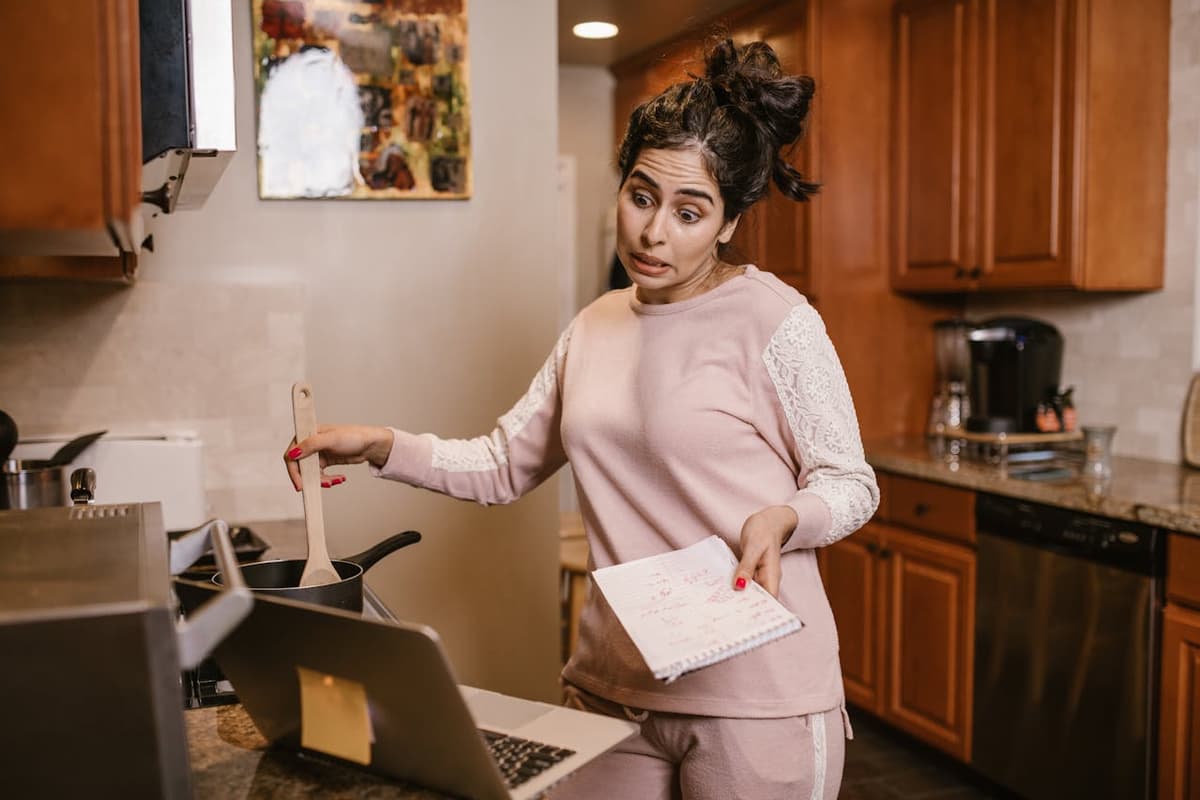
A stressed parent. RDNE Stock project via Pexels.com

A friend just asked me how we got to this point — a point that she is miserably in the middle of, beside herself with guilt for missing an afternoon pickup of her child at school (someone else pitched in), or for having to cut bath time short to take a work call.

The pressure to be perfect and ever-present, and somehow control every aspect of our tots’ lives, is INTENSE … and completely unnecessary. And new. The micromanagement of children requires us parents to become micromanagers, which was something not expected of parents till about 10 minutes ago. Because it’s an impossible ask and impossible task.

My friend asked, HOW DID WE GET TO THIS POINT? Here, in rant form, is my reply:

How We Got to HELICOPTER PARENTING

1. Excess fear and attention to extremely rare/high-profile kidnappings in late 1970s/early 1980s led to “milk carton kids.” Belief born that anytime a child is unsupervised, they are in DANGER.

2. “Stranger danger” became a constant drumbeat (even though the vast majority of crimes against tots are committed by people they KNOW). So constant supervision — and even PRIDE in distrusting others — became the norm.

3. In the meantime, smaller families and two incomes meant more money could be spent on each child. The market responded with new programs (travel sports, tutoring, extracurriculars) that were sold as “better” than tots just “wasting” their time playing. Children would supposedly be SAFER (constant supervision) and “learn more,” a fallacy that assumes tots only learn through direct instruction — contradicted by almost all of human history, when schooling did not EXIST. Pretty soon, the MORE activities you could put your child in, the MORE you thought your tot could get ahead.

4. Anyone who trusted their children to just hang out was seen as lazy, or leaving child potential on the table, or actually endangering their tots.

5. The norms shifted SO MUCH that some parents were accused of NEGLECT simply for letting their tots do what ALL children were doing a generation earlier: playing outside, staying home alone or walking to the store.

6. And once ELECTRONIC SURVEILLANCE became possible, the idea that you would EVER take your eyes off your tots became completely untenable. “Just put an AirTag in her shoe, Mom! Or don’t you care if she gets trafficked to Thailand?”

7. So: the ease of surveillance. The fact that extracurriculars swept almost all tots off the street, leaving “no one to play with.” The fear of gov’t investigation for neglect. The worry that the other children were getting ahead via tutors, etc. And the completely outta-whack perception of danger (Harris Poll: 50 percent of adults think if two 10-year-olds are playing at the park, they are LIKELY to be abducted). All this meant we switched from trusting tots, neighbors and even children’s own innate smarts and resourcefulness to ONLY TRUSTING OURSELVES.

8. That’s why parenting is so hard. We feel we somehow can and MUST exert control over everything our tots encounter. We trust only ourselves or a proxy that we (background check and) hire to watch/teach/entertain/interact with our children. 

“The village” has boiled down to JUST US always watching, double-checking, distrusting and surveilling our tots, not to mention busily stuffing them with 2 million words by age 3, lest they grow up saying “good” instead of “exemplary” and tank their SATs.

Or so sez me.

Creators.com


The New York Sun

© 2025 The New York Sun Company, LLC. All rights reserved.

Use of this site constitutes acceptance of our Terms of Use and Privacy Policy. The material on this site is protected by copyright law and may not be reproduced, distributed, transmitted, cached or otherwise used.

The New York Sun

Sign in or  create a free account

or
By continuing you agree to our Privacy Policy and Terms of Use