


New Indie Film ‘Rebuilding’ Fails To Construct an Inspiring Story While Exploring Resilience After Disaster

At best the main character is a supporting character. This shortcoming prevents engagement with a drama that nonetheless contains sturdy themes and topical relevance.
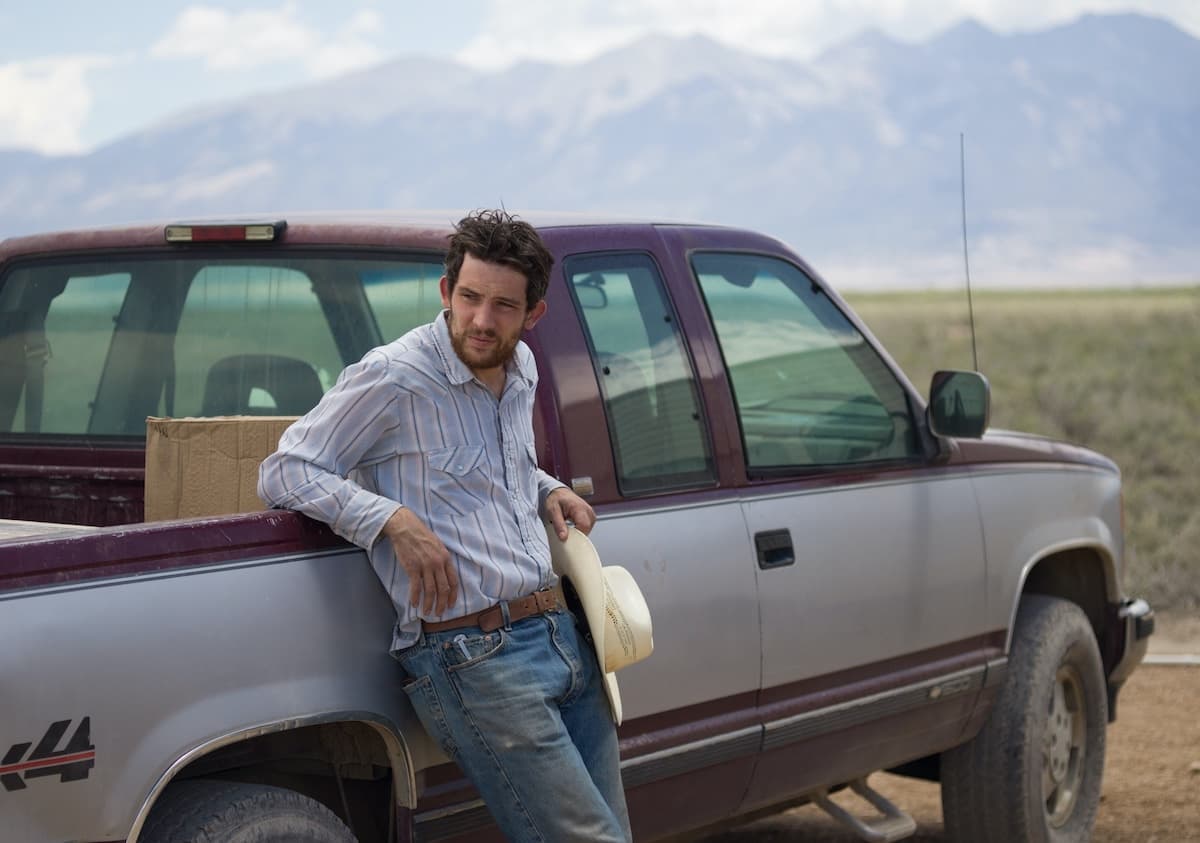
Via Bleecker Street
Josh O'Connor in ‘Rebuilding.’ Via Bleecker Street

The protagonist of the new independent film “Rebuilding” is a young man, Dusty, who recently lost his Colorado home and cattle ranch in a wildfire. Taciturn and stiff, he moves into a government-provided trailer at a campsite where others who’ve lost their homes are living. 

These other displaced people include a mother, Mali, whose husband died in the fire. Additional characters who circle ’round our cowboy are ex-wife Ruby and daughter Callie Rose. Any one of these would have made for a more compelling lead character than Dusty.

For a few years, the phrase “main character syndrome” has circulated, mostly on social media, to describe a self-centered individual who behaves as if the world revolves around himself/herself. Dusty isn’t exactly an example of this modern malady, yet the movie overall suffers from what I call “wrong main character syndrome.” While his struggles to come to terms with losing his home and livelihood immediately make him sympathetic, there’s just not enough to the role to justify its centrality in the film: At best he’s a supporting character. This shortcoming prevents engagement with a drama that nonetheless contains sturdy themes and topical relevance.

Recovery from devastation, whether it be the end of a relationship, the death of loved ones, or the loss of property and possessions, is a storyline predicated on positivity and eventual renewal. “Rebuilding” is no different.

As Dusty slowly re-emerges after a period of grief, we see him sell the remaining livestock and survey his charred land on horseback. The most important step in his recovery is his re-connection with Callie Rose, though he’s distant with the girl because he knows he may decide to move to Montana. Yet out of a sense of responsibility for her, if not profound love, and at Ruby’s insistence, he remains in the area, working in road construction and naively attempting to get a bank loan to expand his former enterprise.

Josh O’Connor and Lily LaTorre in ‘Rebuilding.’ Via Bleecker Street

As Dusty sort of settles into his new living arrangement, he also hangs out with his neighbors, including Mali and her daughter, two aging women, a former plumber, and a few others. Writer/director Max Walker-Silverman sketches a saddened yet adaptable group of everyday people, and each trailer park denizen seems more interesting than our glum lead character. Mali, in particular, would have made for a gripping lead as a recent widow and newly solo parent. As played by professional boxer and actress Kali Reis (“True Detective: Night Country”), the character has a stature and hinted-at depth lacking in Dusty.

With blandly pained expressions and an unsteady Western American accent, British actor Josh O’Connor not only fails to impress as a Coloradoan cowboy but is also unable to portray more than the most obvious characteristics of a directionless young man. Mr. Walker-Silberman’s first film, the wonderful “A Love Song,” featured fantastic performances by two veteran actors who were able to fill in the blanks in the sparse script. That movie also had the benefit of being less sentimental while exploring themes of aging, impermanence, love of nature, and loneliness — ending without tidy resolution, something “Rebuilding” aims for. 

There are a couple of moments in which Dusty’s inner life proves more complicated than his flat outward persona, such as when he tells Mali that he didn’t lose everything in the fire like she and the others. Yet the listless Mr. O’Connor cannot convey the character’s guilt over his relative luck and privilege, and this tension can only be mined for minimal effect in scenes, at least until it comes up again near the end. Realizing his protagonist needs more to struggle with before then, Mr. Walker-Silberman has his ex-mother-in-law pass away.

Despite Ruby’s supporting character designation, actress Meghann Fahy paints a strong portrait of a woman juggling multiple responsibilities and close relationships, including ex- Dusty, current partner Robbie, mother Bess, and, of course, her daughter. Youngster Lily LaTorre, too, is a riveting screen presence, with her periodic reading of a children’s story about a cowboy with magic boots adding a whimsical, if fairly obvious metaphorical, quality. This element and a scene in which Callie Rose applies glow-in-the-dark stars to the walls of the trailer lead one to believe that, if told from her perspective, the film’s lack of real drama might have been enhanced through more childlike wonder.

While the filmmaker makes overtures to exploring the idea of community through an ensemble piece, what his movie most typifies is a character study. The focused-on hero, though, is someone who’s almost completely incurious about the other characters, rendering his climatic epiphany regarding communal land dubious. 

Perhaps Mr. Walker-Silberman wished to make an analogy with issues of immigration, inheritance, and resource allocation, but he clearly forgot to give his main character the humanity and social engagement needed to sell this sudden openhearted outlook. The detached Dusty gets to be a savior without doing much at all, leaving this viewer unmoved and unconvinced.


The New York Sun

© 2025 The New York Sun Company, LLC. All rights reserved.

Use of this site constitutes acceptance of our Terms of Use and Privacy Policy. The material on this site is protected by copyright law and may not be reproduced, distributed, transmitted, cached or otherwise used.

The New York Sun

Sign in or  create a free account

or
By continuing you agree to our Privacy Policy and Terms of Use