
Opinion: Nintendo’s Switch 2 Is Too Expensive To Be a Runaway Hit

Though the Switch 2 will sell well, its substantial price-hike will likely kill its chance of repeating the original’s success.
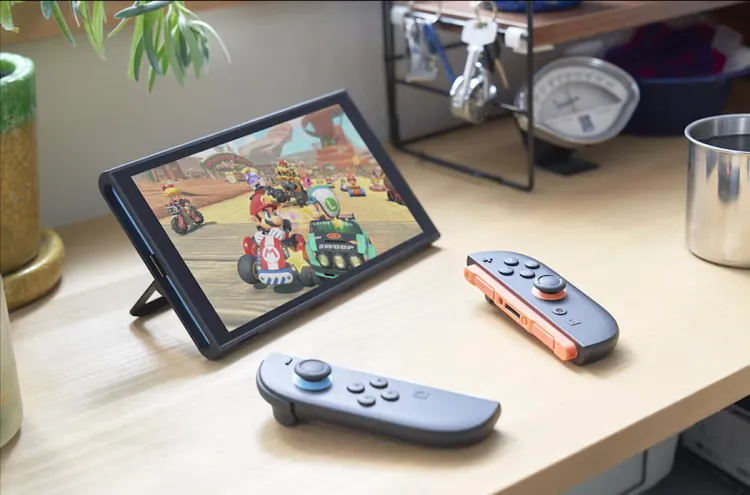
Courtesy of Nintendo
Nintendo Switch 2. Courtesy of Nintendo

Last week, Nintendo finally revealed more details about their upcoming Switch 2: the sequel to their best-selling dockable handheld console, launched in 2017. The original Switch was the second-highest-selling console ever, and it’s not hard to see why. It had a compelling portable and dockable form factor and was affordable, starting at $299. First-party titles — like the award-winning Legend of Zelda: Breath of the Wild — topped out at $60, with most selling for under $40.

The long-awaited Switch 2 is notably more capable than its predecessor, with a larger, high refresh rate screen, more powerful hardware, and great new games. But, though there was excitement, nothing received more attention than the prices, because the Switch 2 is no longer affordable.

If the Switch 2 were to cost the same inflation-adjusted price as the original, it would start at roughly $385, but it’s more than 15 percent higher at $450. One theory suggests this price accounts for expected upcoming tariffs, though Nintendo hasn’t confirmed this — meaning Americans may pay up to $560 for the console.

Even at the advertised prices, this is not a “budget” console, particularly when you account for the necessary add-ons. If you want to play with a second person — the preferred way to play for games like “Mario Kart” — then you’ll need to buy a second pair of Joy-Cons for $90, and the charging grip for them for $35, or the “Pro Controller” for $80. If you want a spare dock, that’s an extra $110. The new camera for the in-game chat feature? $50.

The biggest killer, though, is the game prices. Nintendo is the console for everyone — families, kids, and adults alike — and children will have a tough time convincing parents to spend $80 for the new “Mario Kart” game; or a rumored $90 for the physical copy. That’s more than many new PC, PlayStation, and Xbox games cost, and most of those are available for a low monthly fee through Playstation Plus or Game Pass, which Nintendo has no competitor for. Nintendo also never discounts their games, so “Mario Kart World” will always cost $80.

Nintendo Switch 2.
Nintendo Switch 2. Courtesy of Nintendo

Ironically, that price doesn’t seem too bad if you benchmark it against inflation. Gamers are among the most ornery and outspoken consumers so, despite the explosion in video game production costs, console games have generally maintained the $60 price point established in 2008. To make up the shortfall, they’ve increased revenues by adding in-game cosmetics, paid additional features, and so forth — even though these worsen games. It’s to Nintendo’s credit that they’ve been unwilling to follow that path and instead want to sell whole games for the list price. But it’s not a good move to rebalance game prices for inflation as you introduce a dramatically more expensive console.

If Switch 2 was expensive, but the games were still cheap — or it was fully compatible with previous, cheaper original Switch titles — customers would likely not complain, and Switch 2 would be a huge sales success. The same would be true if the opposite were the case; that the Switch 2 was relatively inexpensive, but new game prices jumped to align with inflation. But doing both simultaneously is tough, and I think it will stop the Switch 2 from replicating the sales success of its predecessor.  

The Switch didn’t outsell its console competitors simply because it had better games and was more fun to use — though both were true. The most important part was that it was way cheaper, and thus far more competitive for family consumers; and nothing like it existed on the market.

That isn’t true anymore, and it’s no longer the cheapest option. For example, though the Steam Deck doesn’t have Nintendo’s library, it can play almost any game available on the Steam store — including the endless number of modern classics perpetually available on sale for under $10 — and it can be used on the move, or docked with a TV, starting at only $399.

Meanwhile, if you want to play “Mario Kart World” in multiplayer with a friend, partner, or child — buying the Switch 2, the spare Joy-Cons, and the game — you will need to spend $605. And if you want to access Nintendo’s guide on using their new console, you’ll pay $10. Yes, the digital equivalent of an instruction manual is now a paid extra.


The New York Sun

© 2025 The New York Sun Company, LLC. All rights reserved.

Use of this site constitutes acceptance of our Terms of Use and Privacy Policy. The material on this site is protected by copyright law and may not be reproduced, distributed, transmitted, cached or otherwise used.

The New York Sun

Sign in or  create a free account

or
By continuing you agree to our Privacy Policy and Terms of Use