Playing Football Under Friday Night Lights Might Come at a Deadly Cost — CTE

Study gives credence to New York City mass shooter’s claim that high school football damaged his brain.

NYPD
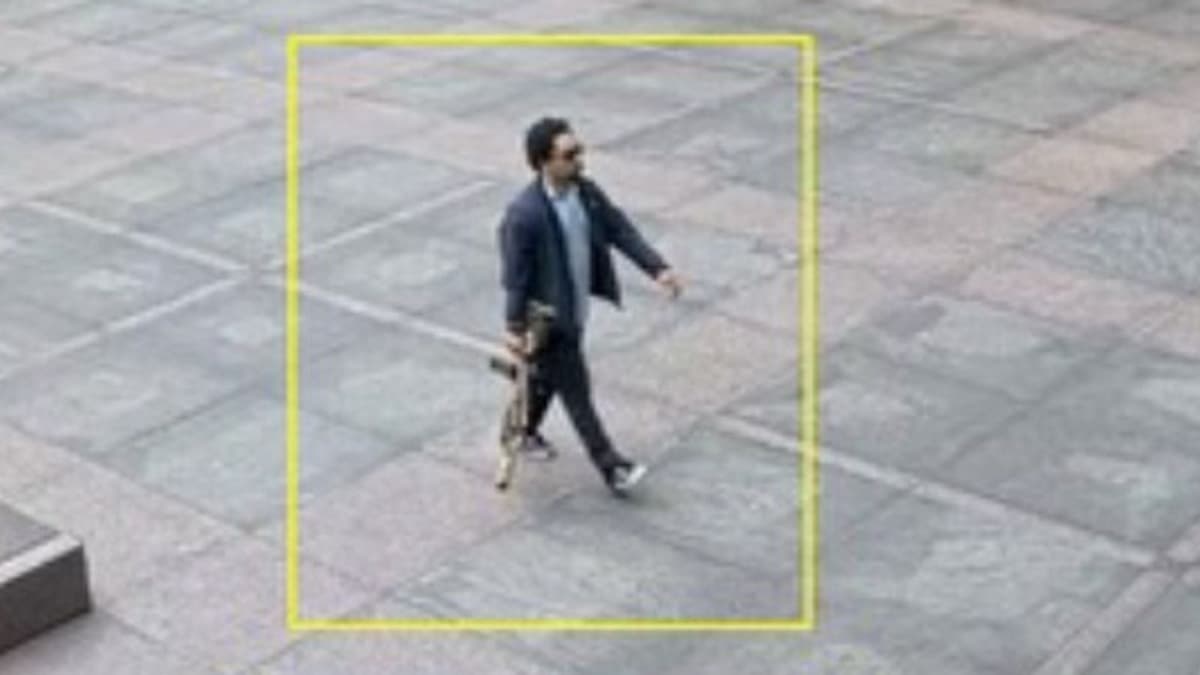
Surveillance footage released by the New York Police Department shows Shane Tamura approaching an office tower in Midtown Manhattan. NYPD

More than one million high school football players across the country are preparing for the upcoming season with the hope of experiencing gridiron glory despite the looming risk of irreversible brain damage.

That’s the chilling reality of a recent study that suggests the recent Midtown Manhattan mass shooter, Shane Tamura, might have been suffering from chronic traumatic encephalopathy when the 27-year-old killed four people in a Park Avenue office building on July 28, before taking his own life.

Tamura, a running back in high school, left a three-page manifesto suggesting he was suffering from CTE and targeted the NFL for concealing “the dangers to our brains to maximize profits.”

Tamura didn’t play tackle football beyond high school. That doesn’t mean that he didn’t suffer from CTE. ESPN reported on Sunday that Tamura repeatedly sought medical treatment for “debilitating headaches” that began while he was in high school.

His claim may have merit. A 2023 study by Boston’s University’s CTE Center examined 152 donated brains. Researchers found signs of CTE in 63 of them, more than 40 percent. The youngest confirmed case? A 17-year-old high school football player.

One of the most haunting cases is Wyatt Bramwell, who took his own life in July 2019. A few months after graduating high school in Kansas City, Missouri, he committed suicide by shooting himself in the heart. He left behind a haunting video where he said, “My life for the past four years has been a living hell inside my head.”

While CTE is commonly associated with professional football players, Bramwell became the first case of Stage 2 CTE found in a high school football player. Furthermore, of the 45 former high school football players who died in their teens and 20s, 31 percent showed signs of the disease.

The co-founder of the Concussion Legacy Foundation, Chris Nowinski, said football players take “a billion attacks” to the head each season. “We should not be surprised that some of those will go on to develop behavior associated with damage to their frontal lobe and other parts of the brain,” he said.

Medical officials haven’t confirmed whether CTE influenced Tamura’s deadly rampage. The Las Vegas security guard drove to New York and targeted the NFL offices. His note read, “study my brain please. I’m sorry.” CTE cannot be diagnosed until a person is dead.

The NFL, under pressure from a series of lawsuits, has implemented protocols to limit head injuries. They include fewer practices in full pads, the use of Guardian helmets, and the revamping kickoff rules to eliminate full speed collisions. But the traditional kickoff remains in most high schools and guardian helmets are limited to those that can afford them.

“We take precautions,” the head football coach at Prairie High School in Cedar Rapids, Iowa, Kyle Knock, said. “We don’t hit every single day. I don’t ask the kids to bang heads every day. And we have the guardian caps, which you see a lot of the NFL teams wear and college teams wear. They help protect the helmet.”

Researchers say signs of possible CTE are feelings of sadness, depression, frequent headaches, and mood swings. There is no clear connection to violet acts or criminal activity. “You can’t tie a brain injury or brain disease or condition to a single act or single behavior,” Mr. Nowinski said.

Yet, some found to have CTE died by suicide, harmed others, and committed criminal acts. Dave Duerson, Junior Seau, and Andre Waters are among the list of former NFL stars who committed suicide and were confirmed to have CTE. Phillip Adams, who played six years in the NFL, killed six people before killing himself in Rock Hill, South Carolina, in 2021. He was later diagnosed with CTE. A former New England Patriots tight end, Aaron Hernandez, committed suicide in 2017 while in prison serving a life sentence for murder. At age 27, he was found to be suffering from Stage 3 CTE. “Having Stage 3, that advanced, at that age, would absolutely change anyone’s personality, judgment and behavior,” Mr. Nowinski said.

Christie Bramwell, Wyatt’s mother, never imagined her son was putting his life in danger playing high school football. “I thought the worst thing that would happen to my kid maybe was a bad tackle, something broken, something bleeding,” she told the Concussion Legacy Foundation. “That wasn’t the case.”

Researchers said the risk of developing CTE doubles every 2.6 years of football played, which is why they suggest tackle football should be played later rather than sooner.  Wyatt Bramwell began playing tackle football in the third grade. Tamura began playing at age 6.

“Kids are bigger, faster and stronger than ever,” Mr. Nowinski said. “I don’t understand why we still have nearly 1 million boys playing tackle football before high school knowing some will develop CTE like Wyatt Bramwell.”


The New York Sun

© 2025 The New York Sun Company, LLC. All rights reserved.

Use of this site constitutes acceptance of our Terms of Use and Privacy Policy. The material on this site is protected by copyright law and may not be reproduced, distributed, transmitted, cached or otherwise used.

The New York Sun

Sign in or  create a free account

or
By continuing you agree to our Privacy Policy and Terms of Use