Playwright and Actor Jordan E. Cooper Is Back With a Modern Take on the Tale of Noah’s Ark, ‘Oh Happy Day!’

Cooper’s hero communicates a dual sense of self-pity and self-loathing that can become oppressive after a while; there’s little evidence here of the comic facility and sheer buoyancy the playwright brought to his Broadway debut.
Joan Marcus
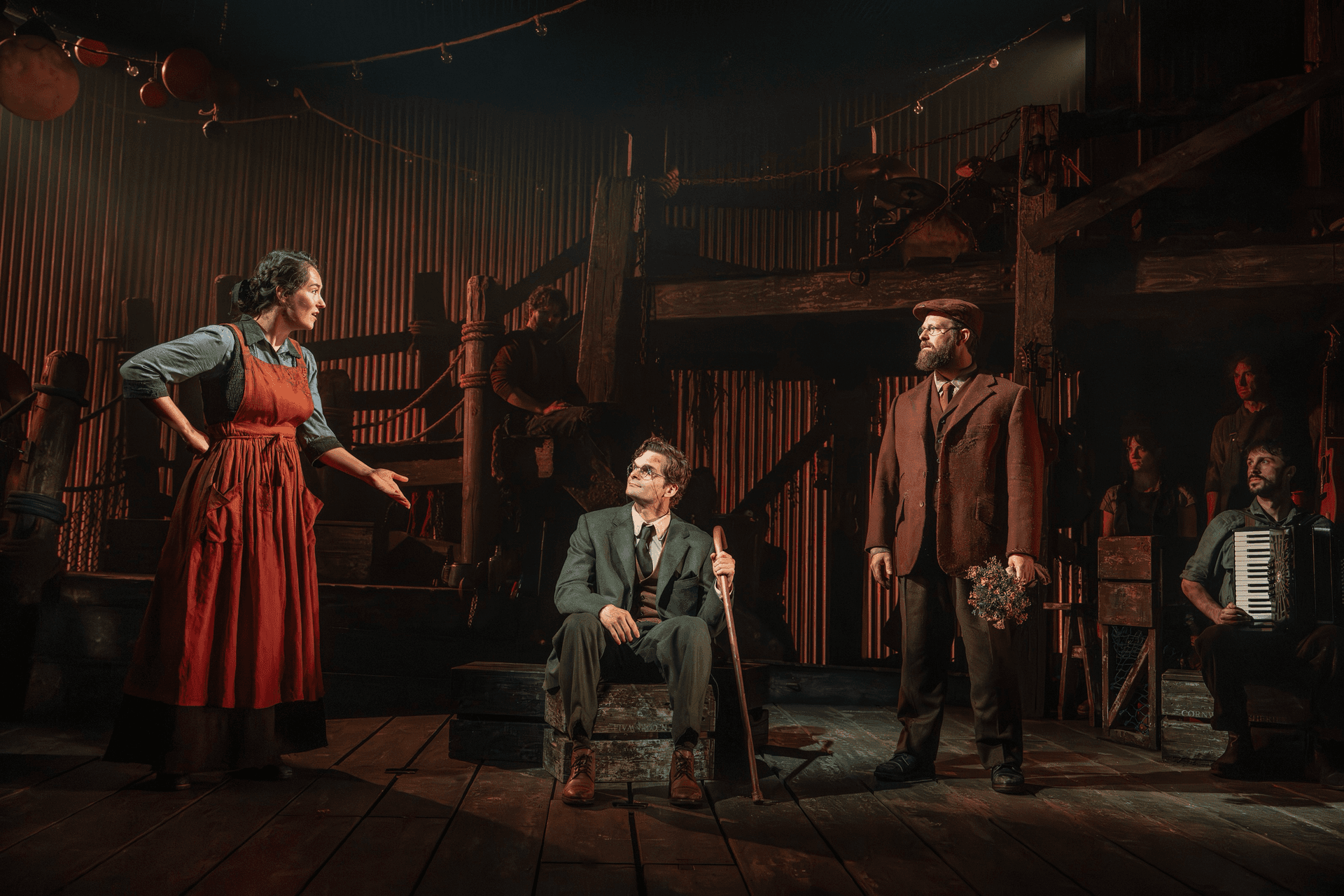
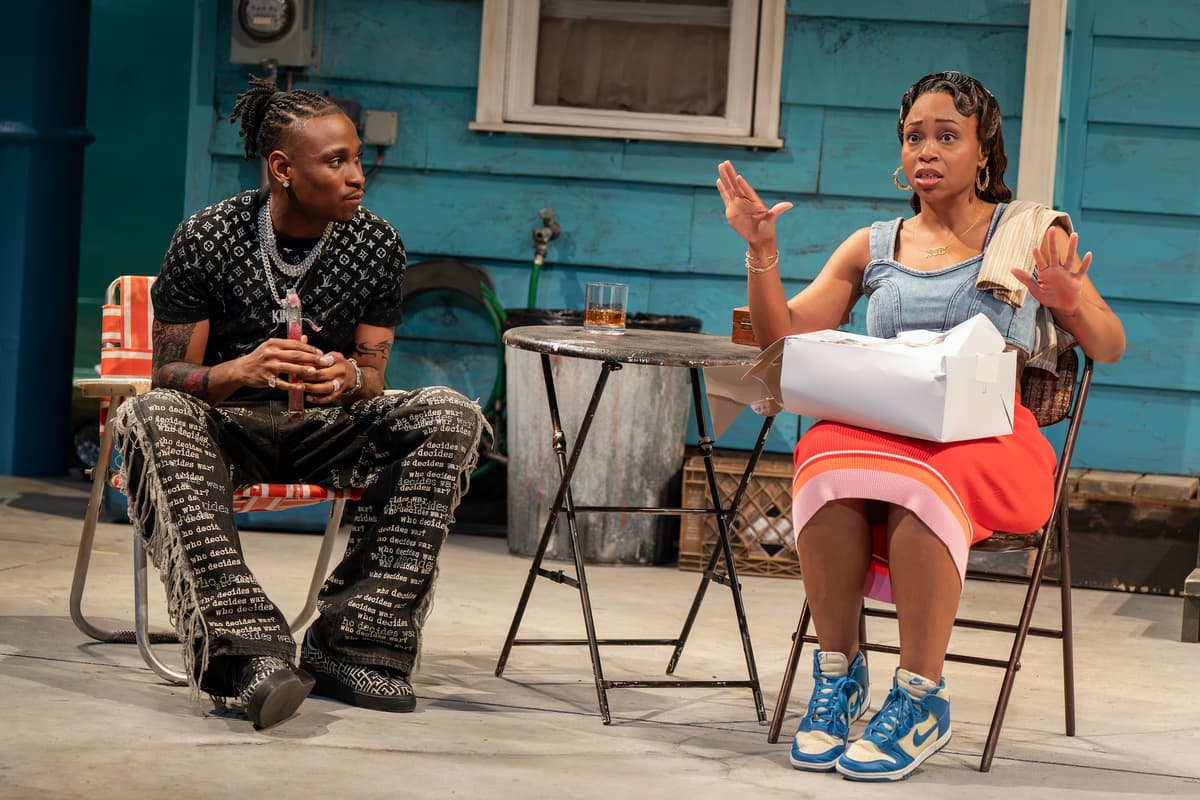
Jordan E. Cooper and Tamika Lawrence in 'Oh Happy Day!' Joan Marcus

In 2022, Jordan E. Cooper at age 27 became the youngest black dramatist to have a play produced on Broadway. The raucous comedy that earned him that distinction was “Ain’t No Mo’,” which imagined that our government had offered all citizens of his race free, one-way airplane tickets to Africa; those who didn’t take advantage of this deal risked what was described as “extreme racial transmogrification.”

In Mr. Cooper’s new play, now being staged off-Broadway at the Public Theater, the premise is again darkly fanciful: “Oh Happy Day!” puts a modern spin on the tale of Noah’s Ark, in which the animals being saved are a small human family and the Noah figure is black, gay, and — spoiler alert — dead.  

“Day!” opens with “A Good Day to Be Happy,” one of several jubilant, soulful tunes by a contemporary gospel artist, Donald Lawrence, featured in this two-act piece. The song is delivered by the Divines, a girl group composed of 4,000-year-old spirits, played by Tiffany Mann, Sheléa Melody McDonald, and Latrice Pace; all are blessed with heavenly voices and look extremely well-preserved in periwinkle gowns and sparkly headdresses designed by Qween Jean. 

The Divines — whose first names are Holy (Ms. Mann), Mighty (Ms. McDonald), and Glory (Ms. Pace) — are on hand to help convince the protagonist, one Keyshawn Johnson, played by Mr. Cooper, to not be consumed by negativity. Happiness “ain’t a mood, it’s a choice,” Holy tells him, underlining the play’s central message, which will be repeated throughout. 

The Divines: Tiffany Mann, Latrice Pace, and Sheléa Melody McDonald. Joan Marcus

Keyshawn is skeptical, and not simply because he has just been murdered — his “blood spilled like lava all over the parking lot concrete of a Motel 6,” as Mighty reports. The real challenge is that Mr. Cooper’s hero carries a chip on his shoulder the size of a boulder, and it was clearly there long before he met his sorry end. 

To be fair, Keyshawn’s short life wasn’t one that encouraged gratitude and good cheer: Rejected by both his father and his church because of his sexual orientation, he found himself on the street at an early age, forced to support himself by predictably ugly and dangerous means. Ironically — though predictably, really — religious hypocrisy ends up playing a direct role in Keyshawn’s sad fate.

Mr. Cooper paints a more sympathetic and nuanced portrait of Keyshawn’s dad, Lewis, an ex-convict who was incarcerated for much of Keyshawn’s childhood and has tried to compensate for that absence with his notion of a firm but loving hand; and of God, who assumes a number of forms in this play.

We also meet Keyshawn’s sister, Niecy, a single mom who lives with Lewis, played with warmth and grit by Tamika Lawrence, and her 12-year-old son, Kevin, whose mostly quiet demeanor betrays a keen wit that’s adorably present in Donovan Louis Bazemore’s performance. Brian D. Coats, similarly, reveals the frustration and compassion under Lewis’s forbidding gruffness.

Yet this is Keyshawn’s story first and foremost, and as both an actor and a writer, Mr. Cooper communicates a dual sense of self-pity and self-loathing that can become oppressive after a while; there’s little evidence here of the comic facility and sheer buoyancy the playwright and performer brought to “Ain’t No Mo’.” Director Stevie Walker-Webb, who also helmed that earlier production, doesn’t help by keeping the volume up both literally and figuratively, so that arguments between the family members can devolve into shouting matches. 

“Oh Happy Day!” has its share of lighter moments, and there are times — especially when the Divines are around — that its loudness becomes vibrant and celebratory. The play and the production would have been better served, in fact, had Messrs. Cooper and Walker-Webb followed the trio’s advice more closely, and embraced the light that’s clearly foundational to both.


The New York Sun

© 2025 The New York Sun Company, LLC. All rights reserved.

Use of this site constitutes acceptance of our Terms of Use and Privacy Policy. The material on this site is protected by copyright law and may not be reproduced, distributed, transmitted, cached or otherwise used.

The New York Sun

Sign in or  create a free account

or
By continuing you agree to our Privacy Policy and Terms of Use