

Another Pirro Loss: DOJ Drops Case Against Olympic Canoeist, Admitting Reflecting Pool Renovation Was ‘Hasty and Botched’
By JOSEPH CURL
|Grantland Rice’s poem, originally published in the Sun after Babe Ruth died, has an unstudied sorrow about it — a real sense that something strong and vibrant had been wrenched from the American scene.

Published:
Updated:
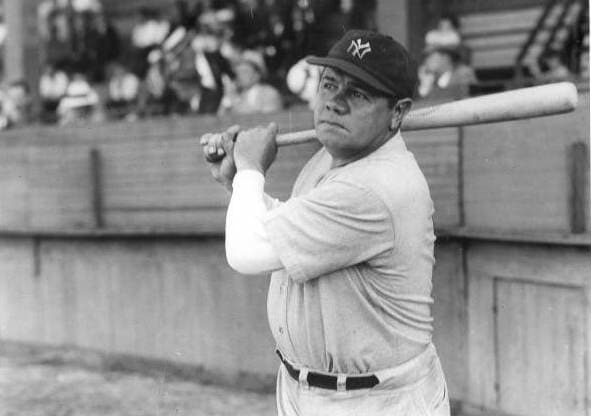
George Herman “Babe” Ruth died on August 16, 1948, and the next day, Grantland Rice (1880–1954) published a small elegy in The New York Sun with the title “Game Called.” Sometime in the 1950s, Grant would change the poem for the “Fireside Book of Baseball,” making it more formal and more sententious, more deliberately uplifting. Which is a shame, for the Sun original had an unstudied sorrow about it — a real sense that something strong and vibrant had been wrenched from the American scene.
Grandiloquence always tempted Rice. He wrote well, as well he ought, a 1901 graduate of Vanderbilt with a degree in Classics. But in his rise from local sports reporting to a nationally syndicated column, building his reputation as the dean of American sportswriters, he always showed his love for big figures — the winners of sports as the battle of life: Bill Tilden in tennis, Jack Dempsey in boxing, Bobby Jones in golf, Knute Rockne in football. He set out in his grandiloquent prose to make these men seem ancient Greek and Roman demigods, fighting epic battles upon the plains of American sports. He wanted his readers to see an ancient mythology replayed in the new American athletic competitions.
Rice actually published a minor book of poetry, “Songs of the Stalwart,” in 1917. But the thing to remember is that formal verse was simply an idiom that writers were expected to know. Like his fellow newspapermen from whom we’ve featured Poems of the Day — Franklin P. Adams (1881–1960) and Don Marquis (1878–1937) — Rice was part of what may have been the last generation of writers to assume both that rhymed poetry was the peak of word use and that poetry was called on for casual occasions of comedy and formal occasions of sorrow.
By JOSEPH CURL
|
By JAMES BROOKE
|
Cancel anytime
By continuing you agree to our Privacy Policy and Terms of Service.
By DEAN KARAYANIS
|