


Barack Obama’s Anti-Israel Era
By THE NEW YORK SUN
|William Cowper was a kind of proto-Romantic. He was a poet and a madman — a less-common combination than one might suppose.
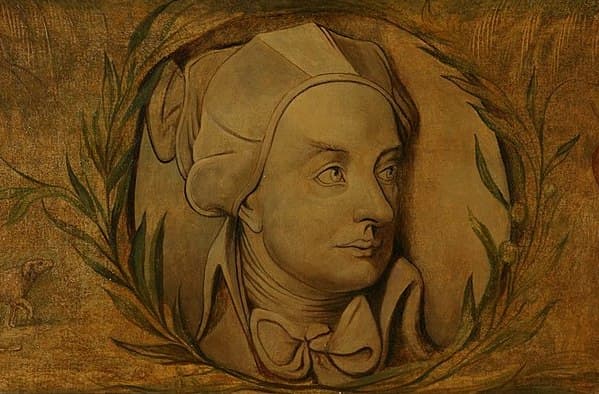
William Cowper (1731–1800) was a poet and a madman. Which is a less-common combination than one might suppose. Oh, sure, there’s Cowper’s contemporary, Christopher Smart (a fragment of whose “Jubilate Agno,” about his cat Jeoffry, was a Poem of the Day in the Sun last summer). And the 20th century’s Robert Lowell, and a handful of others. But often enough, it’s the madness that comes first — a tendency toward insanity, writ deep down in the person, with poetry a therapeutic path back to sanity. For a while.
Somehow, though, Cowper managed to be quite popular in his time: a kind of proto-Romantic whose verses on country scenes and the ordinary lives of ordinary people anticipated the turn that Wordsworth would complete. His fervent evangelical Christianity found expression in the 1779 “Olney Hymns,” produced with John Newton (composer of “Amazing Grace”). Cowper’s campaign against slavery issued in such poems as “The Negro’s Complaint.”
By THE NEW YORK SUN
|
By ROSS ANDERSON
|
By LAWRENCE KUDLOW
|
By GEORGE WILLIS
|
By JENNIFER DOHERTY
|
By LUKE FUNK
|
By A.R. HOFFMAN
|
By ALEXANDER LARMAN
|William Cowper (1731–1800) was a poet and a madman. Which is a less-common combination than one might suppose. Oh, sure, there’s Cowper’s contemporary, Christopher Smart (a fragment of whose “Jubilate Agno,” about his cat Jeoffry, was a Poem of the Day in the Sun last summer). And the 20th century’s Robert Lowell, and a handful of others. But often enough, it’s the madness that comes first — a tendency toward insanity, writ deep down in the person, with poetry a therapeutic path back to sanity. For a while.
Somehow, though, Cowper managed to be quite popular in his time: a kind of proto-Romantic whose verses on country scenes and the ordinary lives of ordinary people anticipated the turn that Wordsworth would complete. His fervent evangelical Christianity found expression in the 1779 “Olney Hymns,” produced with John Newton (composer of “Amazing Grace”). Cowper’s campaign against slavery issued in such poems as “The Negro’s Complaint.”
Already have a subscription? Sign in to continue reading
Cancel anytime
By continuing you agree to our Privacy Policy and Terms of Service.
Cancel anytime