

French Protests Boil Over With Buildings Torched and Hundreds Arrested Nationwide
By DAVID JONES
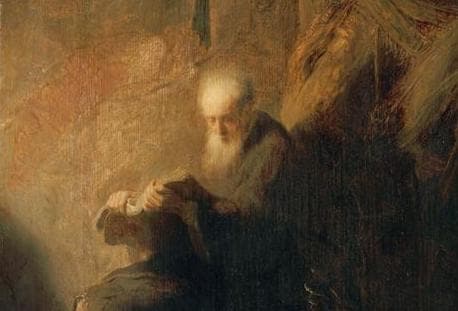
|Elinor Wylie’s prodigal seeks a hermitage, not to live a rightly ordered life but to die an orderly death.

Published:
Updated:
Readers of The New York Sun will recognize Elinor Wylie (1885–1928), whose birthday we mark today, as one of a generation of American women poets writing in the shadows of the early twentieth century. There was the obvious shadow of World War I, which stained the springtime for our recurring Poet of the Day, Sara Teasdale.
Wylie’s own “A Crowded Trolley Car,” with which the Sun commemorated her birthday last year, reimagines the grittiness of the early-twentieth-century American Naturalists, Theodore Dreiser and company, even as it penetrates the grim anonymous exhaustion of working people to make visible the human soul in its particularity.
Yet there was also, in Elinor Wylie’s relatively short lifetime, the long shadow of William Butler Yeats. As another Poem of the Day, Edna St. Vincent Millay’s “I Shall Return to the Bleak Shore,” makes clear, poets found it almost impossible to conduct a poetic career in the early twentieth century without entering into some form of conversation with Yeats’s enormous, varied body of work. “The Lake Isle of Innisfree,” which appeared as Poem of the Day the same week as the Millay poem, had already become its own genre: alluded to, imitated, parodied.
We might understand today’s poem, “Prophecy,” as another example of that genre. It’s not quite an imitation, and it’s not quite a parody. It’s more a riff on Yeats’s idea of return to a distant homeland, to live in peaceful, orderly solitude. Though Wylie’s three quatrains are in common meter, alternating tetrameter and trimeter lines, we can almost discern the shape of Yeats’s own three hexameter quatrains superimposed on them, like an old, faint watermark on a ceiling.
There’s the invocation, too, of that Yeatsian voice, opening the poem with the declaration of the Prodigal Son in Luke’s Gospel: “I will arise and go . . .” In Wylie’s poem, however, there is no arising and going. There is no human action of any kind, just the wind’s “setting his mouth” to a crack in the window to “blow the candle out.” Her prodigal seeks a hermitage, not to live a rightly ordered life but to die an orderly death.
By DAVID JONES
|
By MARTIN PENGELLY
|
By BRADLEY CORTRIGHT
|
By DAVID JONES
|
By BRADLEY CORTRIGHT
|
By MARIO NAVES
|
By GARY GASTELU
|
By ALEX ZDAN
|Readers of The New York Sun will recognize Elinor Wylie (1885–1928), whose birthday we mark today, as one of a generation of American women poets writing in the shadows of the early twentieth century. There was the obvious shadow of World War I, which stained the springtime for our recurring Poet of the Day, Sara Teasdale.
Wylie’s own “A Crowded Trolley Car,” with which the Sun commemorated her birthday last year, reimagines the grittiness of the early-twentieth-century American Naturalists, Theodore Dreiser and company, even as it penetrates the grim anonymous exhaustion of working people to make visible the human soul in its particularity.
Yet there was also, in Elinor Wylie’s relatively short lifetime, the long shadow of William Butler Yeats. As another Poem of the Day, Edna St. Vincent Millay’s “I Shall Return to the Bleak Shore,” makes clear, poets found it almost impossible to conduct a poetic career in the early twentieth century without entering into some form of conversation with Yeats’s enormous, varied body of work. “The Lake Isle of Innisfree,” which appeared as Poem of the Day the same week as the Millay poem, had already become its own genre: alluded to, imitated, parodied.
We might understand today’s poem, “Prophecy,” as another example of that genre. It’s not quite an imitation, and it’s not quite a parody. It’s more a riff on Yeats’s idea of return to a distant homeland, to live in peaceful, orderly solitude. Though Wylie’s three quatrains are in common meter, alternating tetrameter and trimeter lines, we can almost discern the shape of Yeats’s own three hexameter quatrains superimposed on them, like an old, faint watermark on a ceiling.
There’s the invocation, too, of that Yeatsian voice, opening the poem with the declaration of the Prodigal Son in Luke’s Gospel: “I will arise and go . . .” In Wylie’s poem, however, there is no arising and going. There is no human action of any kind, just the wind’s “setting his mouth” to a crack in the window to “blow the candle out.” Her prodigal seeks a hermitage, not to live a rightly ordered life but to die an orderly death.
Already have a subscription? Sign in to continue reading
Cancel anytime
By continuing you agree to our Privacy Policy and Terms of Service.
Cancel anytime