


Why Amazon’s A-List Stars Are Increasingly Giving its Film Studio Bad Reviews
By ALEXANDER LARMAN
|Emily Brontë’s work depicts the snowy landscape as a ‘voiceless, soulless, messenger.’
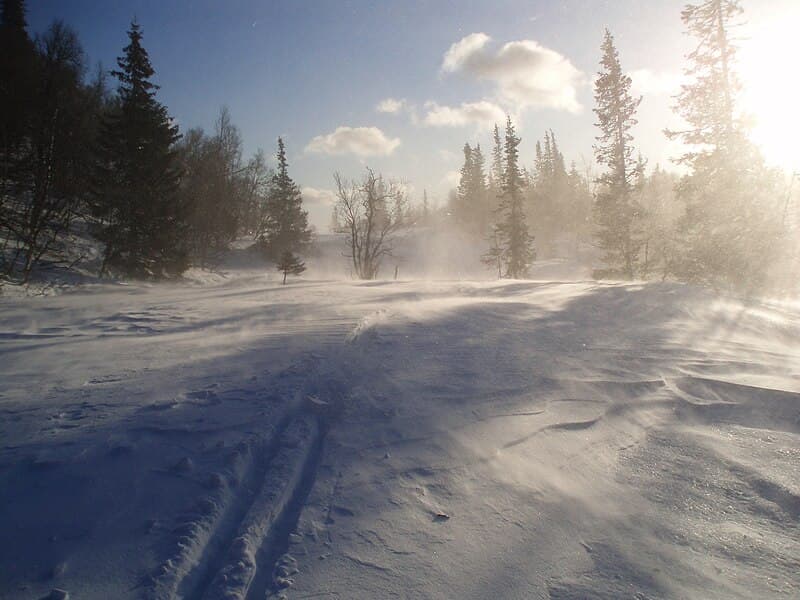
Last winter, as a Poem of the Day, the Sun offered “Spellbound” by Emily Brontë (1818–1848). It’s a grim poem about winter on the Yorkshire moors and the sense of being caught: “a tyrant spell has bound me / And I cannot, cannot go.”
Today’s poem offers a different view of winter. In “To a Wreath of Snow,” Brontë begins with something similar to her thoughts in “Spellbound”: “morning rose in mourning grey / And faintly lit my prison room.” But there’s a difference in what happens next, for on one of those gray mornings, she rises to find that snow had fallen: “angel like, when I awoke.” And the message of the moors is changed: “voiceless, soulless, messenger / Thy presence waked a thrilling tone / That comforts me while thou art here / And will sustain when thou art gone.”
In seven tetrameter quatrains, rhymed abab, “To a Wreath of Snow” reverses a poem such as “Moonlight, Summer Moonlight” (another of Emily Brontë’s, Poem of the Day last summer). Where that poem shows a beautiful, romantic landscape that suddenly reveals a beautiful, romantic corpse, “To a Wreath of Snow” gives us the landscape as an iron-hearted prison — even satanic, with hands that have a “rebel task,” like the fallen angels — that is overcome in beauty and meaning by the “frail” snow.
By ALEXANDER LARMAN
|
By THE NEW YORK SUN
|
By BRADLEY CORTRIGHT
|
By LAWRENCE KUDLOW
|
By THE NEW YORK SUN
|
By MATTHEW RICE
|
By LUKE FUNK
|
By A.R. HOFFMAN
|Last winter, as a Poem of the Day, the Sun offered “Spellbound” by Emily Brontë (1818–1848). It’s a grim poem about winter on the Yorkshire moors and the sense of being caught: “a tyrant spell has bound me / And I cannot, cannot go.”
Today’s poem offers a different view of winter. In “To a Wreath of Snow,” Brontë begins with something similar to her thoughts in “Spellbound”: “morning rose in mourning grey / And faintly lit my prison room.” But there’s a difference in what happens next, for on one of those gray mornings, she rises to find that snow had fallen: “angel like, when I awoke.” And the message of the moors is changed: “voiceless, soulless, messenger / Thy presence waked a thrilling tone / That comforts me while thou art here / And will sustain when thou art gone.”
In seven tetrameter quatrains, rhymed abab, “To a Wreath of Snow” reverses a poem such as “Moonlight, Summer Moonlight” (another of Emily Brontë’s, Poem of the Day last summer). Where that poem shows a beautiful, romantic landscape that suddenly reveals a beautiful, romantic corpse, “To a Wreath of Snow” gives us the landscape as an iron-hearted prison — even satanic, with hands that have a “rebel task,” like the fallen angels — that is overcome in beauty and meaning by the “frail” snow.
Cancel anytime
By continuing you agree to our Privacy Policy and Terms of Service.
Cancel anytime