


Britain’s Tilt Toward Antisemitism Faces Critical Vote in Coming Weeks
By AVI SHAFRAN
|The injunction to ‘carpe diem,’ or ‘seize the day,’ applies to flowers, too.
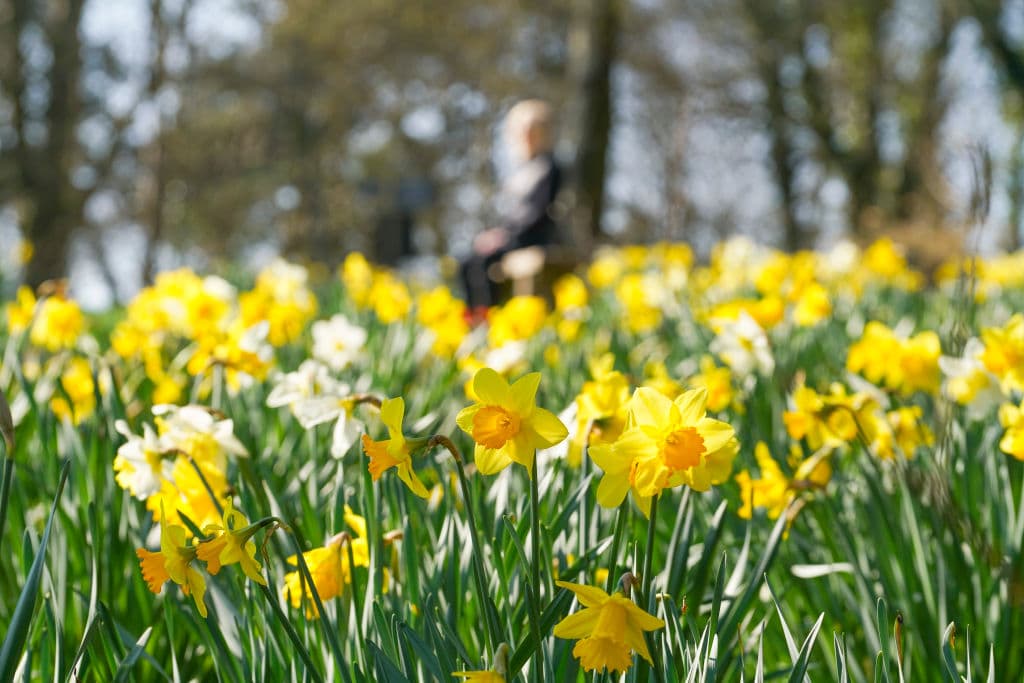
Robert Herrick (1591–1674) has what may seem a wonderfully bifurcated poetic output. His carpe-diem poems include such commonly anthologized Cavalier poetry as “To the Virgins, to Make Much of Time” and “Corinna’s Going A-Maying.” And then his religious poetry contains such work as “To Keep a True Lent” and “To Find God,” both of which have been Poems of the Day over the past year here in The New York Sun.
Perhaps it’s time we offered a Herrick poem that might bridge the gap. “To Daffodils” appears in Herrick’s only book of poetry, the 1648 volume whose title warns of his work’s two sides: “Hesperides: Or, The Works Both Humane & Divine.” It’s two stanzas match each other’s meter: four lines of ballad meter (a four-foot line followed by a three-foot line), and then a curious four lines of monometer and trimeter (one-foot lines followed by three-foot lines), ending with another two lines of ballad meter — so the stanzas both have the shape 4/3/4/3/1/3/1/3/4/3.
Quite what the poet intended with that metrical showmanship is hard to say, but the result is a poem that urges the daffodils to make much of time. The day is fleeting for both flowers and people, for “the hasting day” will run “But to the even-song” — “And, having pray’d together, we / Will go with you along.”
By AVI SHAFRAN
|
By A.R. HOFFMAN
|
By STEPHEN MOORE
|
By ALEX J. POLLOCK
|
By CARLOS SOUSA
|
By ELYSA GARDNER
|
By JEFFREY WELLS
|
By ELYSA GARDNER
|Robert Herrick (1591–1674) has what may seem a wonderfully bifurcated poetic output. His carpe-diem poems include such commonly anthologized Cavalier poetry as “To the Virgins, to Make Much of Time” and “Corinna’s Going A-Maying.” And then his religious poetry contains such work as “To Keep a True Lent” and “To Find God,” both of which have been Poems of the Day over the past year here in The New York Sun.
Perhaps it’s time we offered a Herrick poem that might bridge the gap. “To Daffodils” appears in Herrick’s only book of poetry, the 1648 volume whose title warns of his work’s two sides: “Hesperides: Or, The Works Both Humane & Divine.” It’s two stanzas match each other’s meter: four lines of ballad meter (a four-foot line followed by a three-foot line), and then a curious four lines of monometer and trimeter (one-foot lines followed by three-foot lines), ending with another two lines of ballad meter — so the stanzas both have the shape 4/3/4/3/1/3/1/3/4/3.
Quite what the poet intended with that metrical showmanship is hard to say, but the result is a poem that urges the daffodils to make much of time. The day is fleeting for both flowers and people, for “the hasting day” will run “But to the even-song” — “And, having pray’d together, we / Will go with you along.”
Already have a subscription? Sign in to continue reading
Cancel anytime
By continuing you agree to our Privacy Policy and Terms of Service.
Cancel anytime