
Rejecting Complaints From City Leaders, Customs and Border Patrol Enters Charlotte Promising Even More Aggressive Immigration Enforcement
The takeover of immigration and customs enforcement by border protection officials has led to uncertainty in sanctuary cities which had learned how to challenge workplace raids and courthouse arrests.
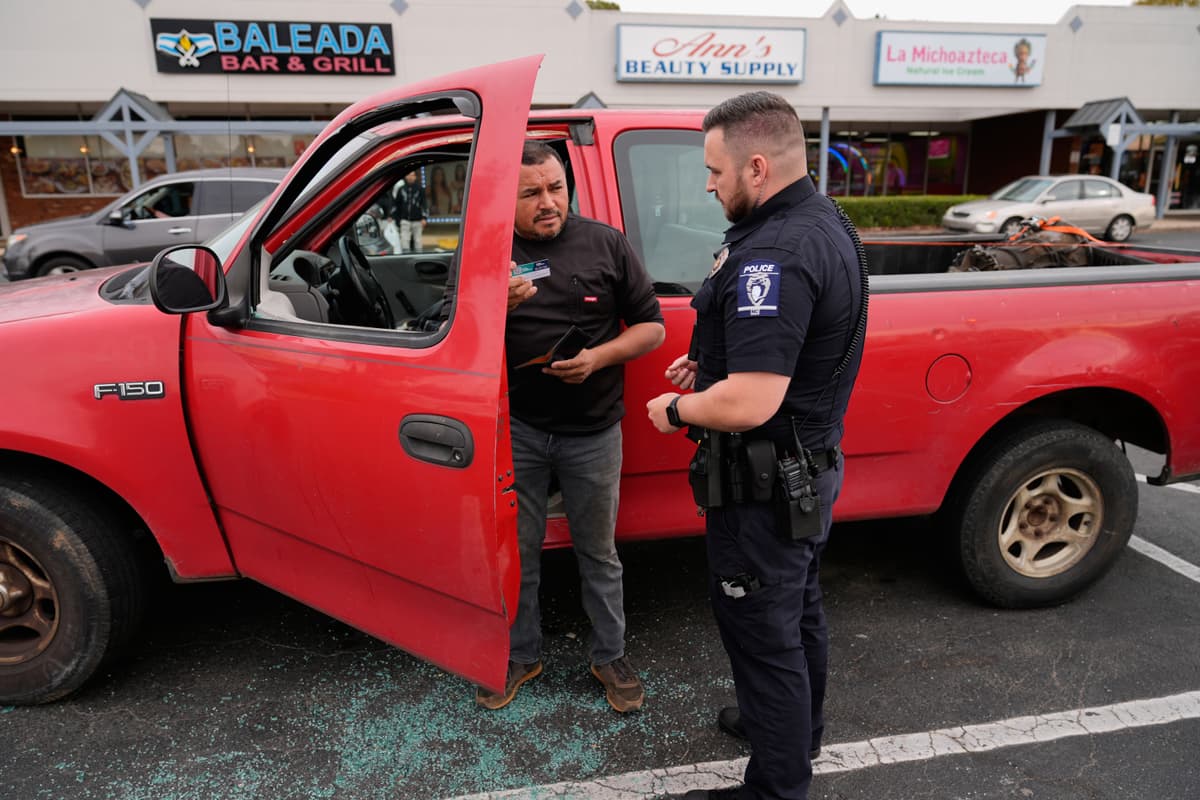

U.S. Customs and Border Protection agents are flipping the script at Charlotte, North Carolina this weekend, where they have taken the lead in Immigration and Customs Enforcement duties, seizing dozens of what the agency says are illegal aliens off the streets in targeted arrests.
Charlotte is the second city where Customs agents are now managing on-the-ground tactics following a shakeup of ICE leadership earlier this month. The Department of Homeland Security replaced 12 of 25 ICE field office directors with Customs officials. Trump administration officials say the turnover was intended to streamline command and control of deportation activities while ICE concentrates on managing detention facilities.
Border patrol agents first took the lead at Chicago for a two-month deployment. Customs officials are now managing ICE field offices at Washington, D.C., Denver, Phoenix, Los Angeles, San Diego, Philadelphia, Miami, Houston, and Columbus and Cleveland, Ohio.
The surge of Customs agents in what is being dubbed Operation Charlotte’s Web over the weekend led to a reported 75 arrests on Saturday of illegal immigrants. The head of the Customs operations, Gregory Bovino, shared posts of multiple arrests in Charlotte of immigrants captured on Saturday.
The Department of Homeland Security says it was sending Customs officials down to the Democratic-led city of Charlotte after it failed to honor 1,400 detainer requests to hold suspects for immigration authorities.
Activists were meeting Sunday after holding protests on Saturday following reports of masked agents arresting individuals using force. Several individuals taken into custody said they are U.S. citizens. Civil rights groups are preparing to challenge the legality of the raids.
The city’s mayor, Vi Lyles, and the heads of the County Commission and Board of Education issued a joint statement on Saturday saying the arrests are causing “unnecessary fear and uncertainty.”
It added that people should not hesitate to call 911 as the police department does not participate in ICE or border patrol operations and would not coordinate or execute actions by federal authorities.
“We want people in Charlotte and Mecklenburg County to know we stand with all residents who simply want to go about their lives, contributing to our larger community,” the leaders wrote.
Since the Trump administration came into office, ICE has traditionally focused on enforcement of immigration policy in cities, conducting workplace raids, courthouse arrests, and managing detention centers and removal proceedings. Historically, the border patrol has been the first point of contact for migrants within 100 miles of the border. It is responsible for inspections, asylum screenings, and expedited removals.
Last week, the border patrol released data showing it had 30,573 encounters at the U.S. border in October, 92 percent below the Biden administration peak and 7,989 apprehensions, 95 percent lower than the monthly average of the last administration. It also noted 258 apprehensions per day on the southwest border, which was “less than the number apprehended every two hours under the Biden administration.”
With the switch to internal U.S. cities and more aggressive tactics, legal experts say the impact is faster removal and fewer safeguards.
The decision to place CBP at the forefront of immigration enforcement reflects a philosophical shift in how America handles its immigrant population. It blurs the lines between border and interior, civil and criminal, human and bureaucratic. The Trump administration plans to integrate Border Patrol leadership into ICE operations to enhance immigration enforcement, with these changes being implemented by the president’s entire team.
“The laws haven’t changed — only the actors. ICE still holds statutory authority under the Immigration and Nationality Act, but CBP officers are now carrying out many of ICE’s on-the-ground duties,” an Ohio-based immigration attorney, Richard T. Herman wrote in a post to his clients. “For immigrants in Ohio and across the United States, the message is clear: be informed, be represented, and be prepared. Legal advice is no longer optional—it’s essential.”