Review: Fujifilm’s GFX100RF Is a Pricey, Special, but Flawed Camera
The new GFX100RF is a camera for a very specific niche of customers; but, for that niche, it’s pretty great.
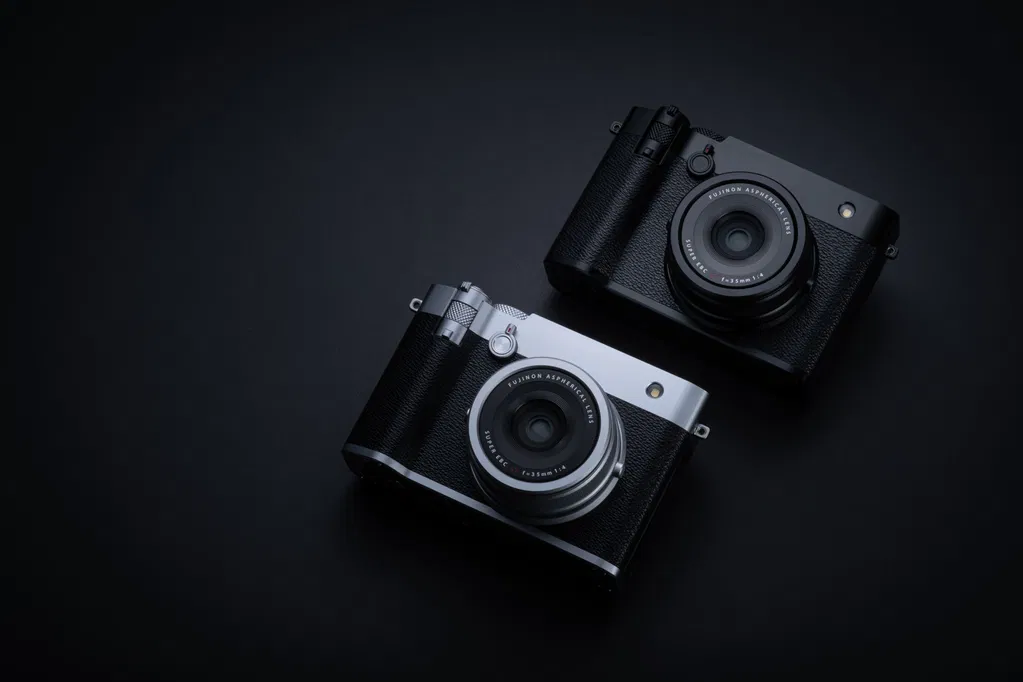

Fujifilm’s GFX100RF is a larger version of their best-selling, much hyped X100VI. It shares the X100VI’s retro design, leaf shutter, offset viewfinder, and broad control layout — albeit with an additional toggle under the shutter button and a vertical aspect ratio wheel. And, on a certain level, it is. This is another fixed-lens, enthusiast-focused camera, designed for capturing beautiful, film-inspired shots, utilizing all of Fujifilm’s built-in customizable color filters.
However, unlike the X100VI, X100V, or even the new X-T5, this is branded with a GFX; and that’s because, although it shares the look and attitude of the X-series, it is built around Fuji’s full-frame, 44x33mm, GFX sensor. This is Fuji’s professional full-size camera range, and it’s this that explains its significantly larger chassis compared to the X cameras, its significantly larger price — at $4,899 — and the enormous photos it can take.

On one hand, the idea of a fixed-lens a camera this expensive, and with a sensor this big, seems almost pointless. If you’re willing to buy a camera this expensive, surely you would like the flexibility of multiple lenses? It’s a necessity for professional use.
The reality, however, is that these photos are so large that, even if you digitally crop in by 200 percent, the final images are still huge. This is why it’s Fuji’s first camera with an aspect ratio wheel; you can crop off a significant portion of the frame, and the final picture will still be more than big enough. You can take clear, large portrait photos while holding the camera in landscape mode, just by cropping in; the photos are that big.
This isn’t just due to the huge sensor, but also Fuji’s decision to pack 102 megapixels into the sensor with smaller individual pixels, rather than using larger ones. The latter is the conventional route for large sensor cameras, allowing them to bring in more light than smaller sensors with the same number of pixels. Fuji’s tack here robs them of that advantage, but makes for such enormous pictures, able to be cropped.

Beyond the crop of the aspect ratio dial — which is so fun to use, but very ugly — Fuji also compensates for the fixed lens by adding virtual zoomed-in lenses — at the equivalent of 45mm and 63mm — toggled through a control below the shutter, on the front of the camera. These are fine, but I found myself mostly sticking with the default state, which creates incredible pictures with a slight fish-eye quality in street photography, or can capture dramatic vistas when looking at grand landscapes. The final pictures are not only consistently beautiful but also fun to use, in part because of the ability to ‘shoot in post,’ allowing for new crops to be found after the fact.
It’s a phenomenal camera, but it’s not the fastest lens, and this routinely caused problems. Not cropped or zoomed in, they looked perfect, but cropped in, and details that ought to have been crisp were smeared with motion blur. If you use a tripod or don’t crop in, then this problem goes away, but wouldn’t that undermine the whole point of the camera?
Even if this were not an issue, it would be of limited appeal. This is a camera for someone who wants the look, feel, and approach of the X series; is willing to pay for the sensor size of the GFX series; but doesn’t need it for professional use, and is not put off by it being a fixed lens. The other way of putting it, though, is that this uses the same sensor as the GFX100S II, which costs about $5,000 for the body only, with no lens; and would you pay hundreds more to change lenses, in an uglier body?