
Supreme Court Appears Skeptical of New Jersey’s Campaign Against Faith-Based Pregnancy Center
The justices seem skeptical of the notion that the subpoena is simply a ‘request’ that will not have a chilling effect on donors.
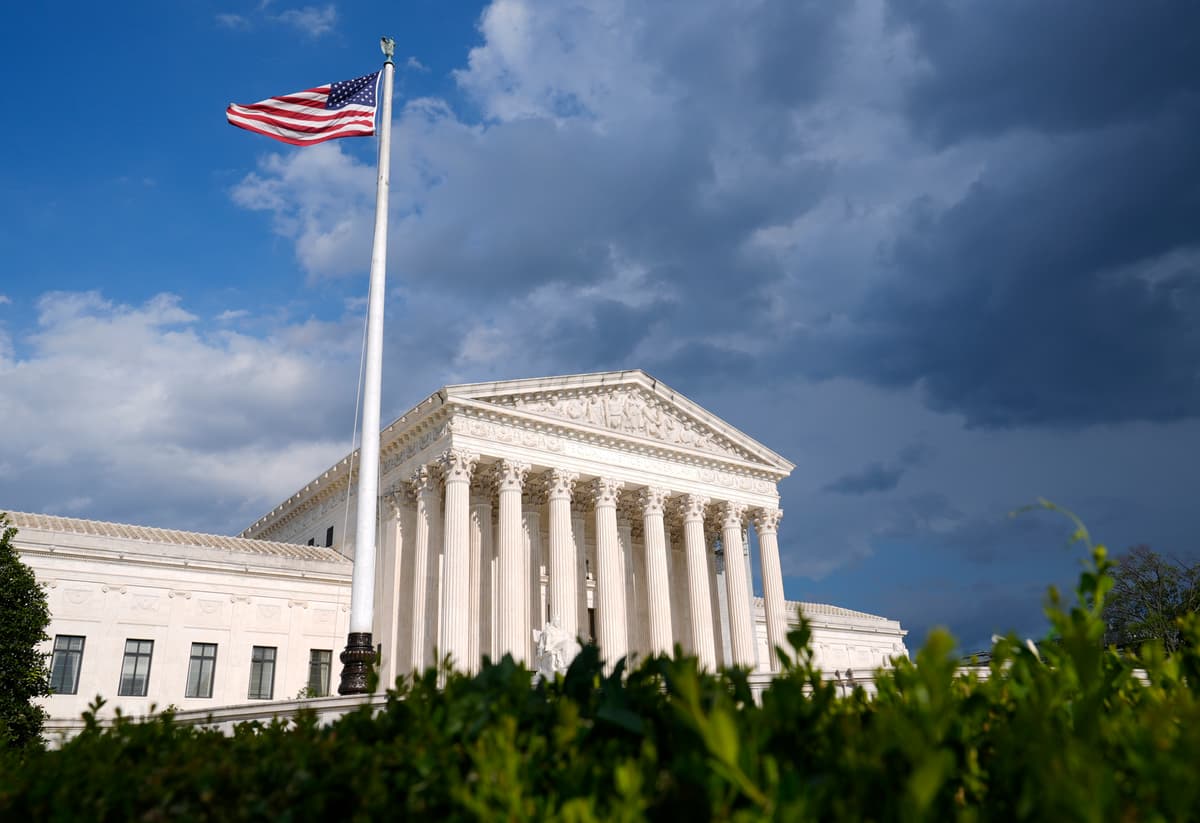
The Supreme Court appears likely to side with a New Jersey faith-based pregnancy center in its challenge of a subpoena seeking donor information, which the organization alleges was issued by a “hostile” Democratic state attorney general.
The case stems from a lawsuit issued by New Jersey’s attorney general, Matthew Platkin, that sought donors’ names and contact information from a faith-based pregnancy center, First Choice Women’s Resource Centers, as part of his investigation into whether the center had misled donors.
First Choice challenged the subpoena in federal court, arguing it violated the First Amendment by creating a chill and making donors nervous about giving money to the group.
A federal court and the United States Court of Appeals for the Third Circuit, however, dismissed the challenge, finding that it was not “ripe” because the pregnancy center had not established a reasonably objective chill on its First Amendment rights. A New Jersey court had not enforced the subpoena, the courts ruled, which is required before compliance can be compelled.
On Tuesday, the justices heard arguments in the case and appeared skeptical of New Jersey’s argument.
The attorney representing First Choice, Erin Hawley, told the justices that the subpoena warned of penalties for a lack of compliance that would be a “death knell for nonprofits like First Choice.” Ms. Hawley argued that First Choice experienced several injuries from time and resources spent on litigation, as well as the “possible imminent order of disclosure.”
The lawyer for New Jersey, Sundeep Iyer, argued that the subpoena amounted to a “voluntary request.”
On the question of whether the subpoena had a chilling effect on donors, Justice Elena Kagan appeared skeptical of the idea that, because the subpoena needs to be enforced by a court, it would not be concerning to donors.
“What’s an ordinary person supposed to think?” she asked. “An ordinary person … presented with this subpoena and then told ‘but don’t worry, it has to be stamped by a court,’ is not going to take that as very reassuring.”
Chief Justice Roberts also asked, “Do you think there is a credible chilling effect from the state seeking full names, phone numbers, addresses, present or last known place of employment of every one of their donors?”
Mr. Iyer said he did not believe that to be the case. He cited a portion of First Choice’s complaint that stated the subpoena “may cause” donors to fear that they will face public exposure or retaliation from the government, and argued that the alleged harms had not materialized and are “contingent on a future, downstream state court ruling.”
Mr. Iyer pointed to a declaration from anonymous donors who stated that they “would have been less likely to donate to First Choice if we had known information about the donation might be disclosed.”
“That’s a backwards-looking statement of harm. It’s not a prospective chill,” Mr. Iyer said.
However, Justice Neil Gorsuch interjected, asking, “Really? We’re going to now pick over the tense of the verb that they chose? I mean, they’re saying, ‘If we had known this was going to happen, we wouldn’t have given.’”
Justice Samuel Alito chimed in, asking, “What if they had used the future tense: If this information is disclosed, we will not donate?”
Mr. Iyer began to say that he does not believe that would be sufficient, to which Justice Alito interjected, “That wouldn’t be enough?”
Mr. Iyer argued that the mere issuance of a subpoena “without additional facts, statements, actions” is not enough to create a chill. However, Justice Amy Coney Barrett asked, “In this case, weren’t there [additional facts]? I mean, you had this ‘project strike’ on the pregnancy centers. The attorney general had … essentially declared war on pregnancy centers.”
Mr. Iyer insisted that the “story” of the attorney general being “hostile” toward crisis pregnancy centers is “not borne out by the record.”
Mr. Iyer predicted that ruling in favor of First Choice would turn “every quotidian subpoena dispute into a federal case.” However, attorneys for First Choice say a ruling in their client’s favor will protect nonprofits from “hostile” prosecutors who dislike their mission.
A legal columnist at National Review, Ed Whelan, posted on X that “overall” the oral arguments seemed to be “going well for the pregnancy centers.”
A decision in the case is expected in the spring.