


The Electric Jeep Recon Was Designed To Blow the Doors Off of the Competition
Jeep’s first off-road electric vehicle is unique.
Jeep is celebrating its 85th anniversary in 2026. Although the brand hasn’t technically existed that long, it traces its lineage back to the Willys MB that entered military service in 1941 and spawned the original Jeep CJ.
One of the ways it will be marking the occasion is with the limited edition Willys ’41 Jeep Gladiator pickup, replete with olive drab paint and stencil lettering on the hood. The Gladiator is essentially a Wrangler with a bed attached and shares its removable doors. It’s a heritage feature that recalls a bygone era, but Jeep will soon be offering it on its most modern model.
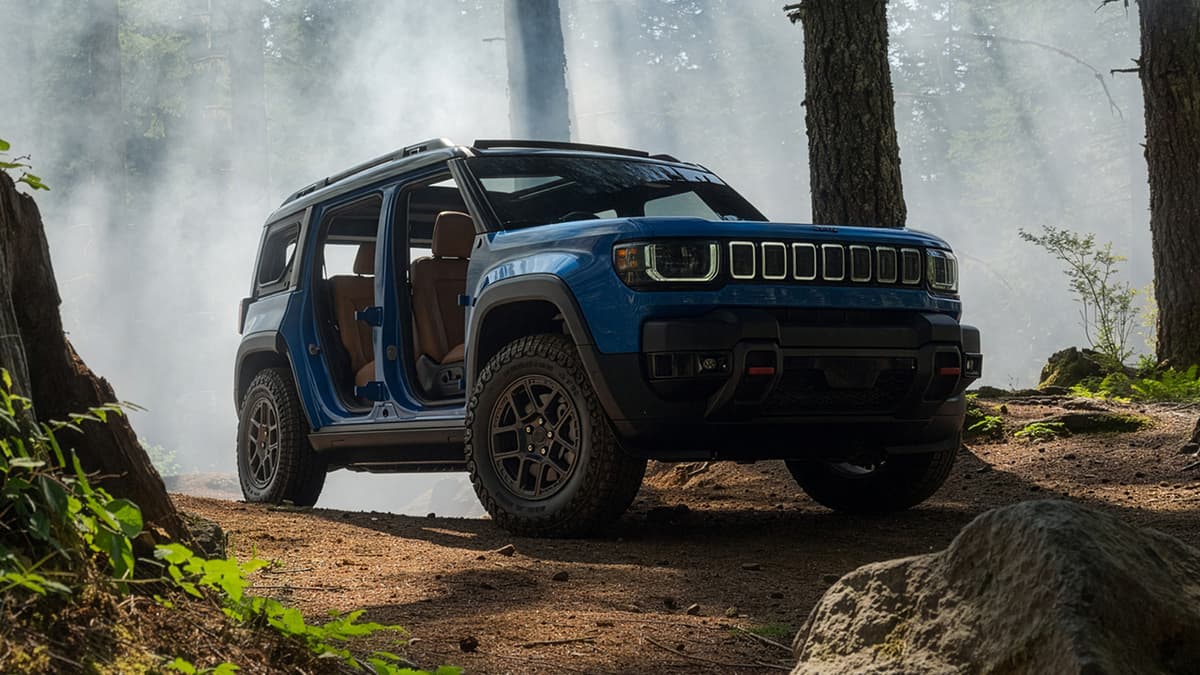
The Recon that debuted at the Los Angeles Auto Show is an all-electric SUV designed for serious off-roading in the same vein as the Wrangler. Its boxy, utilitarian styling belies the technology that drives it.

The Recon is built on the same battery-powered platform as the street-smart Wagoner S luxury SUV, but it has been repurposed for driving on rocky trails. The launch trim is named Moab, after a popular 4×4 area in Utah, and comes standard with all-terrain tires.
The dual-motor all-wheel-drive system has a combined output of 650 hp, which is more powerful than any other Jeep on sale today. It can accelerate the Recon to 60 mph in a brisk 3.6 seconds, but is really meant for grinding over rough terrain.

The Recon has 9.1 inches of ground clearance and its blunt ends improve its angle of attack when faced with an immovable obstacle it needs to go over. An electronic limited slip rear differential maximizes traction when necessary and it’s floor-mounted 100.5 kilowatt-hour battery pack is protected by high-strength steel shields, in case you happen upon a 9.2-inch tall rock. The Recon is also rated to wade through up to two feet of water without any issues, electrical or otherwise.
Aside from a quite low-speed pedestrian alert, it does all of this silently, which is a boon for nature lovers. If World War III broke out tomorrow, it’s not likely that the Recon would be called into service, but it would be a very stealthy vehicle if it were.

Tools are not required to take the doors off. The power cable bundle for the window and lock just needs to be unplugged, and then the door simply slides out of its exposed hinges. The 2026 Wrangler and Gladiator have been updated with a similar design. The Recon Moab’s rear quarter windows and tailgate glass can also be popped out, and there is an optional retractable fabric roof panel for the full open-air effect. The center console and glove compartment can be locked for those times when you can’t be bothered to close everything up.
You will probably want to check the weather report before you leave an open Recon Moab sitting outside. The interior is more upscale than the Wrangler’s and is equipped with large digital displays for the instrument cluster and infotainment system interface. The upholstery is a synthetic faux-leather and most of the interior is trimmed with recycled materials in keeping with the environmentally friendly EV vibe.

Unfortunately, many of the things that make the Recon Moab good on dirt hurt its on-pavement range, which is 230 miles per charge. The Wagoner S can deliver up to 294 miles of thanks to better aerodynamics and street tires with lower rolling resistance than the Recon Moab’s chunky rubber. Jeep is planning to add additional Recon trims with up to 250 miles of range. While they won’t be as capable off-road, they will be less expensive than the Moab’s $66,995 starting price.
The Recon’s most direct competitor is the Rivian R1S, which is slightly larger and available with three rows of seats. It starts at $78,885 with 258 miles of range, but comes with all-season tires, not all-terrain tires. Its doors and were not designed to be removed, however, and trying to do so is definitely not recommended.