


‘The Purpose Was His Immediate Sexual Gratification’: Judge Harshly Rejects Sean ‘Diddy’ Combs’s Move To Have His Prostitution Convictions Tossed
The tenor of the judge’s ruling suggests he may give Combs a relatively severe sentence.
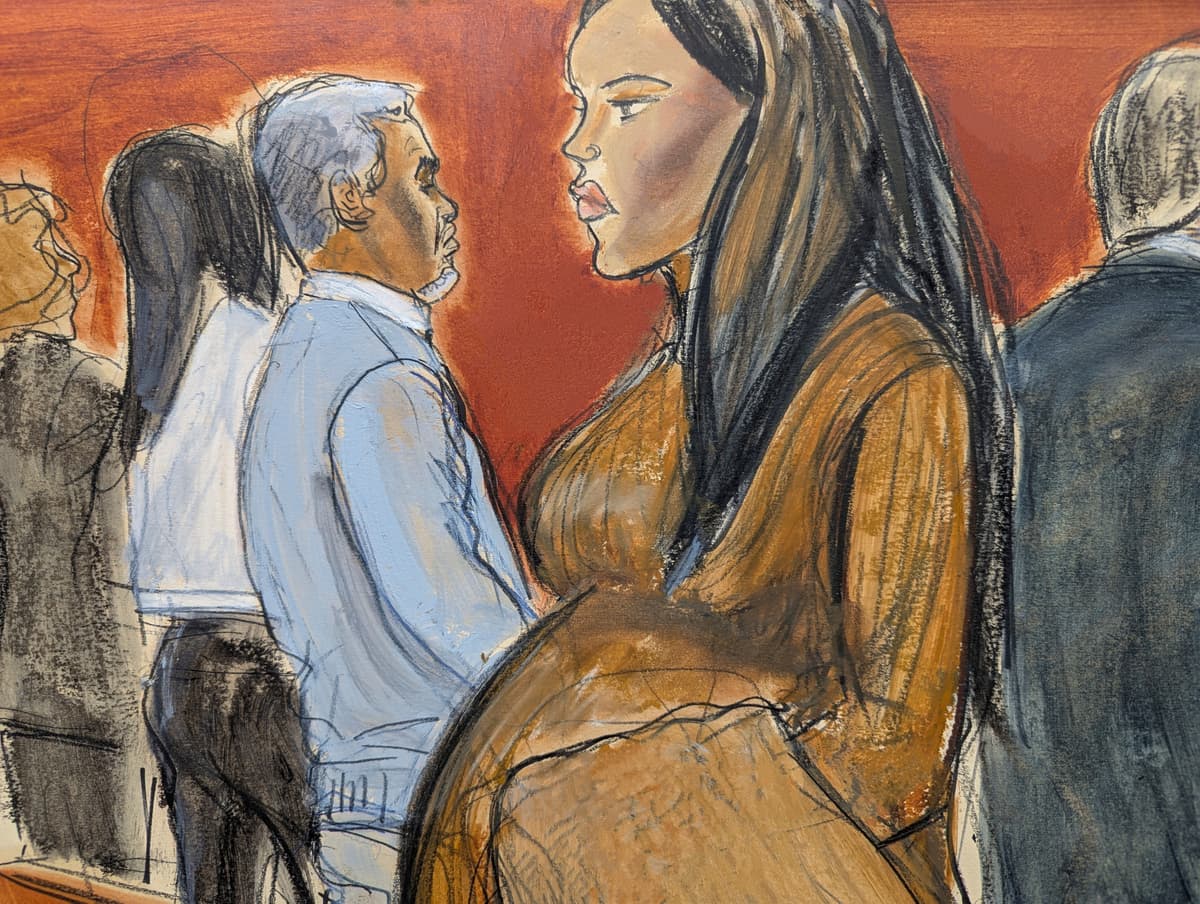
A federal judge denied Sean “Diddy” Combs’s motion to dismiss the two prostitution convictions from his sex-trafficking case. In his written opinion, the judge refuted the arguments raised by the defense so thoroughly that appealing the decision may be difficult. The music mogul will be sentenced, as planned, on October 3, and faces years in prison.
“These arguments don’t hold water,” the judge, Arun Subramanian, wrote in his 16-page opinion published Tuesday evening, referring to the arguments raised by Combs’s defense team in their attempt to dismiss his two Mann Act convictions.
Judge Subramanian’s detailed ruling suggests he may favor a harsher sentence for the prostitution charges, which were minor compared to the far more serious charges of which Combs was acquitted.

After an eight-week trial, a jury found that Combs was not guilty of sex trafficking and racketeering conspiracy, which carry a maximum sentence of life in prison. But the jury did convict him on two counts of transportation for the purpose of engaging in prostitution, a crime laid out in the Mann Act, a 1910 federal law that prohibits the interstate or foreign transportation of individuals for prostitution.
Each count carries a maximum of 10 years in prison. Prosecutors have asked for an 11-year prison sentence, twice as much as is usually given, arguing that Combs used violence to coerce the women into the sexual encounters.
Defense attorneys suggested a 14-month prison sentence. Combs, who was arrested in September 2024 and has been incarcerated at Brooklyn’s notorious Metropolitan Detention Center, has already served close to 13 months.
“The government alleged,” the judge summarized, “that Combs arranged for and paid men to travel across the United States and internationally to have sex with Combs’s girlfriends, Cassie Ventura and Jane.”

A singer and model, Cassandra Ventura dated Combs between 2007 and 2018. Another ex-girlfriend, who testified under the pseudonym Jane, dated the rapper between 2021 and his arrest in September 2024. Both women testified at trial and both said that Combs would hire male escorts to have sex with them.
“Further, the government alleged that Combs transported Ventura and Jane to have sex with those men, gave them illegal drugs, and physically abused them,” the judge went on.
Evidence at trial supported these allegations and showed that Combs paid for male escorts to participate in so-called freak off sessions, hours-long, drug-fueled sex marathons, with Combs’s ex-girlfriends, while Combs watched, pleasured himself, and often filmed the encounters.
The defense argued that all participants were consenting adults, and that Combs did not engage in prostitution because he did not have sex with the men and did he benefit from the encounters financially.

“Combs argues that prostitution, properly defined, has two elements absent from this case. First, the defendant must have a financial motive. Second, the exchange of money for sex must be bilateral—whoever pays for the sex must engage in it,” the judge wrote. “But both arguments fail.”
The Mann Act, as well as “every modern dictionary,” the judge reasoned, defines prostitution as “sex for sale.” In 1986, when Congress amended the Mann Act, the judge explained, it clarified the definition of prostitution as “an act of sexual intercourse or any unlawful sexual act for hire.”
The 1986 changes also added male prostitutes to its remit, along with other persons transported for any sexual activity that is a criminal offense, and enhanced criminal penalties for transporting minors to engage in such activities. The amendment also replaced vague references to “debauchery” and “immoral purpose” with the clear language of “any sexual activity for which any person can be charged with a criminal offense”
“There’s nothing in the text of the statute,” the judge found that supports Combs’s condition that a defendant must be seeking financial benefits. The judge added, “and it doesn’t make any sense in this context … Combs wasn’t convicted of prostitution, but rather transporting others for prostitution. Combs seems to be conflating two things: the definition of prostitution and the motive of the defendant who transports somebody for prostitution.”

The judge pointed out that “the statute requires only the ‘intent that [the transported person] engage in prostitution.’” In other words, the violation lies in transporting the prostitute from one state to another state, or country, and through credit card bills, bank, and travel documents, it was proven that Combs did in fact transport the male escorts from Los Angeles to New York, or to Miami, and even out of the country to different islands where he was vacationing.
The judge also refuted the second argument that “prostitution” requires that the person paying for the sex must be the same person engaging in it. “That definition would narrow prostitution almost out of existence,” the judge wrote. “It would exclude any situation in which a person pays a third party (like a brothel) to have sex with an employee.”
Another argument that the defense raised was a violation of Combs’s First Amendment rights. Combs, the defense said, videotaped the “freak off” sessions, provided costumes for the women, decorated the rooms with special lighting, and gave instructions to the participants as would an amateur pornographer. At a hearing last week, the defense attorneys argued that Jane even bought a large television so she and Combs could watch the movies together afterward. Consuming pornography, the defense said, is protected by the First Amendment.
But the judge didn’t buy that argument either, writing that “illegal activity can’t be laundered into constitutionally protected activity just by the desire to watch it.”

“Though film is an expressive medium protected by the First Amendment,” he added, “at some point, it must certainly be true that otherwise illegal conduct is not made legal by being filmed.’”
The judge further found that Combs was more interested in his “immediate sexual gratification” than in the production of pornographic films.
“Combs’s conduct goes far beyond that point. Evidence at trial showed that when Combs filmed he didn’t typically give notice ahead of time or ask for consent, as a film producer would; and that he masturbated, suggesting that the purpose was his immediate sexual gratification.”
Last but not least, the judge also cited evidence at trial that showed that Ms. Ventura, a male escort and Combs himself treated the “transaction” like an act of prostitution. “Each side worried that the other side was undercover police, a concern that wouldn’t be relevant if Combs’s intent hadn’t been to pay for sex. At least one escort asked Combs whether he was a cop and Combs had Ventura ask multiple escorts the same.”

Evidence, cited by prosecutors in their sentencing submission, also suggests that Jane didn’t feel like she was starring in pornographic films. In October 2023, Jane sent several text messages, telling Combs she did not wish to participate in any more “freak off” sessions, writing, “I’m not a porn star I’m not an animal.”
By contrast, the defense presented text messages in which Ms. Ventura wrote that she loved the “freak offs.” But even if the ex-girlfriends consented, which both women testified they did sometimes but not all the time, and certainly not every week for more than 30 hours and under the constant influence of strong drugs, the judge still saw the encounters as clear acts of prostitution.
The judge cited explicit trial evidence that detailed what the male escorts were paid to do. In one instance, prosecutors asked Ms. Ventura, “For the escorts who you interacted with, what were they paid thousands of dollars to do?” And Ms. Ventura answered: “To ejaculate, to finish.”
Combs’s sentencing hearing begins on Friday and is expected to last until Monday.