Trump Floats Plan To ‘Release the Twins’ — Fannie Mae and Freddie Mac — but Mortgage Giants May Be Too Sweet for Government To Give Up
Public-private government entities give all the benefits with little downside, save an enormous debt that remains off-book.
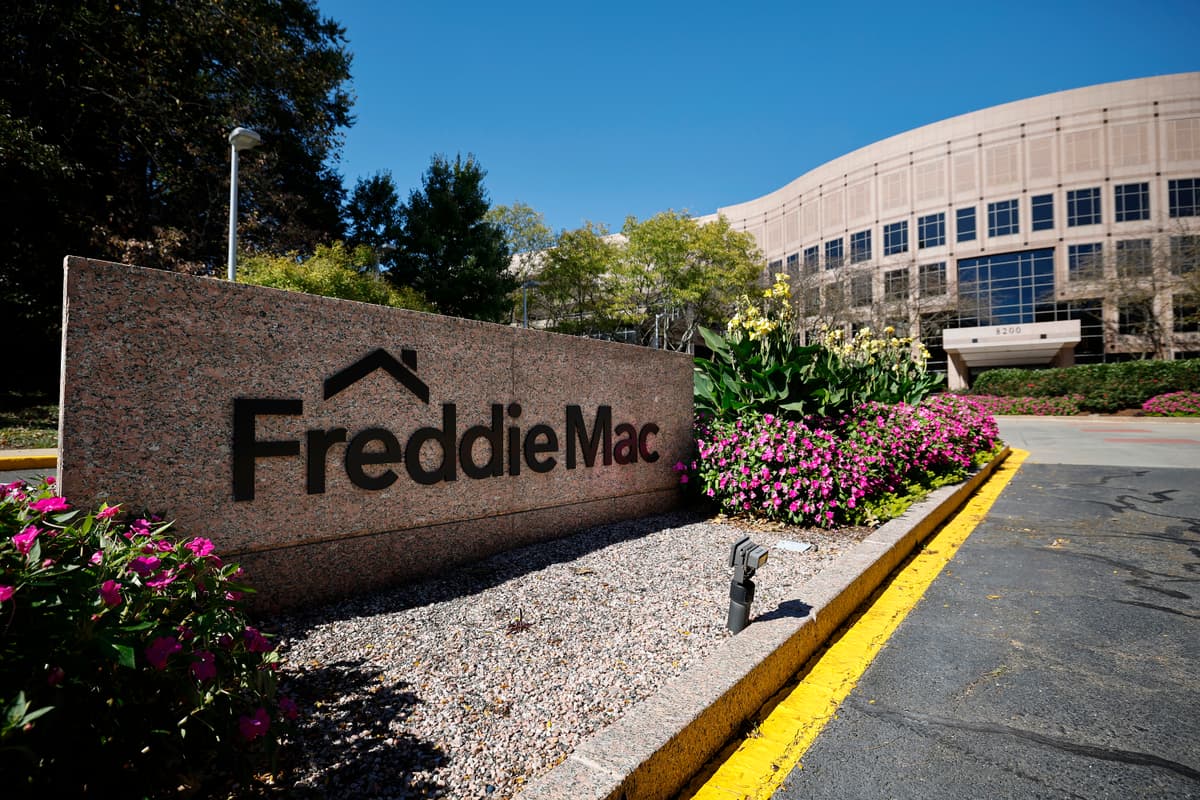

President Trump’s weekend hints about a MAGA-inspired Great American Mortgage Company listed on the New York Stock Exchange may be a little closer to reality now than they were during his first term, but the idea of creating such an entity from the government conservatorship of Fannie Mae and Freddie Mac has left housing mortgage authorities and financial analysts with more questions than answers.
On Monday, the Wall Street Journal reported that the Trump administration is preparing to sell stock in the two mortgage giants in an offering later this year that could be worth about $30 billion, or 5 to 15 percent of a combined valuation of $500 billion for the two mortgage corporations. Administration officials told the Journal that they are deciding whether the initial public offering for both companies will be combined or separate.
The head of the Federal Housing Finance Agency, Bill Pulte, has indicated that he’s all-in on the president’s timeline to move forward with a public offering in November. Like his boss, however, he has not indicated exactly how the process would work.
Created by Congress and overseen by the Federal Housing Finance Authority, Fannie Mae, founded in 1938 and privatized in 1968, and Freddie Mac, founded in 1970, are supposed to operate as government-sponsored enterprises, meaning that they are owned by private shareholders, daily operations are run by private managers, and a majority of the board of directors is elected by investors.
As part of the public-private partnership created in 1968, however, the federal government issued an “implicit guarantee” to protect investors if the housing market imploded. In 2008, it did. As a result, both Fannie and Freddie were put into a conservatorship that enabled the Treasury to infuse capital while the housing finance authority took over operations. That was supposed to last for a few months. It has now been 17 years.
Mr. Trump announced in May that he was going to return Fannie Mae and Freddie Mac to the market. But he added, “The U.S. Government will keep its implicit GUARANTEES and I will stay strong in my position on overseeing them as President. These Agencies are now doing very well, and will help us to, MAKE AMERICA GREAT AGAIN!”
That is a major risk, the chief economist and global strategist for Euro Pacific Asset Management, Peter Schiff, says.
“Since Trump said Fannie and Freddie will be ‘privatized’ but keep their implicit government guarantee, it’s no longer implicit — it’s explicit. Investors will treat this as an absolute promise that taxpayers will bail them out, making the moral hazard even worse than before 2008,” Mr. Schiff wrote on X.
While the public offering would be one of the largest in history, authorities say much needs to be disentangled before such a grand scheme can move forward. For one, under conservatorship, the government owns virtually all the stockholder shares while the head of the Federal Housing Financing Authority oversees the companies and leads their boards.
“They can’t have them be part of the government and have the implicit guarantee and have public stock in it and keep management control of Fannie Mae in the government. It’s still part of the government and therefore it’s part of the federal budget. Somebody has to say that,” a former Fannie executive vice president of credit, Ed Pinto, tells The New York Sun
Putting Freddie and Fannie’s debt on the public budget, however, would likely cause interest rates to increase, could disrupt the bond market, and may persuade ratings agencies like the S&P to downgrade the federal government for a third time.
Mr. Pinto says a better option would be to shrink the agencies, which should not be conducting about two-thirds of the business they do, excluding investor loans, refinance loans, or multi-unit housing.
“No renter has ever been helped by anything Freddie and Fannie do,” he said. “They should focus on single-family, owner-occupied loans.”
A former Fannie executive and CEO of Impact Capital, Tim Rood, tells the Sun that the idea that the federal government would give up control of 75 percent of the mortgage market is “hilarious” because through the two entities, the government is earning enormous capital by raising debt at government rates and then selling that debt at a premium, creating a net interest margin, all while charging additional fees and controlling the types of mortgage products that it wants to sell.
“Sweet arbitrage, right? It’s a magic funded book and my liabilities match my assets. It’s a beautiful thing,” he said.
Fannie Mae notes it has paid approximately $181 billion to the Treasury in senior preferred stock dividends since the Great Financial Crisis, $62 billion more in value than it received from the bailout. It claimed a net worth of $95 billion at the end of 2024.
“Those companies yawn and cough up $4 billion quarters while they’re doing the public good,” Mr. Rood said, adding that the president is not saying he is going to fully privatize the GSEs, but rather that he wants to monetize them. “We’re gonna liquidate some of this. We’re going to claim victory, and we’re going to move on. That’s what I would do. At least until they need more money,” he said.
With talk of a public offering, billionaire Bill Ackman, whose company reportedly owns 10 percent of the common stock in the mortgage companies, stands to make a mint from any offering. He posted that he would like to see the two agencies merge before any trading begins, arguing that savings from streamlined operations could be passed along to consumers in the form of reduced mortgage rates.
But Mr. Pinto said the only thing worse than two mortgage companies is one mortgage company.
“At some point there might be someone as president who is a progressive and if they had this structure, what’s it called, Fannie Mac … that would put all of the control in one entity and everything they want to do they can do with one entity,” Mr. Pinto said.
“I hesitate to think what one of these will look like in 10-15 years if they basically control the entire mortgage market in the United States, save for FHFA. That would be a horrendous resolve,” he added.