
Trump Stages Sudden Intervention, in ‘Personal Capacity,’ To Block Release of Jack Smith’s Secret Mar-a-Lago Report
The 47th president asks Judge Cannon for leave to argue that the classified documents report should stay hidden.
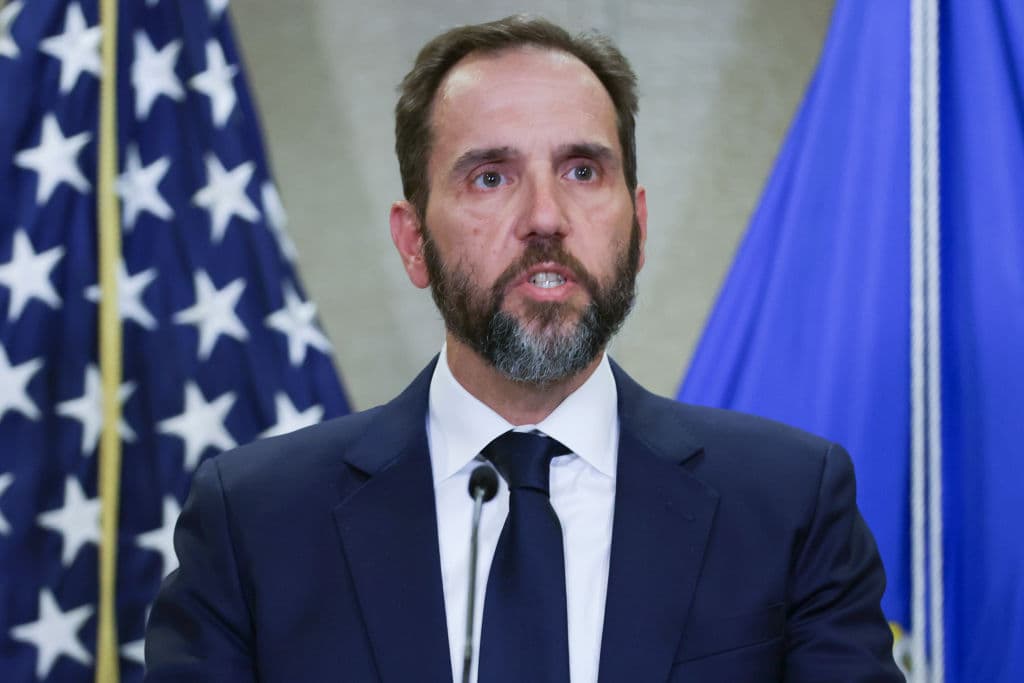
President Trump’s effort to bury Special Counsel Jack Smith’s final report on his Mar-a-Lago prosecution underscores how the secret dossier retains an explosive power nearly a year into the 47th president’s second term.
Mr. Trump’s intervention comes in the form of an amicus curiae petition to none other than Judge Aileen Cannon, a federal district court judge in South Florida who Mr. Trump appointed to the bench in 2020. Judge Cannon presided over the Mar-a-Lago documents case, eventually ruling that Mr. Smith was unlawfully appointed. She dismissed the charges Mr. Smith brought against Mr. Trump and two of his employees.
Judge Cannon also blocked the release of Mr. Smith’s report, which he completed per the special counsel regulations and submitted to Attorney General Merrick Garland. Mr. Smith’s other report, on his January 6 case, was released in the days before Mr. Trump moved back into the White House. In that report Mr. Smith took a defiant tone, insisting that he could have convicted Mr. Trump had Vice President Harris claimed the 2024 election.
Judge Cannon’s ruling disqualifying Mr. Smith was cited several times in a ruling last week from Judge Cameron McGowan Currie, who determined that the interim United States attorney for the Eastern District of Virginia, Lindsey Halligan, was unlawfully appointed. Judge Currie, like Judge Cannon before her, dismissed not only the prosecutor but also the charges. When Judge Cannon’s ruling was handed down Mr. Garland scoffed that he never would have made such a “basic mistake about the law.”
Now two organizations, American Oversight and The Knight First Amendment Institute at Columbia University, have filed motions to pry loose Mr. Smith’s Mar-a-Lago report. They contend that since the case was dismissed with respect to all of the defendants — Mr. Trump, his valet Waltine Nauta, and Mar-a-Lago’s property manager, Carlos De Oliveira — the rationale for keeping the report’s contents under lock and key no longer holds.
Mr. Trump, in his amicus brief, asks for permission to join the ongoing litigation in as much as it relates to “Jack Smith’s unlawful criminal investigations and proceedings.” Mr. Trump wants Judge Cannon to extend her order barring publication of the report written by Mr. Smith, who he calls a “so-called special counsel” whose case was “marred by numerous deficiencies and repeated abuses of office.”
Judge Cannon is under pressure to make a decision with respect to the report’s publication. Last month a three judge panel of the 11th United States Appeals Circuit chided her for “undue delay” in abstaining from ruling on whether she will hear arguments for and against the report’s publication. The circuit riders set a 60-day deadline for Judge Cannon, which expires in early January.
The so-called “Reno Regulations” that govern special counsels mandate that “at the conclusion of the Special Counsel’s work, he or she shall provide the Attorney General with a confidential report explaining the prosecution or declination decisions reached by the Special Counsel.” American Oversight and the Knight Foundation are now seeking a writ of mandamus to order the report’s release.
Meanwhile Mr. Smith faces growing pressure from congressional Republicans to testify about his investigations — including “Operation Arctic Frost,” the probe into January 6 that included surveilling telephone data from 10 Republican senators and one congressman. An erstwhile deputy of Mr. Smith’s, Thomas Windom, was last week referred to the DOJ for criminal prosecution for Congressman Jim Jordan.
Mr. Smith has said that he is willing to testify under oath, but only if he is allowed to share his story in a public setting and if he is granted immunity. If Judge Cannon keeps his report under lock and key, though, Mr. Smith could be precluded from answering questions about the Mar-a-Lago case that ate not already public.
The Knight Institute argues for disclosure on account of “the extraordinary significance to the public of the record being suppressed, a record whose disclosure would shed light both on the scope and integrity of the Special Counsel’s investigation and on the character and actions of the nation’s highest official.” The group reckons that keeping the ban on publication in place for this long is “manifestly unreasonable.”
Judge Cannon, in blocking release, has cited her prerogative “‘to remedy violations of recognized rights, to protect the integrity of the federal courts, and to deter illegal conduct by government officials.” For the two groups pushing to pull the report into the public ken, though, its continued secrecy undermines “both accountability and the rule of law.”
The Departure of Justice, in a separate filing, worries over the “extraordinary prejudice” that could still accrue to Messrs. Trump, Nauta, and De Oliveira with the report’s release. Main Justice asks that if Judge Cannon intends to lift the block on the report’s release that she “require the Department of Justice to provide written notice to counsel for Mr. Nauta and Mr. De Oliveira sixty days prior to releasing a redacted version.”