Trump Tariffs Take Center Stage as Do-or-Die Deadline Approaches, Courts Weigh Limits of Presidential Power

The Trump administration is negotiating duties with dozens of nations as the end nears for the suspension of April’s ‘Liberation Day’ rates.
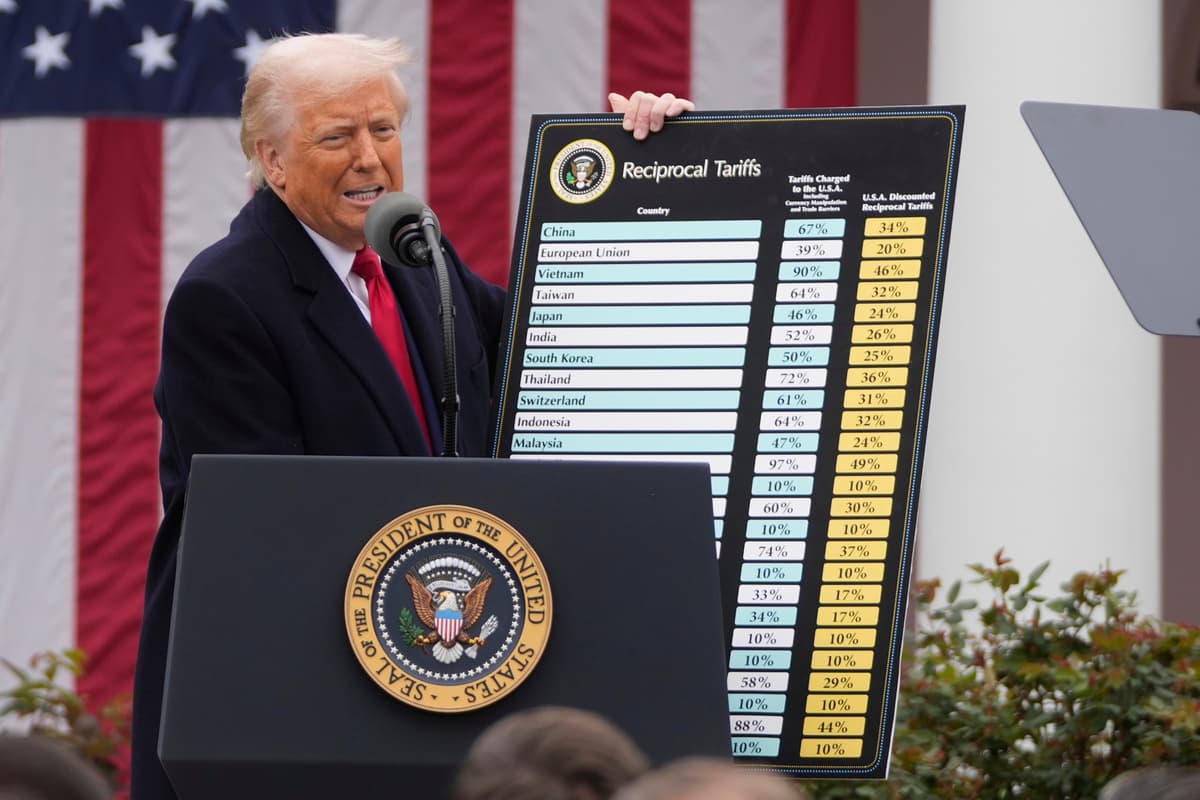

AP/Mark Schiefelbein
President Trump speaks during an event to announce new tariffs in the Rose Garden at the White House on April 2, 2025, in Washington. AP/Mark Schiefelbein

American officials fresh off a deal with the European Union are feeling giddy about new tariff rates as the August 1 deadline approaches for levies to surge unless trade agreements are reached with 166 nations this week. Only a handful of deals have been reached so far.

A few Asian countries, including the Philippines, Indonesia, and Vietnam, have worked out deals, as has the United Kingdom. Chinese and American negotiators are meeting in Stockholm through Wednesday for a third round of high-level talks. On Sunday, Asian media outlets reported that the nations agreed to extend the current pause for another three months as negotiations continue. The pause was set to expire on August 12. 

Other than that, import taxes are going up.

“No extensions, no more grace periods. August 1 the tariffs are set. They will go into place. Customs will start collecting the money and off we go,” the president’s commerce secretary, Howard Lutnick, said on “Fox News Sunday.”

Unless they aren’t. Mr Lutnick said that while higher rates announced in April but suspended during negotiations are coming, talks may continue through Friday’s deadline — and beyond — since the president is always willing to negotiate, especially with larger economies. 

“Between now and then, I think the president is going to talk to a lot of people.  Whether they can make him happy is another question,” he said.

Even if the Trump administration raises tariffs this week, their legality is still being fought in federal court.

With a half dozen cases working their way through the courts, the U.S. Court of Appeals for the Federal Circuit is expected to hear a case Thursday challenging whether the president had the authority to impose tariffs using the International Emergency Economic Powers Act.

Plaintiffs said the national debt and fentanyl imports cited by the president do not count as a national threat covered by the act. The president’s attorneys counter that he is empowered to “restore fairness and reciprocity in the Nation’s trade relationships.”

On Sunday, President Trump announced an extensive deal with the European Union, America’s largest trading partner. Similar to a deal announced earlier this week with Japan, the EU will be charged a 15 percent across-the-board tariff for exports to America and will charge zero for some American imports. 

The president’s trade deal with the EU includes the purchase from America of $750 billion worth of energy on top of an additional $600 billion in investments. The arrangement also calls for a vast though unnamed dollar amount for military purchases.

“We don’t know what that number is but the good news is we make the best military equipment in the world so sort of you have to do that,” the president said in Scotland while sitting alongside the European Commission president, Ursula Von der Leyen.  

“I think it’s great that we made a deal today instead of playing games and maybe not making a deal at all,” he added. 

Mr. Lutnick said the deal unlocks one of the biggest economies in the world. The EU is second only to America in annual gross domestic product. 

“The European Union is going to open its 20 Trillion dollar market and completely accept our auto and industrial standards for the first time ever,” Mr. Lutnick posted on X. 

“Today is a historic day for U.S. trade and will strengthen our relationship with the European Union for decades to come,” he added.

While the Department of the Treasury announced last week that it achieved the first budget surplus in June — $27 billion — since 2015, higher tariff rates threaten to make imported goods more expensive.

The administration’s negotiations have been focused on driving investment and manufacturing onto America’s shores, but many economists fear that the raw materials in American-made products will raise costs to consumers for everyday goods.

“American President raises taxes on Americans across a wide range of goods; European Union President announces tax cuts for Europeans across a narrow range of goods,” a Brookings Institution senior fellow and University of Michigan economics professor, Justin Wolfers, posted on X.

A former advisor to President Clinton adviser and an equity fund CEO, Mark Penn, said he does not expect the tariffs to have any real impact on inflation because they are paid in part by foreign producers and function as a “contractionary tax.” 

He also predicted that the “tilting of incentives” will not be disruptive but instead could bring in $200 billion a year since America imports account for about 11 percent of its economic resources. 

The president “is succeeding in his reshaping of the global economy. He is opening up new markets and putting in a modest amount of protection that makes it more expensive to buy overseas and will stimulate some degree of US manufacturing,” Mr. Penn posted on X


The New York Sun

© 2025 The New York Sun Company, LLC. All rights reserved.

Use of this site constitutes acceptance of our Terms of Use and Privacy Policy. The material on this site is protected by copyright law and may not be reproduced, distributed, transmitted, cached or otherwise used.

The New York Sun

Sign in or  create a free account

or
By continuing you agree to our Privacy Policy and Terms of Use