
Two Italian Films Take Viewers on Picturesque and Pensive Journeys
‘Diciannove’ and ‘Il Dono’ are more than just travelogues, dealing as they do, respectively, with an isolated young man’s immersion in Italian literature and an old man negotiating mortality.
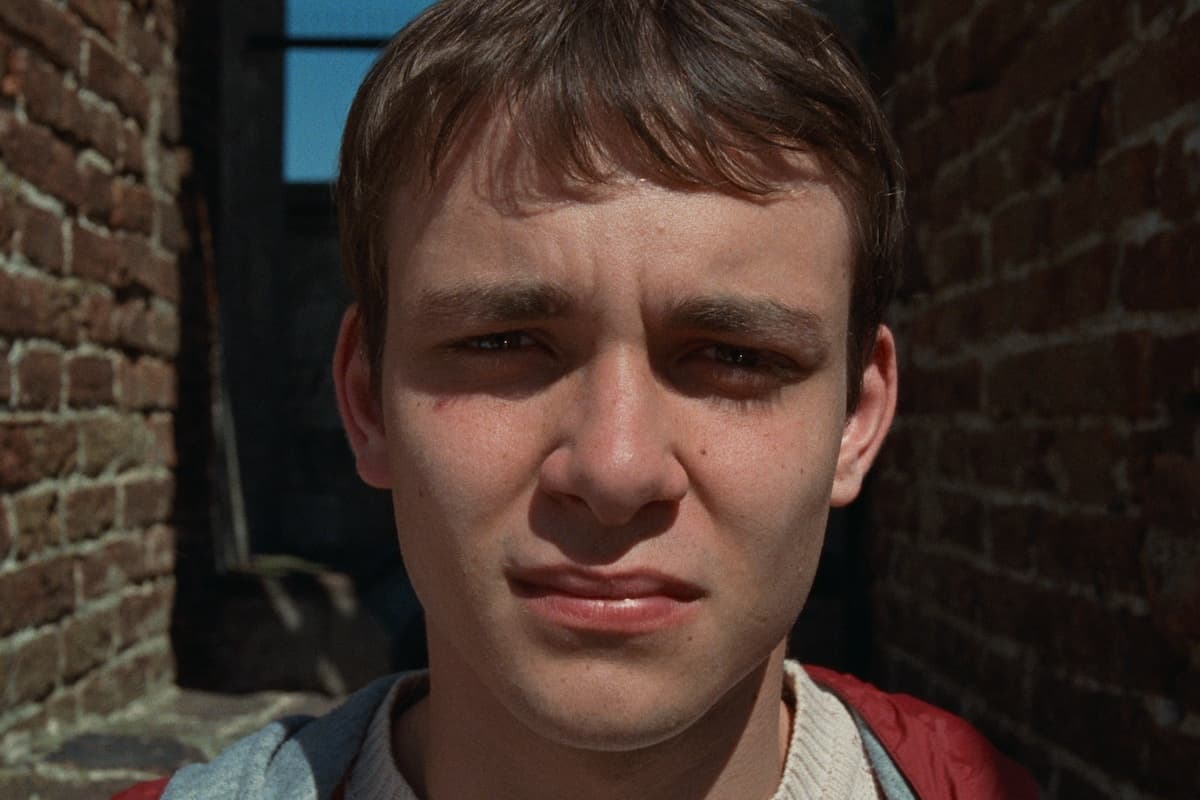
Those New Yorkers unable to travel to Italy this summer can console themselves with two Italian features opening in theaters on Friday: “Diciannove,” a contemporary film about a 19-year-old studying at Siena, and “Il Dono,” a revival of a little-seen 2003 docudrama set in a Calabrian village. Both movies showcase the charms of their particular settings but are more than just travelogues, dealing as they do, respectively, with an isolated young man’s immersion in Italian literature and an old man negotiating mortality. Despite the age difference, the films’ protagonists both ponder death, desire, and honor.
“Diciannove” is set 10 years ago, yet its story of a youth struggling with debauchery, Dante, temptation, and technology could just as well take place this year, particularly as its lead character, Leonardo, espouses a conservative view of modern-day culture and society. The millennial is no monk, though, and early in the film, while at a London club, we see him make out with several girls and get wretchedly drunk. Yet once back in Italy to study pre-20th century Italian literature instead of pursuing a business degree, the teenager’s penchant for classic, at times esoteric, works and traditional interpretations comes to the fore.
It’s during this central, Siena-set section that the film’s coming-of-age framework melds into an exploration of the period in one’s life when one begins to formulate a personal philosophy. There are numerous shots of passages in books, yet the purpose is not to familiarize viewers with the texts themselves but to illustrate how Leonardo finds connections between them.
Like many a precocious, pretentious student, he believes he knows better than his instructors, leading to friction. Most of the time, though, he’s just holed up in his room: reading, scanning sexual content on his phone, obsessing about an uncultured yet confident younger boy, and generally naval gazing. The lonely nature of intensive scholarship and the working out of ideas is even mirrored in one of his readings: “I have gathered from my studies no other fruit than suffering.”

First-time filmmaker Giovanni Tortorici deploys a variety of stylistic devices and references to tell his partly autobiographical story, and through their constant use one senses that he may have worried whether the narrative was too insular and dreary. Animation, freeze frames, and other devices are leveraged to enliven matters, and some of these are clever, such as when he has the camera replicate the movement of a European double-cheek kiss. Also well-represented is the beauty of Siena, which, when coupled with gorgeous classical music, provides both a counterpoint and a conduit for Leonardo’s musings on the purity of language and morality.
The unnamed elderly protagonist in “Il Dono” also grapples with morality after he finds a pornographic printout. This image of a sexual act between a man and a woman prompts a subtle scene in which he peers at the reproduction disdainfully and then, by degrees, relaxes his head and face to gaze at it almost acceptingly. Thus begins the plot, which has him seeking an intimate encounter, though the film’s unhurried pace, near total absence of dialogue, and observational tone often belie the concept of a storyline.
The cinema vérité-style filming of the village of Caulonia, which sits atop a rocky hill and was already sparsely populated in the early aughts, allows director Michelangelo Frammartino to document moments of great brilliance and poetry, such as an amazing shot involving a blacksmith. The surrounding landscape, with its olive trees, winding roads, and relatively nearby sea, supplies stunning imagery as well, though the director rejects the notion of an idyll by also showing us a dry river valley and groves strewn with detritus and abandoned vehicles.
This reluctance to idealize is found in the film’s other main character as well, an unnamed young woman. Frequently, we see her ride her bicycle to the supermarket in the nearby town for those villagers who are unable to buy groceries, while also glimpsing her assignations with local men. Wanton and more than a little unhappy, she looks bored with her life, like many inhabitants.
Yet if Mr. Frammartino appears to critique the decline of rural communities and a predatory atmosphere dominated by men, he also includes scenes of levity, still-thriving traditions, and a strange religious ritual amongst women. A sequence in which a boy chases a red ball down the descending, twisting alleys of the village ends with a visual punch line that is utter joy.
If Leonardo’s journey in “Diciannove” through a few hellish circles of student life results in an unsatisfactory movie, it’s primarily due to inconsequential segments, the lack of interplay between the lead and other characters, and its likening of the superior, bookishly romantic, contradictory Leonardo to a member of ISIS. What the questioning character, played candidly by novice actor Manfredi Marini, really seems to need is not a chastising lecture from a family friend but to go on a date.
The vecchio in the hypnotic “Il Dono” does make a date, with the depressed young lady, though their meeting turns out unexpectedly. In a selfless act upon realizing his approaching death, he gives her a material gift that will improve her life. He also offers her the ultimate gift, one of kindness and respect, proving that chivalry need not be a thing of the past.