Unity or Optics: Donald Trump Walks Diplomatic Tightrope Ahead of 2026 World Cup

Border and tariff tensions with World Cup co-hosts Canada and Mexico make for potential strains in fielding the world’s premier sports event.
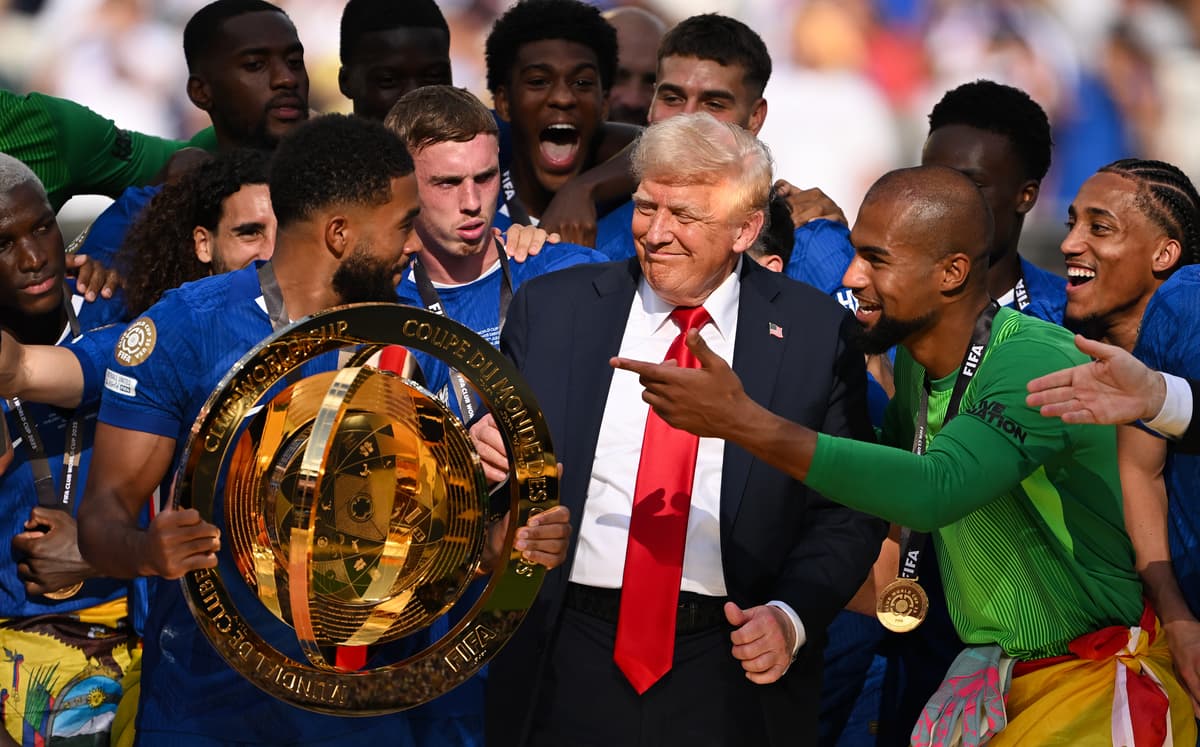

David Ramos/Getty Images
President Trump shares the podium with participants in the FIFA Club World Cup 2025 final at MetLife Stadium on July 13, 2025. David Ramos/Getty Images

Sports diplomacy can bridge cultural divides and soften political tensions, but that notion will be tested as the United States prepares to co-host the 2026 FIFA World Cup with Canada and Mexico, frequent targets of the Trump administration.

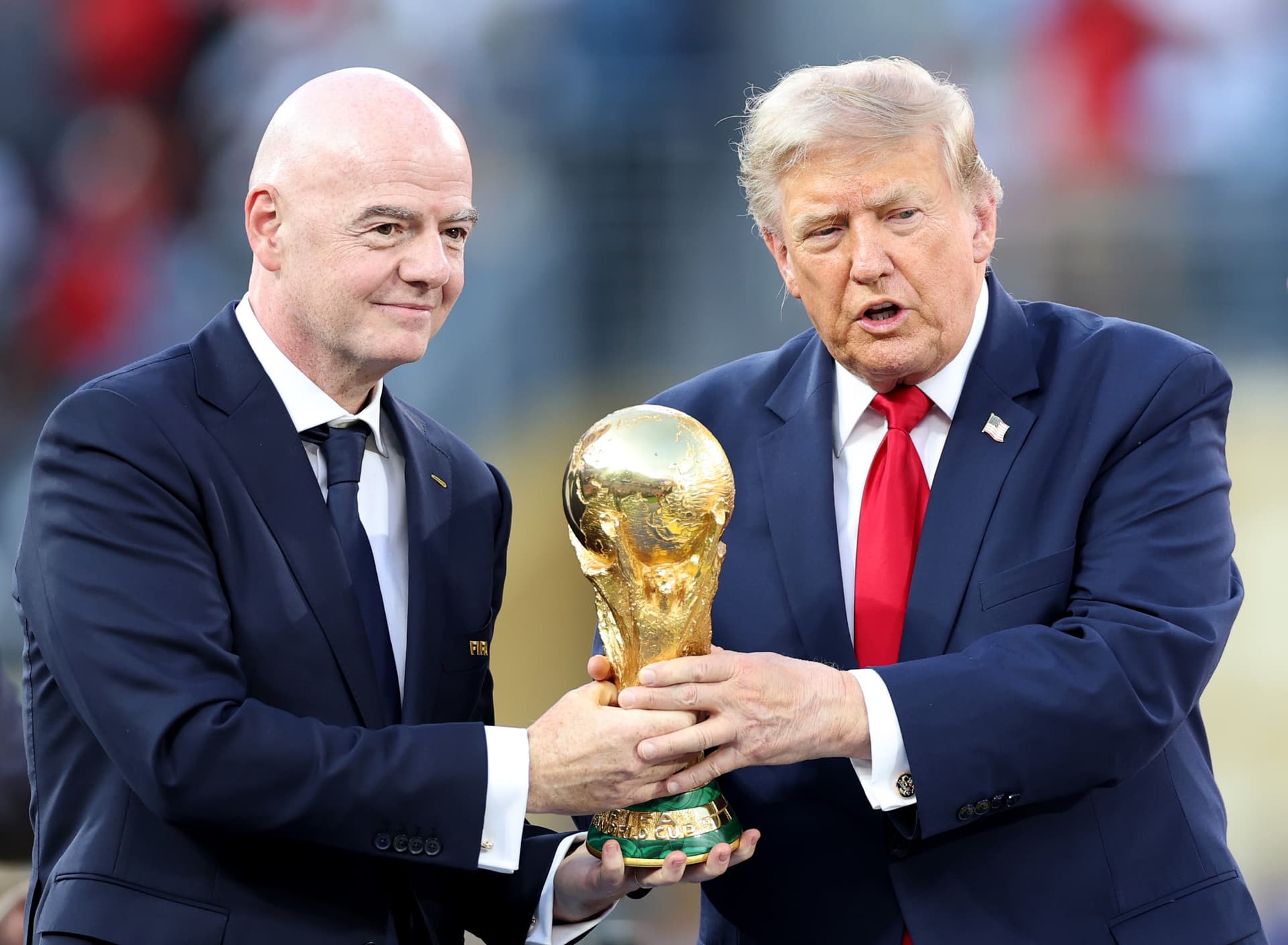
President Trump attended the Club World Cup final at MetLife Stadium on Sunday and stood on the victor’s podium to hand the championship trophy to Chelsea, 3-0  upset winners over the European champion, Paris Saint-Germain. The unusual appearance by a sitting president was broadcast to a billion viewers globally, a fact likely not lost on Mr. Trump.

The former and now current president used his highly visible connections to the sporting world to boost his popularity while seeking re-election to the White House. Now, he is using the same strategy to enhance his image as a unifying global leader.

Mr. Trump, an avid golfer and sports fan, was instrumental in the successful joint bid for the 2026 World Cup, which will be staged at venues across America, Canada, and Mexico. The final will take place at MetLife Stadium. That huge event will be followed by the 2028 Summer Olympics at Los Angeles, again placing America at the center of global athletic competition.

Mr. Trump has publicly supported both events, promising federal agencies to ensure security. But co-hosting the World Cup with Canada and Mexico will require him to walk a diplomatic tightrope.

Relationships with both countries are strained. In its dealings with Canada, the Trump administration has imposed and threatened tariffs, reopened existing trade agreements, threatened its sovereignty, and engaged in personal attacks on a former prime minister, Justin Trudeau. Mr. Trump has repeatedly referred to Canada as the “51st state.”

Mexico was a prime target during his first administration. One of Mr. Trump’s primary campaign promises was to build a border wall and implement strict immigration policies. He has also threatened to impose tariffs on all Mexican imports and blamed the country for drug trafficking, job losses, and sending criminals and “rapists” to America.

Despite the combative rhetoric, Mr. Trump said the co-hosting of events like the Club World Cup and the World Cup reflect his desire for unity. “It’s about everybody getting together,” he told DAZN at the Club World Cup final. “A lot of love between countries. This is probably the most international sport, so it can really bring the world together.”

Domestically, Mr. Trump has blurred the lines between sports and politics to show he has the support of celebrity athletes. He frequently attends UFC bouts and other major sporting events.

His condemnation of NFL players kneeling during the National Anthem drew praise and criticism during his first term, and ultimately stood as a referendum on American values. Meanwhile, championship teams have renewed the tradition of visiting the White House, where Mr. Trump greets them as a show of national pride.

By aligning himself with the World Cup and the Olympics, he appears to be expanding that strategy internationally. Not only do global events offer exposure, but the administration feels that being in the global spotlight will attract foreign investment and strengthen America’s position as a top destination for sports and tourism, according to the White House.

It also presents Mr. Trump with multiple opportunities to praise his administration and reinforce his role as a global leader serving the best interest of America.

“We’re doing very well on the political stage and the financial stage,” Mr. Trump said in May. “I was just in Saudi Arabia. All the leaders said, ‘A year ago your country was dead, and now you have the hottest country in the world.’ There’s a lot of truth in that. We were doing very badly as a country. We had an incompetent administration, and now we have a hot country.”

Whether co-hosting the World Cup and Olympics will bring genuine unity or deepen divides remains to be seen. But Mr. Trump continues to engage in sports not as a passive supporter, but as an active participant, shaping his narrative.


The New York Sun

© 2025 The New York Sun Company, LLC. All rights reserved.

Use of this site constitutes acceptance of our Terms of Use and Privacy Policy. The material on this site is protected by copyright law and may not be reproduced, distributed, transmitted, cached or otherwise used.

The New York Sun

Sign in or  create a free account

or
By continuing you agree to our Privacy Policy and Terms of Use