
Valve Introduces Its Steam Machine Console and Redesigned Controller
The gaming company has introduces a new console, and paired it with a redesigned controller featuring dual touchpads and gyro controls.
Valve — the unusually managed game company responsible for managing the biggest gaming platform on earth, Steam — occasionally sees fit to release some hardware. Such unannouncements are unexpected but always welcomed, with their last big launch — the Steam Deck — completely resetting the handheld gaming market. It’s my primary gaming computer now, and I’ve played all of Dispatch on it. And so, when Steam announced three new products on a random Wednesday in November, people took notice.
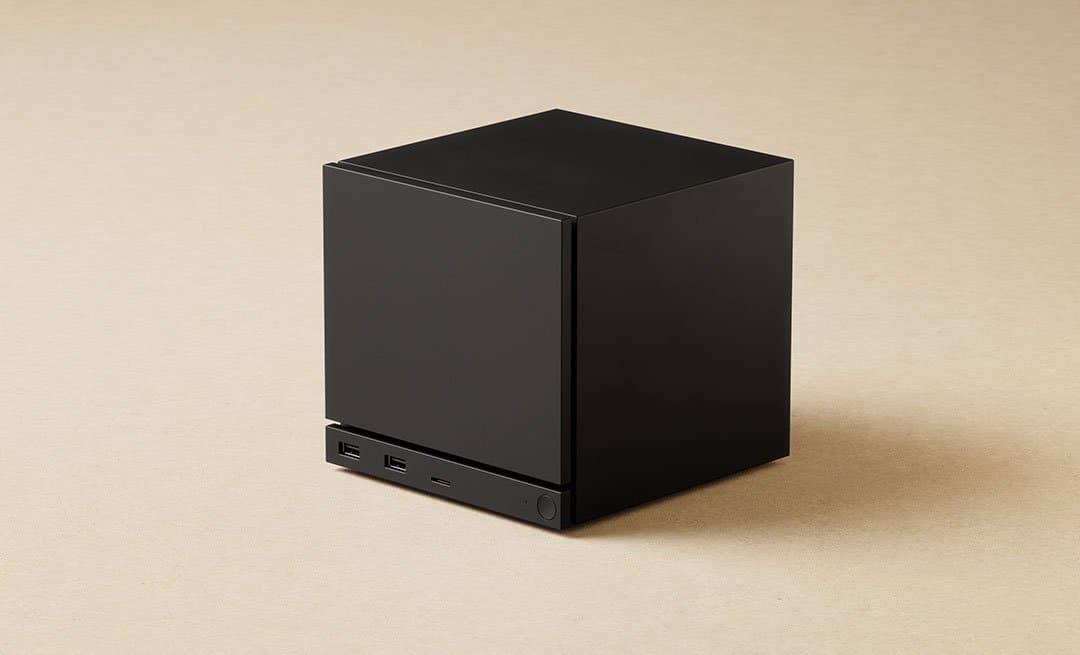
Though their Steam Frame VR goggles are incredibly impressive, the bigger seller will likely be their new Steam Machine: a compact gaming console designed to bring PC gaming to the living room. The six-inch cube delivers over six times the processing power of the Steam Deck, powered by AMD hardware, and brings the console-convenience of the Steam platform, but comes with the configurability and technical specs of a company filled with PC gamers. Notably, it’s just a black cube, and on the back, there is a Gigabit Ethernet port, DisplayPort 1.4, HDMI 2.0, one USB-C port, and four USB-A ports. Storage ranges between 512 GB and 2 TB, and although Steam has made a “Steam Machine” before, that failed product lacked the necessary software and hardware to make it a success. Years of development with the Linux-powered SteamOS for the Steam Deck mean this is a different proposition.

The third product they unveiled is their new Steam Controller, which combines elements from Xbox and PlayStation controllers, or more aptly, looks like a Steam Deck with the screen removed from the middle. It features parallel analog sticks positioned at the bottom, similar to the PlayStation DualSense layout, along with A, B, X, and Y buttons, as well as a D-pad. Like Valve’s previous controller and the Steam Deck, it also includes two large touchpads at the bottom that provide haptic feedback and enable precise control for games that rely on mouse input. These touchpads are angled slightly to align with natural thumb movements, which Valve said came from extensive user testing. It’s obviously best with Steam’s own products, but it will be compatible with Windows, macOS, and Linux PCs. It’s a shame that the current version is rather dull, but some future colorways and customizations may change that.
The Steam Machine’s success will depend on pricing, which Valve has not yet disclosed. And even at a great value price, it will be tough competing with mainstream consoles from Microsoft or Sony. But Steam boasts the best library of games, a reputation for producing high-quality hardware, and a robust software layer in its current SteamOS. I hope it’s priced well and sells well because it will force the other industry leaders to make more compelling products again.