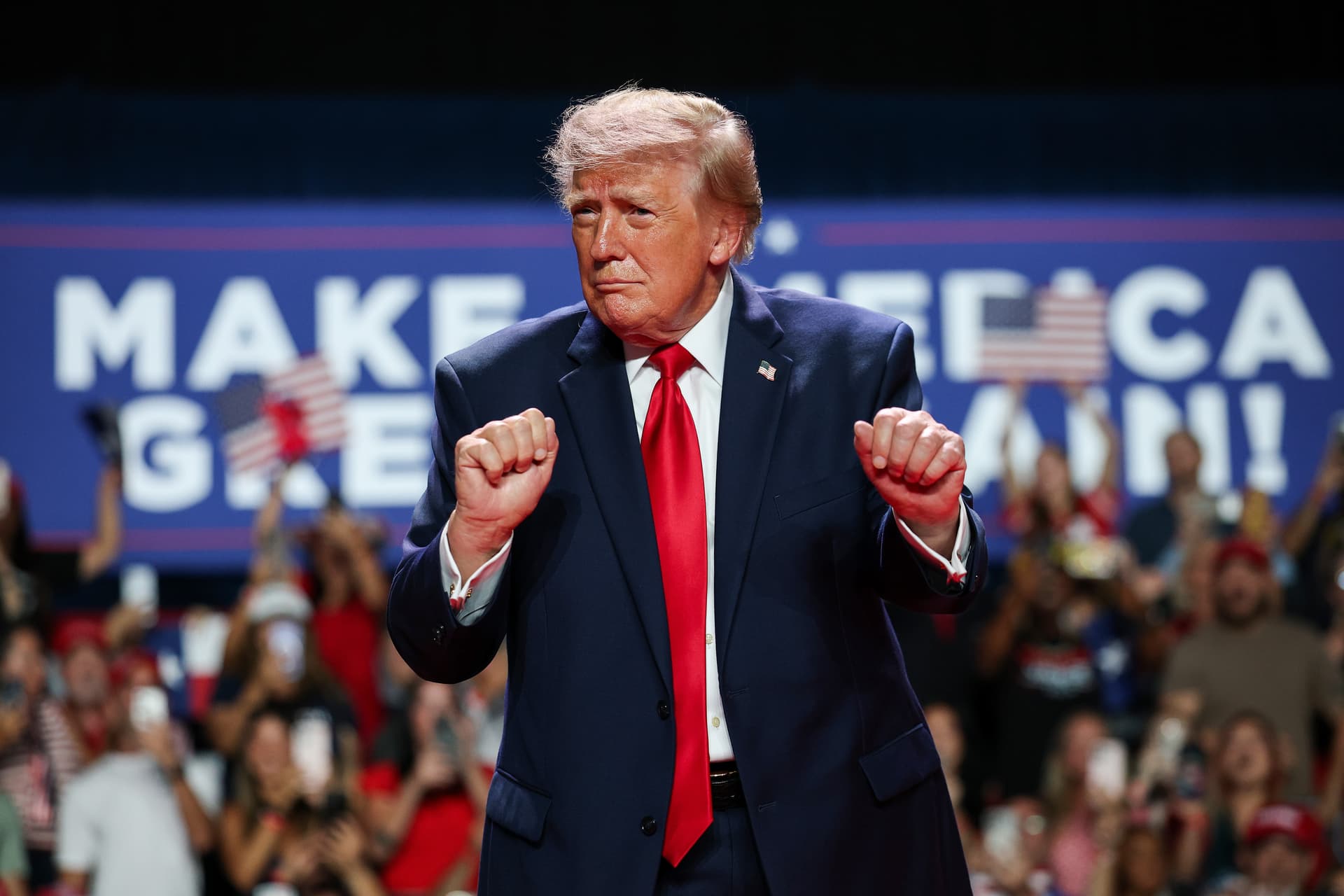
Avalanche of Briefs Opposing Trump Tariff Regime Filed at Supreme Court Ahead of November Argument
The case could upend President Trumpâs economic plan if the high court decides he does not have the constitutional authority to raise import duties.
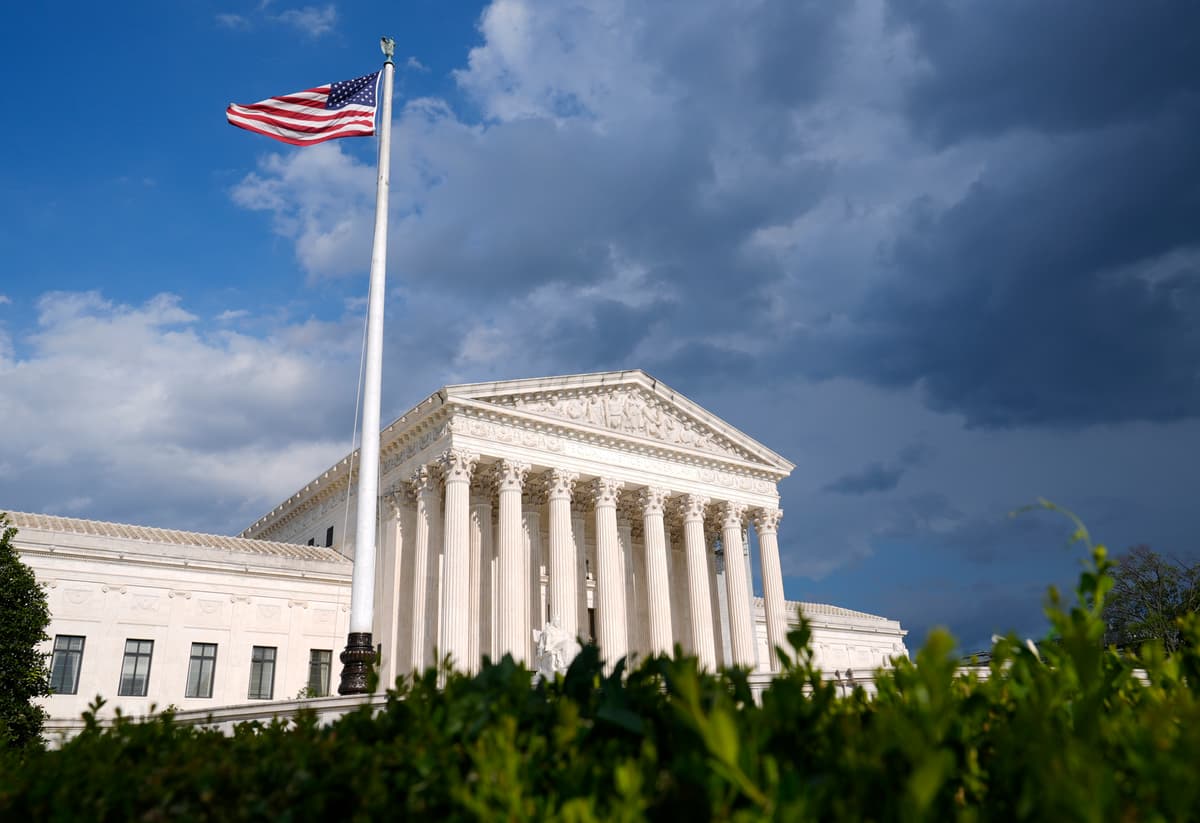

A diverse group of both liberals and conservatives has filed briefs with the Supreme Court in support of a case that seeks to dismantle President Trumpâs rationale to impose global tariffs.
The case claims Mr. Trumpâs reliance on the 1977 International Emergency Economic Powers Act to impose his âLiberation Dayâ duties is a use of the law that lawmakers never intended and has not been seen before. If he loses the case, Mr. Trump could see the foundation of his economic strategy crumble.
The Supreme Court is set to hear arguments on November 5 in Learning Resources, Inc. v. Trump, a case filed by small businesses. Justices have more than two dozen briefs filed by a wide range of groups that want to lend perspective and arguments, and a large majority of them are against the Trump administrationâs case.
A vice president at the libertarian think tank Cato Institute, Scott Lincicome, filed a brief calling the administrationâs rationale for imposing the tariffs âgroundless.â
Mr. Lincicome noted in an X post that the anti-tariff briefs have been filed by a large and diverse list of legal experts, economists, former politicians, and scholars, and the list far outweighs briefs filed on behalf of Mr. Trumpâs case.
Constitutional lawyer Casey Mattox responded to the post saying that the large number of briefs filed for one side in the case is even greater than the filings in a 2021 case, Americans for Prosperity Foundation v. Bona. In that, a 6-3 Supreme Court invalidated a California requirement that charitable organizations disclose the identities of major donors, citing a violation of First Amendment rights.
âIâve often said it was the most diverse coalition on one side of a contested constitutional question in the history of the Court,â Mr. Mattox stated on X.
Among the anti-tariff briefs is one filed by a group of professors of American foreign relations law, which claims Mr. Trumpâs rationale for levying the tariffs circumvents congressional limits on the use of taxes and tariffs.
Two conservative groups, the Goldwater Institute and the John Locke Foundation, filed a brief saying the framers of the Constitution would have âreacted with horrorâ to a president being allowed to unilaterally impose taxes.
âIt runs contrary to everything they held dear,â the brief states.
A group of 31 former federal judges appointed by presidents of both major political parties stated in its brief that the justices should reject the administrationâs assertion that the presidentâs declarations of ânational emergenciesâ are not subject to judicial review.
And from the left, Governor Gavin Newsom and the state of California filed a brief in favor of the small businesses fighting to get the tariffs rejected, calling them âunlawful.â
The Constitution gives Congress the power to impose tariffs on imports but Congress has delegated its authority in recent decades by passing several laws allowing the executive branch to impose the levies in various circumstances.
An obscure federal panel that oversees trade cases, the Court of International Trade, ruled against Mr. Trump in May, saying he does not have âunbounded authorityâ to impose across-the-board import taxes.
The United States Court of Appeals for the Federal Circuit upheld the decision and now the Supreme Court will have to decide on the separation of powers question that is at the heart of the case.
Members of the Trump administration have claimed the country will suffer devastating economic consequences without the tariffs.
Solicitor General D. John Sauer said millions of jobs will be eliminated and the future of Social Security and Medicare will be threatened if money already collected through tariffs has to be refunded.
The Department of the Treasury has brought in more than $221 billion in tariff revenue this year, according to data compiled by the Penn Wharton Budget Model at the University of Pennsylvania. Secretary Scott Bessent said that the large sums already collected will make it more difficult for the Supreme Court justices to rule against Mr. Trump.
In a September NBC interview, Mr. Bessent said about half of the tariffs would have to be refunded if the administration loses, âwhich would be terrible for the Treasury.â