
Jack Smith ‘Goes on the Counterattack’ Against Trump as Pressure Builds To Publish Secret Mar-a-Lago Dossier
An appellate court commands Judge Aileen Cannon to rule on the special counsel’s final report, which is under lock and key.
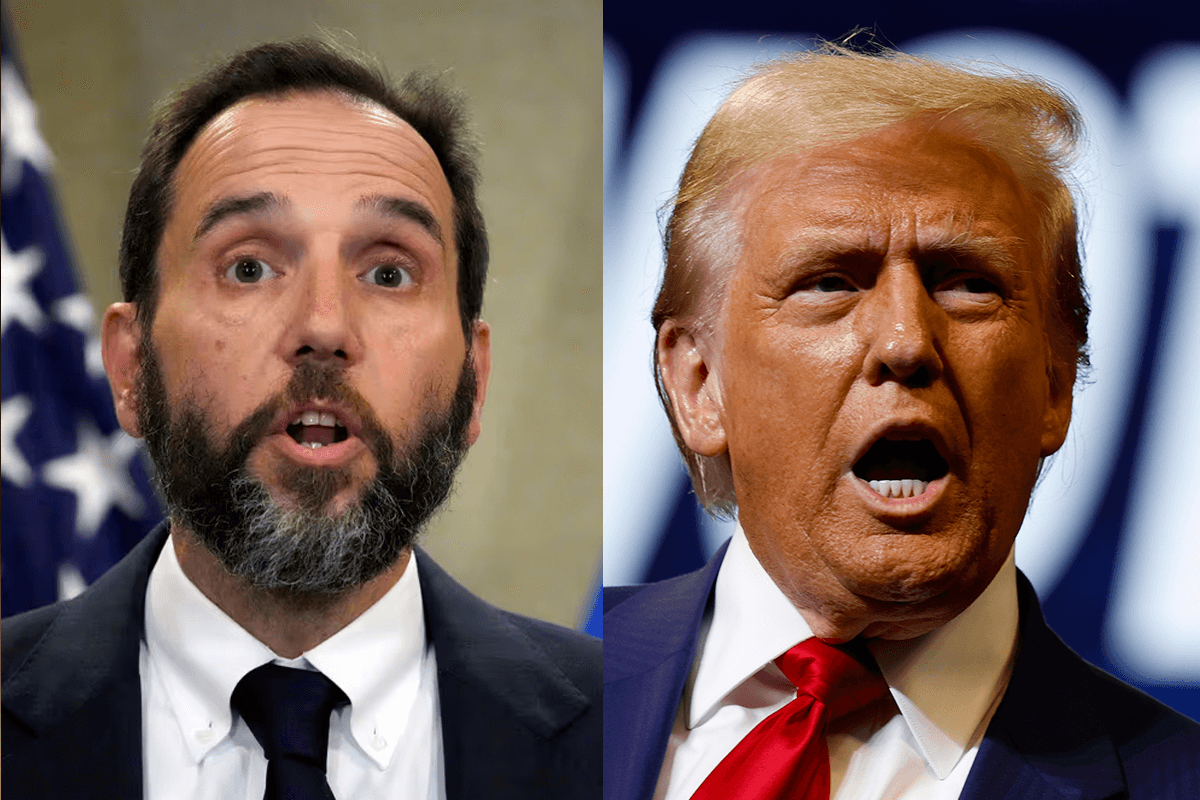
The ruling by the 11th United States Appeals Court that Judge Aileen Cannon has 60 days to rule on the release of Special Counsel Jack Smith’s final report on his Mar-a-Lago case could bring the dossier one step closer to release. This comes as a report says Mr. Smith has moved into “counterattack” mode against President Trump.
The command to Judge Cannon came in the form of a one-page order accusing Judge Cannon of “undue delay” in ruling on motions filed by American Oversight and the Knight First Amendment Institute at Columbia University. The groups, which claim to be nonpartisan, want Mr. Smith’s dispatch on the classified documents case, which never went to trial, ushered into the public ken. Mr. Smith’s report on January 6 — which was brought before a more amenable Washington, D.C.-based judge — has already been released.
The 11th Circuit’s ratcheting up of pressure on Judge Cannon — the appellate court has overruled her before — comes as the New York Times reports that “Mr. Smith has told people in his orbit that he welcomes the opportunity to present the public case against Mr. Trump.” The special counsel has declared that he is willing to testify before Congress, though only if he is afforded immunity.
During the Biden administration, Mr. Smith charged Mr. Trump with multiple felonies related to January 6 and, separately, related to Mr. Trump’s retention of classified documents at Mar-a-Lago. The latter case in particular enraged Mr. Trump because it was launched with an FBI search on Mar-a-Lago, during which armed agents penetrated into the Trump family’s private quarters, including into Barron Trump’s bedroom and the bedchamber of the first lady.
The case never made it to trial after Judge Cannon, who was appointed by Mr. Trump in 2020, ruled that Mr. Smith was disqualified from prosecuting the case. Mr. Smith moved to dismiss the charges against Mr. Trump after he won re-election and grasped the “categorical” immunity afforded sitting presidents.
In January of this year, Judge Cannon put in place an injunction that bars the release of the summary of what American Oversight calls “one of the most significant criminal investigations in American history.” She reasoned that while discretion to release such reports generally rests with the attorney general, its disclosure here would harm Mr. Trump’s two co-defendants in the case.
Once Mr. Trump came to office, though, the Department of Justice dropped the cases against his two employees, grounds manager Carlos De Oliveira and Mr. Trump’s valet, Waltine Nauta, who had both resisted Mr.Smith’s efforts to make them turn on Mr. Trump and were therefore criminally charged.
While the Mar-a-Lago report is still under lock and key, a clue to its tone can be gleaned from Mr. Smith’s January 6 dispatch. The prosecutor wrote that the “view that the Constitution prohibits the continued indictment and prosecution of a President is categorical and does not turn on the gravity of the crimes charged, the strength of the Government’s proof, or the merits of the prosecution.” Mr. Smith insists he could have convicted Mr. Trump “but for” the results of the 2024 presidential election.
The executive director of the Knight Institute, Jameel Jaffer, declares with respect to the Mar-a-Lago volume that “this report is of singular importance to the public because it addresses allegations of grave criminal conduct by the nation’s highest-ranking official. There is no legitimate reason for the report’s continued suppression.” Now, he wants the 11th Circuit to issue a writ of mandamus ordering Judge Cannon to release it.
One issue on which Mr. Smith’s Mar-a-Lago report could shed light is the special counsel’s decision to bring that case in the Sunshine State rather than the more hospitable District of Columbia. The Washington Post reports that some in his inner circle thought that decision was “insane” and were “alarmed by what he saw as a huge gamble.” A deputy called the possibility of Judge Cannon drawing the case “an existential threat.” Mr. Smith shrugged off those concerns.
No matter what unfolds now in Florida courtrooms, though, Mr. Smith increasingly appears inclined to share his thoughts on his two unsuccessful prosecutions of Mr. Trump. After months of silence, he is increasingly stepping into the spotlight. During a keynote address at George Mason University he declared that “what I see happening at the Department of Justice today saddens me and angers me.”
Mr. Smith has also appeared in Britain with paid MSNBC contributor Andrew Weissman, an avowed foe of Mr. Trump and the erstwhile top deputy to Special Counsel Robert Mueller. Mr. Smith told Mr. Weissman that it was “absolutely ludicrous” to suggest that his prosecutions of Mr. Trump were political in nature. Attorney General Merrick Garland appointed Mr. Smith two days after Mr. Trump declared his intention to retake the White House.
Mr. Smith, in another preview of the report, told Mr. Weissman that he adduced “tons of evidence” that Mr. Trump willfully retained secret documents and worked to “obstruct the investigation” into the classified materials that found their way to the president’s Palm Beach mansion.
Mr. Trump took to Truth Social last week to declare: “These thugs should all be investigated and put in prison. A disgrace to humanity. Deranged Jack Smith is a criminal!!!” That broadside comes after the disclosure that Mr. Smith, as part of his election interference probe — code-named “Operation Arctic Frost,” after a satsuma orange in a likely an allusion to Mr. Trump — secured telephone data from Republican lawmakers.
Mr. Smith has been summoned by Congressman Jim Jordan to answer questions about “prosecutorial misconduct and constitutional abuses of his office.” Mr. Smith’s lawyers write in a letter that their client is “prepared to answer questions about the Special Counsel’s investigation and prosecution, but requires assurance from the Department of Justice that he will not be punished for doing so.”
At least one Republican senator, Chuck Grassley, is not so eager to hand Mr. Smith a microphone. The 92-year-old lawmaker tells CNN that “Jack Smith certainly has a lot of answering to do, but first, Congress needs to have all the facts at its disposal. Hearings should follow once the investigative foundation has been firmly set.” Republicans could also subpoena Mr. Smith, and initiate contempt proceedings if he declines.
Mr. Smith is also facing a civil probe, initiated by Senator Tom Cotton, into whether the timing of his prosecutions of Mr. Trump violated the Hatch Act. That law bars federal employees from engaging in political activities intended to influence elections. A prosecutor has never been found to have run afoul of that prohibition.