Judge Blocks President Trump’s Birthright Citizenship Order With New Legal Strategy

The justice department says the request to form a class action while the case is argued is premature.

 AP/Evan Vucci
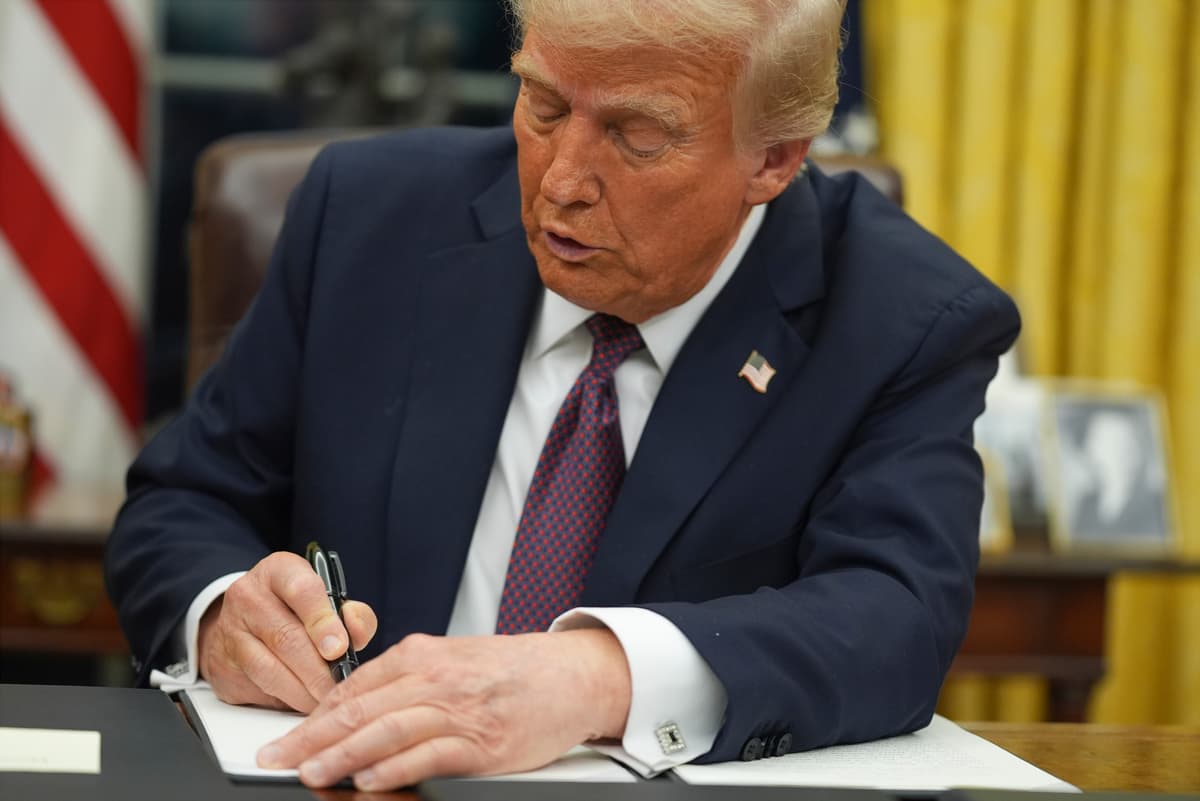
President Trump signs an executive order on birthright citizenship at the Oval Office of the White House, January 20, 2025, at Washington. AP/Evan Vucci

A federal judge in New Hampshire says he will certify a class action challenging President Trump’s executive order ending birthright citizenship and issue a preliminary injunction blocking the order from being implemented.

It is the latest twist in a long-running legal saga in which the Supreme Court struck down Judge Joseph LaPlante’s earlier injunction blocking the order.

Judge LaPlante agreed to certify a class action that includes all children who are affected by the executive order during a Thursday morning hearing involving Barbara v. Trump. He said it was “not a close call” because of “irreparable harm” the order could bring to children, Reuters reported.

The 14th Amendment ordains, in part, that “all persons born or naturalized in the United States, and subject to the jurisdiction there of, are citizens of the United States.” Mr. Trump says the amendment was meant to apply only to the children of former slaves after the Civil War.

He issued his order ending the automatic granting of citizenship to the children of illegal aliens shortly after his return to the White House. Soon after, multiple district judges issued injunctions to block its implementation pending constitutional challenges.

The Supreme Court, in a 6-3 decision in Trump v. CASA, ruled last month that federal district judges lack the authority to issue “universal injunctions” affecting the whole country, but left a possible loophole for class actions.

The American Civil Liberty Union filed the new case the same day and requested class action status. The group’s lawyers also asked the judge to impose a nationwide halt to the policy while the legal battle plays out.

The lawsuit charges that the Trump administration is flouting the Constitution, congressional intent, and longstanding Supreme Court precedent.

Mr. Trump’s Department of Justice argues that the request to form a nationwide class is premature. Judge LaPlante says he will stay his ruling for a few days to allow the Trump administration to appeal his ruling.

The executive order was set to take effect on July 27 following the Supreme Court ruling rejecting the initial preliminary injunction. The new preliminary injunction tied to the class action could end up back in front of the high court.

Concurring and dissenting opinions from the justices in CASA referenced class actions as they relate to injunctions.

In her dissenting opinion, Justice Sonia Sotomayor left the door open for class actions as an “important tool to provide broad relief to lawless Government conduct.” But she noted that these are not perfect substitutes for universal injunctions due to the high legal costs and the hurdle of class certification.

But Justice Samuel Alito warned in a concurring opinion: “District courts should not view today’s decision as an invitation to certify nationwide classes.”

Justice Brett Kavanaugh’s own concurring opinion said the decision will require district courts to follow proper legal procedures when awarding relief under class actions. “Most significantly, district courts can no longer award preliminary nationwide or classwide relief except when such relief is legally authorized,” he warned.


The New York Sun

© 2025 The New York Sun Company, LLC. All rights reserved.

Use of this site constitutes acceptance of our Terms of Use and Privacy Policy. The material on this site is protected by copyright law and may not be reproduced, distributed, transmitted, cached or otherwise used.

The New York Sun

Sign in or  create a free account

or
By continuing you agree to our Privacy Policy and Terms of Use