
New Thriller ‘Cloud’ Paints a Gloomy Picture of Modern-Day Japan

Similar to the work of Alfred Hitchcock and Fritz Lang, director Kiyoshi Kurosawa draws on genre to examine cultural norms and aberrations.
Via Sideshow and Janus Films
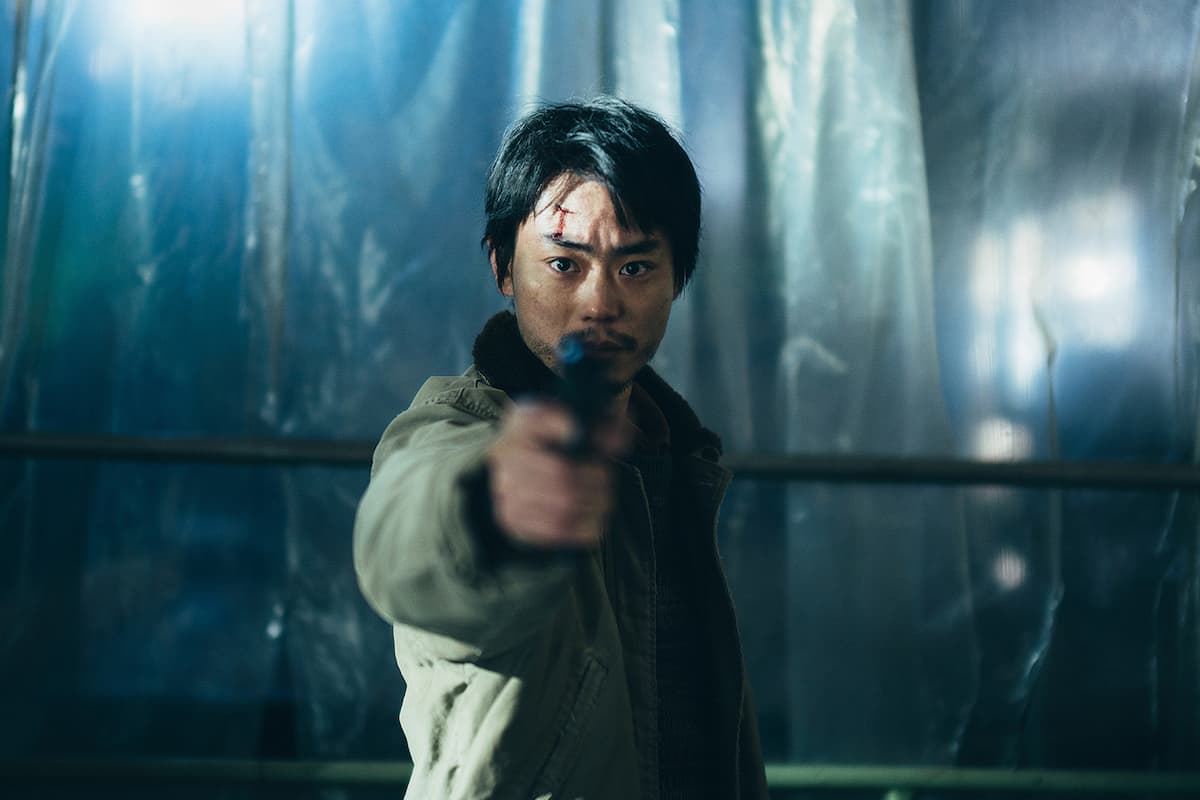
Masaki Suda as Yoshii in ‘Cloud.’ Via Sideshow and Janus Films

The new film “Cloud” is likely to leave many viewers worrying about the state of Japanese society, particularly its men. Making its premiere Friday at the IFC Center, the movie fuses economic uncertainty and empty consumerism with digital rage and wounded masculinity in its tale of a Tokyo-based online reseller of assorted merchandise. 

In press notes, director Kiyoshi Kurosawa (no relation to the late, great Akira Kurosawa) and producer Yumi Arakawa address their intention to tackle some of the country’s serious issues, such as seemingly random violence and social media discommunication. What is most conveyed through their film, though, is the director’s inclination toward genre storytelling. Similar to the work of Alfred Hitchcock and Fritz Lang, Mr. Kurosawa draws on genre to examine cultural norms and aberrations, such as in his stateside breakthrough “Cure,” which looked at Japanese social conformity through the lens of a serial killer movie/horror flick. 

With “Cloud,” the director leverages not only elements of the thriller genre but multiple timeworn modes to tell its contemporary story, creating a hybrid viewing experience that relies more on narrative conventions than concentrated enquiry. The film’s initial form — its most effective — is lowkey socioeconomic drama laced with wisps of suspense. 

Protagonist Yoshii turns down the chance to become a manager at the industrial laundromat in which he works and soon quits to dedicate his time fully to buying and selling various goods. Most of these are of dubious authenticity and questionable quality, such as “miraculous therapy devices” and what look to be Birkin bags. Mentions of assembly wages and high rents coincide with talk of happiness and “wasting away” at a regular job.

As Yoshii’s profits increase, disturbing incidents begin to occur while an atmospheric darkness grows, though undoubtedly the film’s scariest scene happens in broad daylight. As the young man sits on a bus with his girlfriend, Akiko, and proceeds to show her via his cellphone the house they will move into, the camera shifts — instead of cuts — from a profile view to a semi-frontal one, revealing a person in black peering over their shoulder. With its eerie pan and airless audio, the moment is indicative of Mr. Kurosawa’s subtle approach to generating fright in all his work.

Once Yoshii and Akiko start to live in a big house in the mountains outside the city, the movie begins its second phase, one that uses the “remote house in the woods” trope and urban/rural division to accumulate tension. Yoshii hires an assistant, Sano, who takes a suspiciously keen interest in the online reselling business beyond just carting and itemizing boxes. A piece of machinery thrown through a window and an encounter back in Tokyo with a former friend, Muraoka, continue to portend a coming storm. 

The omens converge after Yoshii purchases rare dolls from a dealer to hawk online at several times the price he paid, circumventing those who had waited to buy them at a bricks-and-mortar store. First, Akiko leaves him; then, he fires Sano for being too curious and industrious; lastly, and most distressingly, his home is invaded by two men, one being his former boss and the other under a ghostly mask. This leads to a run through the forest, where his two assailants are joined by others, each one a person Yoshii has cheated or treated mildly dismissively, though it becomes clear that they’re really just a bunch of emotionally immature men looking for an excuse to act sadistically. 

“Am I so bad?” Yoshii asks at one point during the altercation, and one might agree with the character’s appeal to relative innocence. As Yoshii, Masaki Suda puts his long eyebrows to good use, both when he’s faced with the menacing but misfit gang and earlier in the movie when he just stares at his computer screen, waiting for sales to transpire. 

Yet the actor’s wry, muted intelligence cannot save the film when plot discrepancies start to gather and the narrative transforms again, this time into an ultraviolent, scattershot actioner. Plausibility isn’t helped by Kotone Furukawa’s performance as kewpie doll/femme fatale Akiko, nor is the positively teenaged Daiken Okudaira believable when Sano suddenly displays the skills of a hit man.

Mr. Kurosawa, who also wrote the screenplay, convincingly connects violence and nihilism with digital media, easy money, and social isolation, yet too often he has his characters make too on-the-nose statements. The director also strangely alludes to World War II and Japan’s alliance with Germany in the final act, ending up with something of a war movie crossed with a Western shoot-’em-up. What started off promisingly ominous and suggestively weighty devolves into genre exercises and muddled messages, reducing to vapours the astute observations and elegant filmmaking found in “Cloud.”


The New York Sun

© 2025 The New York Sun Company, LLC. All rights reserved.

Use of this site constitutes acceptance of our Terms of Use and Privacy Policy. The material on this site is protected by copyright law and may not be reproduced, distributed, transmitted, cached or otherwise used.

The New York Sun

Sign in or  create a free account

or
By continuing you agree to our Privacy Policy and Terms of Use